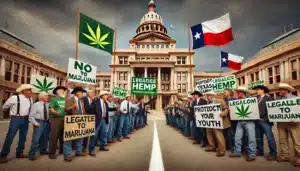
Author: getblazed

Editor for Blazed Magazine.

FDA-Approved and State-Licensed Products Are Moved to Schedule III

HCA Explicitly Excluded from Rescheduling:

The biggest day in federal cannabis policy in decades arrived this morning — and the fine print is doing a lot of work.


For years, cannabis advocates, industry operators, and policy watchers have dreamed of the day the federal government would move marijuana off Schedule I — off the shelf it shares with heroin, away from the company of substances deemed to have no accepted medical use and a high potential for abuse. Today, April 23, 2026, that day arrived. Acting Attorney General Todd Blanche signed the order. The DEA made it official. Cannabis, in limited form, is now a Schedule III controlled substance under federal law.

Savor the moment for a breath, and then read the fine print.

What moved to Schedule III is not cannabis as a category. It is not hemp-derived THC. It is not the THCA flower sitting in the case at your neighborhood smoke shop. It is not recreational marijuana, not CBD gummies, not delta-8 cartridges, not a single product in the vast and inventive gray market that has operated under the protective ambiguity of the 2018 Farm Bill. What moved to Schedule III is a carefully circumscribed set of products: FDA-approved drug formulations containing delta-9-THC derived from Cannabis sativa L., and marijuana subject to a qualifying state-issued medical marijuana license.

That’s it. That’s the win.

Everything else — and there is a great deal of everything else — remains Schedule I. Any marijuana product that is neither FDA-approved nor covered by a state medical license is still, under federal law, as illegal today as it was yesterday. The DOJ press release phrases this with lawyerly precision: the order applies to products “subject to a qualifying state-issued license authorizing the licensee to manufacture, distribute, and/or dispense marijuana or products containing marijuana for medical purposes.” The recreational market in legal states? Still Schedule I. The hemp-derived THC products that have carved out a multi-billion dollar niche in the regulatory gray zone? Still Schedule I. Still, potentially, federal felonies.

This distinction is not incidental. It is the architecture.

To understand why, you have to appreciate who benefits from today’s order and who does not. The clear winners are the multi-state operators — the MSOs that have spent years building licensed, regulated, vertically integrated cannabis businesses in states that permit medical use. These companies have labored under Section 280E of the Internal Revenue Code, a provision that denies standard business deductions to enterprises trafficking in Schedule I or II substances. Moving to Schedule III eliminates that burden, potentially freeing up tens of millions of dollars in annual tax liability for the larger operators. It also accelerates federally permitted research, clears a path for banking relationships long denied to Schedule I businesses, and, less tangibly but not insignificantly, removes some portion of the stigma that has clung to the industry like smoke to fabric.

The losers are the hemp-derived THC operators — the manufacturers, distributors, and retailers who have built businesses on the premise that Farm Bill hemp, with its permissive treatment of cannabinoids other than delta-9, created a lawful pathway to the intoxicating cannabis market. Today’s order does not validate their business model. If anything, it sharpens the line of demarcation between the licensed, legitimate cannabis industry and what the MSOs have long called the gray market — and have more recently started calling an unlawful competitor.

Consider the sequence. For the past two years, multi-state operators have been suing smoke shops and distributors across the country — in Missouri, Pennsylvania, and Texas among other states — arguing that hemp-derived THCA products are functionally marijuana and should never have been sold under Farm Bill cover. Today’s rescheduling order hands those operators a cleaner rhetorical weapon. If you want the protection of federal tolerance, get a state medical license. If you don’t have one, the federal government has just made its position more explicit, not less.

The order was signed by Todd Blanche, the acting attorney general, and it comes roughly four months after President Trump’s executive order directing the administration to move forward on rescheduling — a process that had languished through years of NPRM proceedings, administrative hearings, and public comment periods under the previous administration. That the Trump DOJ completed the move, however narrowly scoped, is genuinely notable. It is not the comprehensive reform that advocates sought, but it is a real policy change with real economic consequences for a real industry.

The next inflection point is June 29, 2026, when the DEA has announced it will convene an expedited hearing to consider whether marijuana as a category — not just the FDA-approved and state-licensed subset — should be reclassified to Schedule III as well. That hearing is where the broader argument will be fought. It is where the hemp industry will have to confront the question it has largely avoided: if marijuana moves to Schedule III wholesale, does the Farm Bill gray zone collapse entirely, or does it survive through a different legal theory?

No one has a clean answer to that question yet, which is precisely why it’s the most important question in cannabis policy right now.

What we know today is this: the federal government drew a line, and it drew that line around the licensed medical market. THCA is on the wrong side of it. Hemp-derived intoxicants are on the wrong side of it. The gray market — creative, entrepreneurial, constitutionally interesting, and genuinely beloved by the consumers it serves — just got a clearer target on its back.

That’s not a reason to despair. It’s a reason to pay very close attention to what happens on June 29.


Jay Maguire covers cannabis policy, hemp industry litigation, and the politics of drug reform. He is political editor of a cannabis industry trade publication and an investigator working on behalf of hemp retailers and distributors in regulatory and legal proceedings.

CROSSHAIRS OF HEMP MEDIA

A Strange Connection: Judge Maya Guerra Gamble, Alex Jones, and the Texas Hemp Industry

By Russell Dowden

Publisher, Blazed Magazine / Texas Hemp Reporter

There are moments where media, law, and industry collide in ways that feel almost pre-written. For me—and for Judge Maya Guerra Gamble—those intersections have happened more than once, each time with real consequences.

From Infowars to HBO: A Shared Timeline

In HBO’s “The Truth vs. Alex Jones,” I appear in the opening minutes, providing context on Alex Jones’ early days in Austin media. In 2012, I served as General Manager of Infowars Magazine, working inside the ecosystem that would later become the center of a landmark defamation case.

That case ultimately landed in Judge Gamble’s courtroom.

The $49 Million Judgment

In November 2022, Judge Gamble upheld a Texas jury’s award of roughly $49 million in damages against Alex Jones in the Sandy Hook case. It was a defining moment for media accountability—and a surreal one for those of us who had once worked in that orbit.

The Sweet Sensi Case: Where It Got Personal

The next intersection wasn’t just professional—it became personal.

During the Sweet Sensi litigation, my publications—Texas Hemp Reporter and related titles—were entered into evidence by both legal teams during discovery. That’s rare air for a publisher: not just covering a case, but becoming part of the record.

Both the plaintiff and defendant were active advertisers, and coverage of the dispute became a focal point in how the case was perceived publicly.

Tensions escalated beyond the courtroom.

On October 25, 2024, Greg Autry of Sweet Sensi ran a paid advertisement in The Austin Chronicle that directly attacked Wyatt Larew of Wyatt Purp and the Texas Hemp Reporter. It was a public shot—aimed not just at a competitor, but at our coverage.

The verdict changed that narrative.

A Texas jury ultimately found constructive fraud and other violations against Sweet Sensi—effectively vindicating Wyatt Larew and the Texas Hemp Reporter’s initial reporting on the case.

For us, it wasn’t just a legal outcome—it was validation.

Back in Court: The Fight for THCA Flower

Now, in 2026, Judge Gamble is again presiding over a case with major implications for Texas hemp.

With THCA flower representing roughly 50% of hemp product sales, the current litigation could determine the industry’s future.

So far, Judge Gamble has:

Granted a Temporary Restraining Order (TRO)

Allowed continued sales of THCA flower—for now

Set a Temporary Injunction Hearing for Friday, April 23 at 9 AM

That hearing is expected to be pivotal.

It could decide:

Whether THCA flower remains legal in Texas

How aggressively the state can regulate hemp moving forward

Whether small operators survive the next phase of enforcement

A Pattern of Consequence

Across three very different cases, a pattern emerges:

Alex Jones → financial accountability at scale

Sweet Sensi → industry-level precedent and media scrutiny

THCA litigation → the future of hemp commerce in Texas

And in each instance, Judge Maya Guerra Gamble has been at the center.

A Publisher in the Crosscurrents

From appearing in an HBO documentary about Alex Jones…

To having my magazines entered into court as evidence…

To now covering—and being part of—the ongoing fight over hemp…

This isn’t just reporting from the sidelines.

It’s being in the middle of it.

What Happens Next

All eyes are now on the April 23rd injunction hearing.

What’s decided in that courtroom could:

Reshape the Texas hemp market

Determine the fate of THCA flower

And once again place Judge Gamble at the center of a high-impact ruling

Final Word

Some stories you cover.

Others, you live through.

This one has been both.


A Texas District Court Just Hit Pause on Texas’ Hemp Crackdown

There are moments in a policy fight when the noise stops working—when all the bluster, press conferences, and scare tactics run headlong into a judge who doesn’t care about any of it and just asks one simple question: what does the law actually say?


April 10 was that moment.


What followed was less a legal argument than a slow-motion collapse. The State’s lawyer looked like a man who brought a water pistol to a cattle drive—outmatched, outgunned, and increasingly aware of it. As the court pressed in, the case didn’t just weaken, it unraveled, failing the most basic requirement of any courtroom: say something with a straight face and back it up.


They couldn’t.


Because when it came down to brass tacks, the trifecta wasn’t even close. The facts weren’t on their side. The statute wasn’t on their side. And the Constitution sure as hell wasn’t on their side.


And a Texas judge noticed.


April 10, 2026 is going to stick. Not because it ends the fight, but because it exposed it. Strip away the politics, put the argument under oath, and the prohibitionist case folded like a cheap lawn chair in an August heatwave.


They didn’t just lose.


They got their hat handed to them.


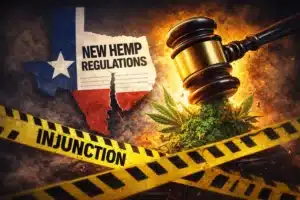
A Travis County district court issued a Temporary Restraining Order halting enforcement of Texas’ latest hemp rules — a sweeping regulatory scheme that, in plain terms, attempted to rewrite the law without bothering to ask the Legislature. For an industry that has spent years navigating shifting goalposts, administrative improvisation, and the occasional outbreak of outright hostility, this order lands not merely as a procedural win. It’s a judicial rebuke — precise, methodical, and rooted in the first principles of administrative law.

What the State Tried to Do

The core issue, stripped of regulatory camouflage, couldn’t be simpler. Texas law defines hemp using a delta-9 THC concentration threshold of 0.3% on a dry weight basis. That’s the statute. That’s the line the Legislature drew. What DSHS attempted was to swap that framework for a “total delta-9 THC” or “acceptable hemp THC level” standard — a different chemical metric, a different legal universe, achieved entirely through rulemaking.

The court saw through the maneuver immediately. The rules, it found, “effect a substantive change in the governing law through rulemaking rather than implementing the statute as written.” That’s not a technical infraction. That’s a separation-of-powers problem — the kind courts take personally. Agencies are creatures of statute. They implement the law. They don’t rewrite it because they’ve decided they’d prefer a different answer.

Why the Court Moved Immediately

Temporary restraining orders don’t come easy. The standard demands a showing of probable success on the merits and imminent, irreparable harm. The plaintiffs cleared that bar with room to spare.

Enforcement of these rules, the court concluded, would fracture the entire hemp supply chain — manufacturing, testing, transport, retail — and effectively force businesses to shut down, abandon Texas, or face enforcement actions tied to standards no legislature ever authorized. The harm here isn’t hypothetical; it’s operational collapse. Supply chains break. Customer relationships vanish. Goodwill, once gone, doesn’t file a refund claim. These aren’t losses that can be tabulated and made whole later. They’re structural — and that’s precisely why the court found them irreparable.

A Statewide Industry, Not a Niche Dispute

One of the ruling’s more consequential passages is its recognition of scope. Processors, manufacturers, distributors, and retailers all operate within the same regulatory ecosystem. A flawed rule doesn’t stay politely contained — it propagates. Limiting relief to the named plaintiffs would have been a legal gesture, not a remedy. Effective relief required restraining enforcement broadly against similarly situated businesses, and the court said so plainly.

That finding matters beyond the immediate case. It signals that the judiciary understands the scale of what’s at stake here and isn’t prepared to treat a statewide industry like a zoning dispute.

The Public Interest Argument They Didn’t Expect to Lose

Perhaps the most quietly devastating section of the order is its treatment of the public interest — the argument opponents of the hemp industry have been running for years as if it were their exclusive franchise.

The court declined to rent it to them.

Instead, it recognized that consumers across Texas rely on hemp-derived products for legitimate, documented purposes: chronic pain, PTSD, sleep disorders, and as alternatives to alcohol and pharmaceuticals that carry their own considerable risks. Many of those consumers are veterans. The court also acknowledged what any honest policy analyst already knows: removing lawful products from the market doesn’t extinguish demand. It reroutes it — toward less regulated, less safe, or outright illicit alternatives. That’s not an industry talking point. That’s a judicial finding, and it will be difficult to walk back.

What the TRO Actually Does

The order is operational, not symbolic. The state is now restrained from enforcing the rules’ substitution of a “total THC” standard for the statutory delta-9 threshold, along with the enforcement mechanisms dependent on that framework — penalties, product embargoes, and license actions built on provisions the Legislature never passed.

The practical effect is a restoration of the status quo ante — the regulatory environment as it existed before March 31, 2026. Not perfect rules. Not permanent rules. Lawful ones. And for now, that’s enough to keep an industry running.

What Comes Next

A hearing on a temporary injunction is set for April 23, 2026, where the legal questions will be litigated more fully and the state will have its opportunity to defend the rulemaking. But the trajectory is already legible. The court has signaled skepticism grounded in statutory interpretation and administrative law doctrine — skepticism the state will struggle to overcome without retreating from its current position.

The strategic lesson here is simple enough. When the political process gets captured by narrative, the legal system becomes the venue of last resort. When the record is strong — when the facts, the statute, and the economic realities align — courts still function as a corrective. There’s a durable tendency in Texas politics to treat enforcement power as though it were synonymous with legal authority. This order draws a bright line between the two.

The state can regulate hemp. What it cannot do is redefine it. That distinction now sits where it always belonged: in the hands of the Legislature, not in the hands of whoever is running the rulemaking process on any given Tuesday.

Washington’s Two-Handed Approach to Hemp

Medicare just became the nation’s first large-scale, reliable buyer of hemp — provided you are old enough, sick enough, and compliant enough to qualify. Everyone else — the twenty-something vaping a delta-8 cart in Austin, the Hill Country soccer mom with a bag of sleep gummies — is staring down a federal crackdown capable of erasing most of the existing retail market within a year. That split screen is the essential fact of American drug policy in 2026: Grandma’s CBD has received its federal blessing, while corner-store delta-8 is being fitted for the gallows.

The $500 Olive Branch, and What It Actually Means

On April 1, the Centers for Medicare & Medicaid Services quietly activated a pilot program allowing certain seniors to receive up to $500 annually in hemp-derived products through participating provider groups. Don’t mistake this for a subsidy program or a reward card you swipe at the Buc-ee’s hemp counter. Beneficiaries cannot walk into their local shop, save the receipt, and bill Washington. Instead, CMS will reimburse organizations operating inside select Innovation Center models — ACO REACH, Enhancing Oncology, and LEAD — up to $500 per eligible patient, with those organizations controlling which products are furnished as part of clinician-guided care plans. The federal government is not subsidizing brands. It is commissioning a tightly controlled cannabinoid experiment on its own terms.

The strings attached are considerable. Products must be hemp-derived and remain within the 0.3 percent delta-9 THC limit established by the 2018 Farm Bill, along with a hard cap of only a few milligrams of total THC per serving. Inhalables, synthetics, and anything with obvious intoxicating potential are excluded. Certain patients — those with disqualifying conditions including some substance use disorders and serious pulmonary disease — are carved out entirely. Dollars flow to accountable care organizations and similar entities, not to beneficiaries directly, which means clinicians and administrators control the tap. For Texas seniors, particularly in rural communities, “legal hemp” is about to acquire a respectable institutional twin: doctor-approved, chart-notated, dispensed through credentialed intermediaries rather than the shop on the frontage road.

FDA’s Wink and Nod — and Who It Leaves Out

To prevent the pilot from colliding with existing law on its first day, the Food and Drug Administration issued a new enforcement memorandum focused on Medicare-linked hemp products. The agency has spent years insisting that CBD in food and supplements occupies an unresolved regulatory gray zone. Now it is signaling a narrow pocket of “enforcement discretion” — an official look-the-other-way — when CBD is dispensed under clinician guidance inside CMS models and meets strict safety, labeling, and potency standards.

That carve-out does not extend to the broader Texas hemp marketplace. Retail tinctures, gummies, beverages, and vapes sold directly to consumers remain burdened by the same unresolved FDA questions, patchwork state rules, and ever-present risk that a compliance misstep converts inventory into contraband. Even brands that have invested seriously in rigorous testing, GMP-style production, and responsible labeling gain no special status from the fact that CMS is quietly paying for distant cousins of their products. Washington has blessed cannabinoid use in a narrow, medicalized lane — and left the general market precisely where it was, except for one item buried in a shutdown bill that threatens to blow everything else up.

The 0.4mg Time Bomb

While the Medicare pilot is launching, a separate piece of federal policy is counting down. Buried in last year’s government funding package to end a shutdown, Congress rewrote the federal definition of “hemp” to impose a hard ceiling of 0.4 milligrams of total THC per finished container — in addition to the already-familiar 0.3 percent delta-9 THC by dry weight. Any hemp-derived cannabinoid product exceeding that threshold will, once the law takes full effect, no longer qualify as hemp at all.

The numbers involved are not abstractions. Lawyers and analysts tracking the change warn that the cap would disqualify virtually all existing full-spectrum and intoxicating hemp products, along with a meaningful share of mainstream CBD items that contain trace THC exceeding the 0.4mg floor across a full bottle. Trade groups and beverage-law specialists estimate that 95 percent or more of current ingestible hemp products are over the line. In Texas alone, estimates peg the hemp market at roughly $8 billion, supported by thousands of jobs in farming, processing, distribution, and retail — an industry that would be, in the words circulating through trade commentary, “effectively shut down” if the cap is enforced as written. What was packaged inside the Beltway as a fix to the “intoxicating hemp loophole” looks, from the I-35 corridor, like a controlled demolition of an industry Washington once invited people to build.

Texas: Fresh Off a Victory, Walking Into an Ambush

No state illustrates the whiplash more vividly than Texas. Earlier this year, a hard push to ban hemp-derived THC products — spearheaded by Lt. Gov. Dan Patrick, backed by substantial Republican leadership — ran headlong into a mobilized hemp industry and a governor who ultimately vetoed the ban. The fight was real: hearing rooms filled, phone lines lit up, and small business owners made the case that prohibition would gut a multi-billion-dollar market. When the veto ink dried, many Texas operators concluded they had bought themselves at least a few years of breathing room.

Then came the federal shutdown deal. Buried in that compromise is the 0.4mg cap that accomplishes, at the national level, almost exactly what the failed Texas ban would have accomplished within one state. Nearly all consumable hemp products with any meaningful THC content become unlawful — not just in Houston and Lubbock but in Boise and Buffalo. The same operators who spent months fighting Austin now find themselves on the receiving end of a Washington decision they had virtually no hand in shaping. The sense of ambush is not rhetorical. It is palpable in every industry conversation and in local coverage from San Antonio to Dallas.

A Split Screen Made for Political Conflict

The juxtaposition is difficult to ignore. On one side of the screen, Medicare dips a cautious institutional toe into hemp, allowing clinicians in select models to furnish carefully constrained CBD and low-THC products as part of structured care plans. On the other, Congress and federal agencies have redefined hemp in a way that treats nearly anything beyond a trace as beyond the pale. One program recognizes cannabinoids as legitimate tools for managing pain, sleep, and chronic conditions — provided they arrive small, boring, and physician-mediated. The other treats any cannabinoid product that people actually choose to buy as a loophole to be sealed.

For Texas officeholders, this creates a set of choices that will not stay quiet. Supporting the federal 0.4mg cap means endorsing a Washington compromise that threatens to dismantle an $8 billion in-state industry that their own voters just finished defending against a home-grown ban. Backing the Medicare pilot, on the other hand, means conceding that cannabinoids are legitimate medicine for the very population most likely to appear in Republican primary elections — which undercuts a good deal of the rhetoric used to justify state-level crackdowns. Trying to ignore the contradiction does not make it disappear. Washington is now setting the terms for a sector that Texas policymakers thought they had partially tamed on their own.

Two Experiments, One State on the Line

From a policy standpoint, the United States is running two concurrent experiments. In the Medicare pilot, CMS and its partners will gather data on whether clinician-guided hemp products reduce pain, improve sleep, or lower downstream costs in selected patient populations, using the $500 annual ceiling as both incentive and constraint. In the broader economy, the new hemp definition and 0.4mg cap will test how resilient an industry can be when its core products are redefined into illegality by a few lines in a funding bill nobody was watching closely enough.

For Texas, which embraced hemp as a politically viable middle ground when broader cannabis reform remained a bridge too far, the stakes of both experiments are anything but theoretical. Producers, processors, and retailers were told the rules: test your products, get licensed, pay your taxes, and you can build a durable business under state and federal law. Now they are learning that the most important rule was always subject to renegotiation in a distant capital, with local investment and livelihoods treated as acceptable collateral. Whether Texas responds to that reality with the same ferocity it brought to Austin, or accepts it as the price of playing in a federally defined market, will say a great deal about whose experiment this actually is — and who gets to survive it.

Alcohol Industry Pushes Back: Regulate Hemp Drinks, Don’t Ban Them

As lawmakers move closer to cracking down on hemp-derived THC products, the alcohol industry is stepping into the fight—and surprisingly, they’re not calling for prohibition.
Instead, a major alcohol trade group is urging Congress to regulate hemp THC beverages rather than ban them outright, arguing that a structured framework would protect consumers while preserving a fast-growing market.
The push comes as federal lawmakers consider policies that could effectively wipe out the booming hemp beverage sector, which has exploded in popularity as an alternative to alcohol.
⚖️ Regulation Over Prohibition
The alcohol industry’s position is simple:
Set clear rules
Enforce age restrictions
Require testing and labeling
Treat THC drinks more like alcohol than contraband
Their argument? A ban won’t eliminate demand—it will just drive the market underground.
💰 A Billion-Dollar Battle
Hemp-derived THC drinks have quickly become one of the hottest segments in cannabis, appealing to consumers looking for a legal buzz without alcohol. But that growth has also put a target on the industry’s back.
With federal changes looming—including tighter definitions of THC that could outlaw many current products—the stakes are massive.
🔥 The Bigger Picture
This isn’t just about drinks—it’s about the future of hemp itself.
Regulators want control
Lawmakers are split between bans and oversight Industries—from cannabis to alcohol—are jockeying for position
And now, even Big Alcohol is signaling something the hemp industry has been saying all along:
Regulation works. Prohibition doesn’t.
🌿 Bottom Line
As the fight over hemp intensifies, one thing is clear—this isn’t a fringe issue anymore.
When the alcohol industry starts lobbying to protect THC products, you know the game has changed.

Federal Hemp Loophole Must Be Implemented With No Delay

By Jordan Zuccarelli |

In case you missed it, a new op-ed in the Washington Examiner highlights a critical public-policy issue: the federal prohibition on intoxicating hemp products that Congress passed into law with bipartisan support last November must be fully implemented this year, without delay.


With the U.S. House Committee on Agriculture set to begin markup of the Farm, Food, and National Security Act of 2026 – also known as the Farm Bill – on March 3rd, the intoxicating hemp industry is pushing hard to keep these products on the market.


But as Diane Carlson writes, “the measure passed with a rare bipartisan supermajority of 76 senators. It reflected what harmed families, emergency physicians, leading public health and youth-serving organizations, law enforcement, regulators, and 39 state attorneys general, both Democrat and Republican, had already concluded: this loophole had become a national public-health crisis. It was causing unacceptable harm to children, families, and communities nationwide.”


Carlson, who is the co-founder and national policy director of One Chance to Grow Up, a nonpartisan, nonprofit organization that educates and advocates children’s interests in marijuana policy, goes on to note that “in the “Wild West” of the intoxicating hemp market, there are no age gates, no testing standards, no ingredient disclosures, no warnings. The only assured variable is predictable harm from those building businesses off targeting children and deceiving the public through “dupe” products and false claims.”


Background: A provision signed into law last November will end the nationwide unregulated sale of psychoactive Tetrahydrocannabinol (THC) products disguised as “hemp” or cannabidiol (CBD). These items have flooded gas stations, convenience stores and online marketplaces with gummies, vapes and drinks that can rival marijuana in potency and typically appeal to children. The prohibition is set to take effect this November, but the intoxicating hemp industry is seeking to delay implementation of the law.


The Problem: Since 2018, bad actors exploited hemp regulations to create unregulated, lab-produced intoxicants (gummies, vapes, drinks) with THC levels matching regulated marijuana markets but are sold without age gates, testing standards or ingredient disclosures.


The Harm: The consequences are real. The loophole has contributed to accidental child poisonings, emergency room visits, impaired driving incidents and serious mental health concerns.


Carlson writes “the intoxicating hemp free-for-all led to the rise of accidental child poisonings and injuries, ER visits and hospitalizations, impaired driving, and other serious physical and mental health effects, including acute psychosis that, for some, led to suicide.”


The Solution: The closure doesn’t ban hemp or eliminate CBD – it simply ensures intoxicating products can’t be marketed as “hemp” and sold in easily accessible stores and locations. Implementation cannot be delayed if we’re serious about protecting children and families.


“If a product can intoxicate, it should not be marketed as wellness ‘hemp’ and sold next to everyday candies, snacks, and drinks outside of a voter-approved marijuana dispensary.”


Congress acted. Now the law must take effect on schedule. Protecting kids from unregulated intoxicating products should not be controversial, it should be common sense.


The full op-ed in the Washington Examiner can be viewed here: https://www.washingtonexaminer.com/restoring-america/community-family/4468479/hemp-loophole-must-implemented-no-delay/

Texas Lawmakers Shift Gear on Hemp THC — Regulation, Not a Ban, Now Likely in 2027

Texas lawmakers who once pushed for a total ban on hemp-derived THC products are now signaling a shift toward regulating the market instead of outlawing it — setting the stage for major hemp policy changes in the 2027 legislative session.
Earlier attempts by state leaders — especially a high-profile push to ban all consumable hemp THC products — failed to become law in recent legislative sessions. Instead of outright prohibition, elected officials are increasingly talking about building a regulatory framework that could offer clarity, safety standards and oversight for THC-containing hemp products.
At a recent cannabis policy conference, lawmakers on both sides of the aisle acknowledged that the status quo — where intoxicating hemp products occupy a legal gray area — isn’t working for businesses, public safety officials or consumers. Republican Rep. Drew Darby (R-San Angelo) said his view evolved after hearing testimony from veterans, small business owners and everyday Texans about the role hemp plays in their lives and livelihoods.
“I was predisposed toward prohibition,” Darby said, “but seeing the real-world impact — people finding relief, small businesses investing their futures — transformed how I think about this. Regulation, not prohibition, is the answer.”
The shift comes after years of debate in Austin over how to handle intoxicating hemp products like delta-8, delta-9 and THCA flower. Lawmakers previously advanced a bill that would have banned nearly all consumable THC products, but Governor Greg Abbott vetoed that measure, saying an outright ban was too extreme and could face legal challenges.
Lawmakers and industry stakeholders now expect the next step to be developing a comprehensive regulatory system — something akin to how alcohol and tobacco are overseen — instead of trying to ban hemp-derived THC outright. That could include standardized testing, age verification requirements and clear labeling rules designed to protect consumers while keeping the billions-dollar hemp market alive.
As Texas observers look ahead to 2027, many within the cannabis industry see this emerging regulatory approach as a practical compromise that could offer long-sought clarity for producers, retailers, and consumers alike — especially after years of contention over how hemp products should be treated under state law.

RFK Jr.’s HHS Breaks the Silence on Cellphone Radiation – FDA Safety Claims Vanish

In a surprising move this week, Health and Human Services Secretary Robert F. Kennedy Jr. ordered the U.S. Department of Health and Human Services (HHS) to launch a federal review into the health effects of cellphone and wireless radiation, a topic long dismissed by government science. At the same time, the Food and Drug Administration (FDA) quietly removed longstanding webpages that said cellphone radiation posed no known health risk.

Kennedy’s decision has reignited debate over whether everyday wireless technology — from cell phones to Wi-Fi — may contribute to cancer or other health issues. Official federal agencies like the FDA, Centers for Disease Control and Prevention (CDC), and the National Cancer Institute have previously maintained there’s no solid evidence that radio-frequency (RF) radiation causes disease, and those existing statements are still up on some sites. But the removal of old FDA safety pages suggests a shift in tone and could clear the way for new research and possible policy changes.

Critics say this might just reopen old arguments without leading to real regulation, while supporters argue it’s a long-overdue reassessment of decades of research and lobbying influence. The new federal review — backed in part by the administration’s “Make America Healthy Again” initiative — aims to examine gaps in the science and push beyond outdated conclusions.

Whether this marks a genuine turning point in how wireless technology is regulated — or simply stirs up more controversy — remains to be seen, but one thing’s certain: the cellphone radiation debate is back on the front burner.

“Make America Healthy, and the National Cancer Institute, Centers for Disease Control and Prevention (CDC), DA, everyday wireless technology — from cell phones to Wi-Fi —, featured, Health and Human Services Secretary Robert F. Kennedy J, his week, RFK on FDA

High Times’ Josh Kesselman Calls B.S. on Big Alcohol’s Anti-Weed Panic

High Times publisher Josh Kesselman is calling out what he sees as a coordinated fear campaign against cannabis, driven less by public health concerns than by market pressure.

n a recent interview with TMZ, Kesselman pushed back hard against viral stories claiming cannabis use is causing people to vomit violently, a phenomenon often described online as “scromiting.” According to Kesselman, the timing is not accidental.

“Yeah, that’s big alcohol going nuts on us,” he said. “That all really kicked in once those beverages hit.”

Kesselman was referring to the rapid rise of THC beverages, including cannabis seltzers, sodas, and tonics, a category that has grown quickly as alcohol consumption in the U.S. continues to decline. He framed the backlash not as a moral or medical debate, but as a business one.

“Big alcohol is our biggest foe right now that we know of,” Kesselman said. “And it’s just about money and nothing else.”

Fear messaging vs lived experience

At the center of Kesselman’s criticism is the contrast between how cannabis risks are portrayed and how alcohol’s well-documented harms are treated.

“Imagine this,” he said. “Big alcohol’s out there telling people that weed’s going to make you puke. Alcohol saying another product might make 0.3% of people possibly puke if they smoke too much of it.”

Kesselman did not deny that cannabis can cause adverse reactions in some users. But he challenged the selective outrage and sensational framing.

“Like, dude, I have puked so many times from drinking,” he said. “I have ‘scromited’ by drinking too freaking much and then trying to eat my way out of it, which doesn’t work.”

For Kesselman, the issue is not whether cannabis has risks, but whether those risks are being discussed honestly or exaggerated to slow competition.

“The truth of the plant and what it does for our community, that’s what matters,” he said. “The truth ain’t about scromiting.”

“Compete fairly or get in the game”

Rather than calling for protectionism or special treatment for cannabis, Kesselman made a straightforward argument: let consumers decide.

“Let’s compete fairly,” he said. “If people like weed better, let them buy the weed.”

His message to alcohol companies was blunt.

“If you’re so concerned about it, make your own beverages,” Kesselman said. “Get into the weed game. Compete with those guys. You’ll do better anyway. But stop trying to hold the rest of us back.”

He also acknowledged that consolidation pressures do not come only from alcohol, noting that large agricultural interests and even major cannabis companies may benefit from heavier regulation that limits who can participate.

“Some of the big cannabis companies will be in there too,” he said. “Because they want it all to be regulated and given just to them.”

Context: CHS is real, but panic sells

Kesselman’s comments echo arguments High Times has made previously about the way cannabis harms are covered in mainstream media.

In December, High Times published “Big Alcohol Says Weed Will Make You Puke? Hmm…,” which examined the surge of alarmist reporting around Cannabinoid Hyperemesis Syndrome, or CHS. The article made clear that CHS is a real and documented condition, while also showing how it is rare, often misrepresented, and frequently stripped of statistical context in headlines designed to shock.

That piece also traced how the term “scromiting” originated on social media rather than in medical literature, and how dramatic language tends to travel faster than nuance.

Kesselman’s TMZ comments extend that critique, shifting the focus from media dynamics to market dynamics.

“This is about money,” he said. “Nothing else.”

A familiar pattern

Cannabis replacing alcohol is not a theoretical threat. Survey data, sales figures, and cultural trends have shown a steady shift, particularly among younger consumers, toward cannabis as a substitute for drinking. As that shift accelerates, Kesselman believes pushback is inevitable.

“We just want everyone to be merry,” he said. “And healthier, with the spirit of cannabis.”

For High Times, the position remains consistent. Acknowledge real risks. Reject hysteria. Follow the incentives.

Or, as Kesselman put it more bluntly: stop trying to scare people and start competing.


2025 GUMMY Challenge –

BLAZED MAGAZINE THC CHALLENGE CONTINUES WITH OUR

Best of 2025 GUMMY Challenge is this WINTER!

Like our Beverage & Flower contest, your brand will compete for 2025 Gummie of the Year!


SUBMIT YOUR GUMMY BY DEC 21ST WHEN YOU PURCHASE A

Full Page Ad   • OR  A 1/2 Page Ad  

https://youtube.com/shorts/UeWidXOh1eQ

SIMPLY PLACE YOUR MAGAZINE AD IN THE CHAMPS EDITION THIS JANUARY!
WINNERS ANNOUNCED AT OUR BLAZED & BOOZED AFTER-PARTY ON JAN 20TH!
ASK ABOUT GETTING VENDOR BOOTH AT OUR EVENT • OR JUST COME HANG OUT WITH US!!
 SHINER SALOON ON CONGRESS AVENUE AUSTIN –JANUARY 20TH
 • free event • live music • drinks • vendors • food
tattoos • flower • a photo booth • with an open roof top & smoke cannon!

AWARDS GIVEN AWAY 10PM FOR BOTH FLOWER AND GUMMY.

Full Page AD  $1000
Half Page Ad 750.00
*Add $250 for booth at Blazed & Boozed After-Party
https://youtube.com/shorts/UeWidXOh1eQ

The Age of Disclosure: Film Review

What It Claims to Be

  • The film, directed by Dan Farah, centers on the claim — laid out by 34 former government, military, and intelligence-community insiders — that non-human intelligence has visited Earth, that there’s been a decades-long cover-up, and possibly a secret “reverse-engineering” of alien tech by world powers.
  • It argues that these insiders, some high-ranking, have chosen to speak out, asserting that “the situation is real,” and that UAPs (formerly UFOs) are not merely aerial oddities, but part of a much larger — and deeply classified — phenomenon.

So from the get-go, Disclosure casts itself less as a speculative film and more as a whistleblower-driven exposé of a “secret history.”

What It Does Well

  • Polished production & strong narrative framing — The documentary doesn’t feel like a rough Internet conspiracy video; it’s slick, cinematic, and well-paced. Editors and production value give it a gravitas rarely seen in UFO documentaries.
  • Credible-sounding testimony — For those inclined to believe in UAP disclosure, hearing former insiders speak, off-the-record but on-camera, adds weight. The film leans heavily into this ethos: “real people with real security-clearance history,” not random paranormal enthusiasts.
  • Compelling urgency & gravity — By tying the claims to national security, advanced technology reverse-engineering, and geopolitics, the film doesn’t treat UAPs as fringe sci-fi fluff. Instead it frames them as potential world-changing events, demanding serious attention.

If you’re someone drawn to the possibility that the world is hiding bigger truths — which I know fits your wheelhouse — there’s a strong emotional and intellectual punch to what this film delivers.


 What Doesn’t Quite Land — And What You Should Watch With a Critical Eye

First Contact
  • No verifiable “smoking gun” evidence — The film relies almost entirely on testimony and hearsay. No new public physical evidence (e.g. recoverable alien artifacts, verifiable bodies) is presented. For many skeptics and for the archival record, testimony alone will fall short.
  • No on-screen dissent / peer-reviewed counterpoints — The documentary plays more like a prosecutorial case than an objective investigation; you won’t find scientists or skeptics in opposition, asking critical questions. That omission — intentional or not — undermines the film’s claim to objectivity.
  • Heavy reliance on reputation and secrecy as evidence — Much of the film’s “proof” is that someone with a clearance and résumé says “trust me, I saw it/heard it.” That’s always a gamble — especially with topics historically steeped in disinformation, propaganda, and secrecy ops.
  • It may feel more like a call to belief than a rigorous documentary — For viewers who demand corroborated facts and replicable evidence, the film might come off as persuasive fiction dressed as documentary.

 Conclusion: Worth Watching — But Don’t Sign Anything

If you’re wired like I am, always probing for angles that Big Media ignores — this documentary is absolutely worth your time. It’s one of the more polished, high-profile, and insider-heavy UFO / UAP docs released recently, and the emotional narrative plus the geopolitical framing give it a cinematic punch.

But treat it as a provocative conversation starter — not a definitive revelation.

The lack of publicly verifiable evidence means you’ll probably leave with more questions than answers.


Hemp Held Hostage: Washington Shutdown Threatens America’s $30 Billion Industry


As Congress stumbles into another government shutdown standoff, the real casualties aren’t just federal employees or political reputations — it’s America’s $30+ billion hemp industry and the millions of workers, farmers, and small business owners who depend on it.

At the center of the chaos is a single paragraph buried in the new federal spending proposal — language pushed by Democrats that would redefine hemp in the upcoming 2025 Farm Bill, effectively giving the DEA new authority to restrict or criminalize hemp-derived cannabinoids like Delta-8, Delta-10, and HHC.

Senate Minority Leader Mitch McConnell, once hailed as the “godfather” of U.S. hemp legalization for shepherding the 2018 Farm Bill, now finds himself in the middle of a bitter political tug-of-war. He and other senior Republicans refuse to pass the Democrats’ version of the funding bill unless that hemp language is removed. Meanwhile, Democrats argue the loophole has fueled an unregulated “gray market” of psychoactive hemp products they say must be closed.

The Industry in Limbo

While Washington plays politics, the U.S. hemp economy — valued at over $30 billion annually — is effectively being held hostage. Retailers can’t plan ahead. Farmers are halting harvests. Processors and distributors face stalled payments and regulatory uncertainty.

“It’s the same story we saw in Texas earlier this year,” one industry advocate told Blaze News. “Politicians who don’t understand hemp chemistry are trying to legislate it out of existence. And while they argue, our businesses bleed.”

This political paralysis couldn’t come at a worse time. The hemp sector has become one of the fastest-growing agricultural and retail markets in America, creating thousands of jobs and billions in tax revenue. Now, amid the federal shutdown, small hemp shops and wholesalers are losing access to SBA support, USDA programs, and even mail-based commerce — all while Washington debates what hemp is.

The Definition Fight

At stake is the definition of hemp itself.
Since 2018, federal law has defined hemp as cannabis with less than 0.3% Delta-9 THC on a dry weight basis. But the explosion of minor cannabinoids — chemically derived from legal hemp — has lawmakers panicking. The proposed new definition would outlaw most hemp-derived THC products, reshaping the entire industry overnight.

McConnell and several Republican allies have quietly sided with farm-state senators to block the redefinition, while progressive Democrats and anti-cannabis conservatives form an unlikely coalition demanding tighter control.

Americans Pay the Price

While D.C. bickers, everyday Americans are paying the price. Veterans waiting on benefits, families missing child tax credits, and government workers sent home without paychecks are now joined by an unexpected group — hemp farmers and entrepreneurs — who find their livelihoods trapped in the crossfire of partisan politics.

This isn’t just a shutdown. It’s a showdown over hemp’s future in America.

The Bottom Line

If Congress doesn’t resolve the shutdown soon — and the hemp language remains in dispute — the ripple effect will devastate a sector that’s already endured state bans, inconsistent regulation, and banking discrimination.

Once again, it’s Main Street — not Washington — that will feel the burn.


Explainer: Why Governor Abbott Is Asking the Texas Supreme Court to Remove Rep. Gene Wu from Office

In a move that’s being called both historic and controversial, Texas Governor Greg Abbott has asked the state’s highest court to remove Representative Gene Wu from office. Abbott’s legal team filed an emergency petition on Tuesday with the Texas Supreme Court, invoking an obscure legal tool known as a writ of quo warranto. If the Court grants the petition, it would mark the first time in modern Texas history that a legislator is removed by judicial action rather than by voters or by their colleagues in the Legislature.

A writ of quo warranto is a legal proceeding used to challenge whether someone is lawfully holding public office. Latin for “by what authority,” the writ is typically used in cases where a person is accused of usurping an office they aren’t entitled to hold, or of committing acts that legally forfeit their right to continue serving. In Texas, it is most often used to challenge appointed officials who fail to meet statutory requirements, but it has rarely been applied to elected legislators.

The petition arises from the decision by Wu and dozens of House Democrats to leave Texas on August 3 in order to break quorum during the current special legislative session. By fleeing the state, they prevented the House from conducting official business, including votes on Governor Abbott’s special session priorities—chief among them, a proposed congressional redistricting map. The Democrats flew to Chicago aboard a privately chartered jet, echoing tactics used during previous quorum breaks in 2003 and 2021.

Abbott’s legal filing argues that Wu’s actions amount to abandonment of office. According to the Governor, the Texas Constitution requires that when the Governor calls a special session, the Legislature shall meet. Abbott contends that quorum-breaking violates that constitutional duty, and that a deliberate, prolonged absence for political purposes constitutes a forfeiture of the office. In addition to abandonment, the petition accuses Wu of effectively soliciting or accepting bribes. Specifically, it points to the chartered flight and political fundraising appeals tied to the quorum break as evidence that Wu received something of value in exchange for withholding his vote or official presence—an act that, if proven, could trigger automatic forfeiture of office under Article XVI, Section 41 of the Texas Constitution. The filing also argues that Wu’s indefinite absence from the state could be construed as a loss of residency, which under Article III, Section 23, would create a vacancy.

While the Texas Supreme Court has original jurisdiction to hear quo warranto petitions against state officials, the legal question remains highly unsettled. No Texas court has ever removed a legislator for participating in a quorum break. In fact, several past instances—most notably the 2003 “Killer D’s” walkout and the 1979 “Killer Bees” incident in the Texas Senate—were resolved politically, not judicially.

As of publication, Representative Wu has not filed a formal legal response. However, legal scholars and civil rights organizations have flagged several potential defenses. One of the strongest is the separation of powers argument: the Texas Constitution gives the House of Representatives the exclusive power to judge the qualifications, behavior, and discipline of its members. Wu’s team is likely to argue that if the House wants to expel or censure him, it has the tools to do so—and that the judiciary, or the Governor, has no authority to interfere in internal legislative matters.

Another possible defense is rooted in the First Amendment. Supporters of Wu’s actions contend that the quorum break is a form of protected political protest, particularly given the stakes of the redistricting debate and the legislative process itself. From this perspective, fundraising to support travel and communications during the protest is not bribery, but a lawful extension of political expression and association.

Wu may also argue that he has not abandoned his office. He has not resigned, and he continues to perform constituent services remotely. Unlike someone who ceases all contact or activity, Wu’s absence is temporary and strategic—intended to influence policy outcomes, not to abdicate responsibility. His defenders will also likely note that accepting travel assistance or campaign donations during a political protest does not, in and of itself, constitute bribery unless there is a clear quid pro quo arrangement.

Questions have also been raised about whether Governor Abbott even has the legal standing to bring this case. Under Chapter 66 of the Texas Civil Practice and Remedies Code, quo warranto actions are typically initiated by the Attorney General or a local district or county attorney, not by the Governor himself. While Abbott’s team argues that the Governor has the inherent power to seek judicial clarification on vacancies under the Constitution, others may view this as an overreach of executive authority.

Finally, the timing of the case raises issues of ripeness and potential mootness. If Wu returns to the state or the special session concludes before the Court rules, some legal observers argue that the issue could become academic. In prior cases, such as In re Turner in 2021, the Texas Supreme Court addressed aspects of quorum-breaking but declined to remove any members or define it as abandonment of office.

What makes this case particularly significant is the potential precedent it could set. If the Court finds in favor of the Governor, future walkouts—regardless of party—could be met not with political consequences, but with judicial removal. That would dramatically change the landscape of legislative protest in Texas, and potentially in other states as well.

The Texas Supreme Court has been asked to issue a ruling by Thursday, August 7, citing the urgency of the special session calendar. If the petition is granted, it would open the door to a high-profile legal showdown that pits legislative independence against executive authority, and tests the limits of protest in the digital and partisan age.

Blazed News will continue to monitor the case closely and provide updates as it develops.


Texas Smoke Shop Owners React to New THC Legislation


Lifestyle, Cannabis, Cannabis Law

Austin, TX – State legislators are considering a  ban of the sale of all consumable hemp products, leaving the cannabis industry and cannabis advocates in the State of Texas in an uproar.

New cannabis legislation threatens to dismantle a $5.5 Billion industry by bringing an end to the sale of all consumable hemp products in Texas.

This will affect over 10,000 businesses in Texas according to the latest estimates, and over 55,000 jobs will be lost.

“We haven’t abused any loopholes in legislation, because we did not write the legislation nor were we asked to help or assist in the regulations” states Ahmad Alnajjar, owner of Trippiez Smoke Shop. “Everything we have sold and produced has been federally legal with the recent federal farm bill guidelines. We want safety like the legislators do, we WANT proper regulation to ensure safety, abide by the law, and provide the right products for millions of Texans who rely on this as much as we rely on them.”

With five locations in Austin and plans to open an additional location soon, Trippiez Smoke Shop will definitely feel the burn when this legislation is enacted. Imposing fees, creating criminal offenses, and providing an administrative penalty for violations is the primary objective of the new legislation. TX SB3 is sponsored by several members of the state Senate and championed by Lt. Gov. Dan Patrick. Texas legalized hemp-derived products in 2019, but according to the Lt. Gov., retailers have abused this by selling products with a THC level of above 0.3%. CBD and CBG products are exempt provided that they are registered, plainly labeled and in resealable, child-proof containers.

“All the businesses who follow regulations are being punished for the very very few businesses who act carelessly”, protests Alnajjar.

The concerns of those owners who will not have to close their doors is significant, as well. Adjustments will have to be made such as cutting labor costs, and profit will be lost on surplus hemp-derived inventory if not sold before the allotted grace period. 


For more information, contact (512) 291-2325 or visit Trippiez online.

Trippiez #1 12636 Research Blvd b104, Austin, TX 78759

Trippiez #2 13764 Research Blvd Austin, Texas 78750

Trippiez #3 aka SOCO 6606 S Congress Ave, Austin, TX 78745

Trippiez #4 16238 Ranch to Market Rd. 620 Suite G, Austin, TX 78717

Trippiez #5 11699 Hero Way W, Leander, TX 78641

Cheech & Chong: Icons of Stoner Culture


  • Cheech & Chong: Icons of Stoner Culture. Spotlighted in Blazed Magazine’s May/June 2025 Issue


The May/June 2025 edition of Blazed Magazine pays homage to the legendary comedic duo Cheech Marin and Tommy Chong, featuring cover art inspired by their latest cinematic venture, Cheech & Chong’s Last Movie. This tribute underscores their enduring influence on both mainstream and cannabis cultures spanning the 1970s through the 1990s.


Rising to prominence in the 1970s, Cheech & Chong became synonymous with countercultural humor, delivering iconic performances in films like Up in Smoke, Nice Dreams, and Still Smokin’. Their unique blend of satire and advocacy played a pivotal role in bringing cannabis culture into the public discourse.


Fast forward to today, the duo continues to innovate within the cannabis industry. Their latest product lines, High & Dry THC-infused seltzers and High Tea THC-infused iced teas, are now available at Total Wine locations across Texas. Flavors such as Magic Mule, Raspberry Highball, and Cheech’s Peaches offer consumers a modern, alcohol-free way to enjoy cannabis-infused beverages.

To celebrate these launches, Cheech & Chong are hosting an exclusive meet-and-greet event:


Date: Wednesday, May 14, 2025

Time: 2:20 PM – 4:20 PM

Location: Total Wine & More, 9350 N. Central Expressway, Dallas, TX 75231


Fans can secure a spot by purchasing any Cheech & Chong beverage (High & Dry or High Tea) at any Total Wine location in Texas prior to the event and presenting the receipt or a clear photo of it. The first 250 attendees will receive a limited-edition signed poster and a photo opportunity with the duo.


Cheech & Chong’s continued contributions to entertainment and cannabis culture exemplify their lasting legacy and commitment to innovation.

Each can be heard on previous podcast of the Texas Hemp Show Podcast.

Ep #55 Cheech

Ep. # 35 Tommy

Cannabis Pioneer ‘The Soil King’ Praises Texans for Passionate Fight Against Hemp Ban

Patrick King, known professionally as The Soil King, made a name for himself in Northern California’s Emerald Triangle — the largest cannabis-producing region in the United States. He was part of the “215 Movement” in 1996, which legalized medical cannabis in California and paved the way for the nation’s broader legalization movement.

“I was the first micro-license given in the state of California and the first solventless rosin-producing company in California (Rosin Tech Labs),” he said.

Today, King travels the world speaking to audiences and promoting his agricultural products — a feat that landed him in Austin for the first time last October for The Taste of Texas Hemp Cup. During that visit, King said he observed something special about The Lone Star State.

“Texas shows up,” he said.

King has watched the tenacity continue in recent months, as advocates have appeared at the state capitol in droves to testify against bills that would ban all or most consumable hemp products.

“Being a pioneer myself to where cannabis is at today, it’s very, very important to show up in numbers and have the support,” King said. “When it came through in Northern California, nobody wanted to show up and do any activism. And that was a problem because there were just a few of us that would go to do all these events, that would show up at the capitol, that would actually read the bills and try to do our due diligence and report back to the community. When we asked the community to show up and help us, they wouldn’t do it.”

While some would offer monetary support, King recalls the reluctance of the community to take a public stand.

“But then when we didn’t get our way, those same people, all they did was cry and complain,” he said. “And my thing is, ‘Hey man, shut up or show up.’ And Texas shows up! That’s what happens here in Texas.”

On April 13, King returned to Austin for a meet and greet at Brite Ideas Hydroponics. He also appeared on the Texas Hemp Show, where he expressed his interest in expanding relationships in the area.

“If anybody wants to do some collabs, I want to get invested in this community,” he said. “I love you guys, I see what you’re doing, and I support you.”

Those interested in collaborating should email patrick@thesoilking.com.

During his time on The Texas Hemp Show, King discussed his passion for living soil and probiotic farming.

“When you’re dealing with probiotic farming, the same soil-born probiotic is the same microbiome as in your body,” he said. “So when you’re growing and get your soils right, you’re producing health to your body, and it’s a reciprocal relationship from earth to soul, and that’s how you get healthy.”

King boasts a “super clean” collection of farming products — including his King Kashi compost and Big Rootz Soil — which can be purchased at thesoilking.com.


Skip to content