Author: Jay Maguire

Big Marijuana’s Texas Play:

Political Editor, Blazed News

Inside DPS’s High-Risk Bet on Nine MSOs—and Why the Industry Pushed Back

Texas has quietly crossed a threshold that will define the future of its medical cannabis program—and possibly its broader cannabis policy—for years to come.

On December 2, the Texas Department of Public Safety (DPS) announced that nine multistate operators (MSOs) had been conditionally selected to move forward in the expansion of the Texas Compassionate Use Program (TCUP). Those companies are now advancing through a due-diligence phase that, had it been applied properly from the beginning, might have prevented many of the red flags now troubling regulators, lawmakers, and the industry.

The nine conditionally selected MSOs are:

  • Verano Texas, LLC
  • Trulieve TX, Inc.
  • Texas Patient Access, LLC
  • Lonestar Compassionate Care Group, LLC
  • Lone Star Bioscience, Inc.
  • PC TX OPCO LLC (PharmaCann)
  • Texa OP dba TexaRx
  • Story of Texas, LLC
  • Dilatso, LLC

These selections mark the most aggressive structural shift in Texas medical cannabis since the program’s creation. But the way DPS handled the first phase of licensing raised immediate concern—because much of the verification that should have preceded these awards did not occur until after public scrutiny forced it.

TEACUP Licensing: What DPS Did—What It Missed—and What It Was Forced to Fix

In Phase I of the TEACUP selection process, DPS advanced nine MSOs based largely on self-reported applications—business plans, organizational charts, security narratives, and financial projections—without publicly demonstrating that it had independently verified:

  • Long-term financial stability
  • Federal tax exposure under IRS §280E
  • True capitalization and debt structure
  • Corporate ownership
  • Or meaningful out-of-state compliance histories

Even more troubling, several applicants did not appear to have active, properly registered Texas business entities at the time of application—a deficiency that would normally be considered a baseline operational requirement for doing business in the state.

Only after the initial awards were made did DPS announce that the nine MSOs would now be subject to “additional due diligence”—including reviews of disciplinary history, litigation, and financial suitability.

That sequence matters. It briefly reversed the logic of licensing itself. Instead of verify first, select second, Texas drifted into select first, verify later.

What Changed—and Why

This story was first broken by Blazed News under the byline of Jay Maguire, Political Editor of Blazed News, detailing the structural deficiencies in the TEACUP licensing process—specifically the lack of front-end financial verification, tax exposure analysis, and meaningful compliance vetting.

That reporting was subsequently picked up by the Dallas Morning News, bringing mainstream scrutiny to a process that, until then, had unfolded largely outside public view. DPS altered its trajectory literally the same day as that coverage, announcing that the nine MSO selections would now be subject to formal additional due diligence before any final licenses would be issued.

The timing was not coincidental. It stands as a clear example of what happens when good advocacy and serious reporting intersect: the public gets better answers, regulators get sharper questions, and policy changes in real time.

Tomorrow’s Hearings: The Rules That Will Decide What Texas Cannabis Looks Like for the Next Decade

While TEACUP licensing has drawn headlines, an equally consequential regulatory fight is unfolding in parallel.

Tomorrow, both the Texas Department of State Health Services (DSHS) and the Texas Alcoholic Beverage Commission (TABC) will hold public hearings on proposed rules that will reshape the regulatory structure for consumable hemp and THC-containing products statewide.

These hearings represent the first serious attempt to impose uniform, enforceable standards on a market that has operated for years on inconsistent lab practices, unverifiable COAs, and frontline officers forced to guess legality in the field.

Mandatory 21+ Age Verification—With Enforcement Power

Both agencies are moving to lock in a 21-and-up age requirement for consumable hemp and THC products. Emergency rules already exist, but the hearings determine:

  • Who must verify IDs
  • What qualifies as acceptable ID
  • What systems retailers must use
  • And what penalties attach to violations

TABC now has the authority to suspend or revoke alcohol permits for violations. DSHS holds parallel power over hemp retailers. For the first time, Texas is treating THC age enforcement with the seriousness of alcohol and tobacco law.

Lab Testing & COA Standards—The Most Overdue Reform in Texas Cannabis

For years, Texas has suffered under a broken enforcement contradiction:

  • Labs use different methods
  • COAs vary wildly in format and credibility
  • Officers cannot verify legality in the field
  • And courts struggle to rely on inconsistent test data

The hearings offer the first real chance to impose:

  • Standardized testing protocols
  • Uniform lab accreditation requirements
  • Defined COA formats
  • Mandatory data retention
  • And enforceable verification standards

Without these reforms, Texas remains trapped in guesswork enforcement.

Enforcement Architecture: Who Survives This Market

The rules under consideration also establish penalty structures that include:

  • Administrative fines
  • License suspensions
  • Permit revocation
  • And permanent market exclusion

For many businesses already barely surviving regulatory uncertainty, these rules will determine who adapts—and who disappears.

Yet even with stronger age gates and lab requirements, Texas still lacks a state-run system to guarantee the authenticity of COAs or track chain-of-custody between lab, distributor, and retailer.

That missing piece is exactly where CRAFT enters the picture.

Why CRAFT Exists—and Who Actually Founded It

CRAFT—the Cannabis Retailers Alliance for Texas—was co-founded by Rhiannon Yard, owner of Hemp Gaia in Waco, Texas, and Jay Maguire, Political Editor of Blazed News and Executive Director of the Texas Hemp Federation.

This matters, because CRAFT did not emerge from a political campaign or a corporate boardroom—it emerged from the front-line compliance battles that defined the first years of the Texas hemp industry.

Under Jay Maguire’s leadership, the Texas Hemp Federation played a central role in defending the legality of hemp products during the industry’s earliest and most fragile years, including the litigation that produced the Sky Marketing injunction—the ruling that preserved the legality of smokable hemp and effectively kept the Texas hemp market alive when state regulators attempted to shut it down.

CRAFT was built as the next-generation infrastructure layer on top of those legal victories—not as a slogan, but as a technical compliance solution to the problems that litigation alone cannot solve.

CRAFT is building:

  • Retail employee training and certification
  • Brand and laboratory verification
  • Blockchain-anchored, cryptographically secure chain-of-custody tracking
  • Tamper-proof COA authentication
  • And a framework for safe-harbor immunity for good-faith retailers and consumers

The goal is strictly evidentiary, not ideological:

To make truth provable at the point of sale, not litigated months later after businesses are seized, employees are arrested, and families are financially destroyed.

CRAFT’s proposal will soon be headed to the Governor’s office, outlining a framework that includes:

  • Product-level verification
  • Mandatory lab-result authentication
  • Chain-of-custody transparency
  • Immunity for innocent retailers and consumers acting in good faith
  • And a regulatory level-set grounded in proof, not presumption

CRAFT exists because Texas finally reached the limit of what lawsuits can protect—and entered the phase where infrastructure must replace injunctions.

The Bigger Pattern

Texas once again stands at a familiar crossroads:

Let big money move first—or let verification come first.

If “licensed” does not mean “verified,” the market will fracture.

If “approved” does not mean “audited,” the program will destabilize.

And if due diligence only happens after exposure, public trust will not survive the next collapse.

The Question Texas Still Hasn’t Answered

The uncomfortable truth is this: Texas did not arrive at this moment because the system worked—it arrived here because the system was forced to correct itself after being exposed. Nine MSOs were advanced before the public ever saw proof of financial stability, tax integrity, corporate legitimacy, or clean compliance histories. Only after scrutiny did the state pivot to “additional due diligence.” That is not proactive regulation. That is damage control.

If even one of these operators collapses under tax exposure, litigation, compliance failure, or capital stress, the consequences will not fall on DPS executives or political appointees. They will fall on patients who lose access, retailers who lose inventory, employees who lose jobs, and communities that trusted the word “licensed.”

Texas still has time to prove that this expansion will be governed by verification instead of influence, by audit instead of assumption, and by proof instead of press releases.

But that window is closing fast.

And when the next failure comes, the only real question won’t be who broke the story.

It will be who chose to ignore it.

Big Marijuana’s Next Target: Texas Compassionate Use Program

A Cautionary Tale of Federal Taxes and Recreational Lobbying

Originally passed by the Texas Legislature and signed by Governor Abbott in 2015, the Texas Compassionate Use Program was structured with the intent of a “right to try” limited program. Similar to other state medical cannabis programs, the intent was to allow patients with a handful of qualifying conditions, such as epilepsy or cancer, to “try” an alternative substance – strictly under physician supervision. Oversight of this program was given to the Texas Department of Public Safety, to ensure proper regulations were enacted and enforced. To be clear, the Texas Compassionate Use Program is not a recreational marijuana program.

The Department of Public Safety is currently holding an open RFP to expand the number of licensed organizations allowed to participate in the program to facilitate stronger patient access under House Bill 46. A wide array of applicants are expected to apply, including not only Texas based medical operators, but also multi-state operators (“MSOs”) located outside of Texas – many of which trade on Canadian exchanges and distribute recreational marijuana across various foreign and domestic markets. Texas DPS should be wary – inviting such MSOs, or their affiliated entities (“Affiliates”), into the Compassionate Use Program will set the stage for a strong push toward a recreational marijuana market in the State of Texas.

Florida Market: Recreational Foresight

The State of Florida provides a perfect case study. Initially signed into law by Governor Rick Scott in 2014, the Florida medical market has grown in leaps and bounds. Estimated reports show that in 2024, the medical market surpassed $2B in gross annual sales, making Florida one of the largest medical markets in the country. But this has not been enough. Since 2019, a gang of MSOs have continuously pressured the market to become recreational, with the intent of rivaling the California recreational market of today.

Most recently, this effort was defeated in November 2024 by Governor Ron DeSantis and the Florida Freedom Fund PAC. At the time, MSOs had spent over $150M on the rec campaign. The primary supporter of this campaign, Trulieve LLC (Tallahassee, FL), even sued the Republican Party of Florida itself in October 2024, claiming that the FL GOP published material intended to convince Florida voters to vote against a measure that would “…legalize the recreational use of cannabis in Florida…”. Trulieve has been one of the largest domestic MSOs in the United States since its late 2021 acquisition of Harvest Health & Recreation, a recreational company out of Phoenix, AZ. Select leadership of Harvest has since started a new recreational MSO – Story Cannabis Co.

A review of the Florida Division of Election’s contribution records for the Make It Legal Florida PAC and the Smart & Safe Florida PAC shows the breakdown of capital donated to turn Florida recreational.

Compare these donations to the expenses incurred by Las Vegas Sands in its attempt to bring gambling to the State of Texas. According to Texas Monthly, Las Vegas Sands spent roughly $13 million between January 2024 and July 2025, spread across over one hundred different lobbyists, to push their agenda. Imagine what out-of-state MSOs, both foreign and domestic, are willing to spend to bring recreational marijuana to Texas.

Federal Legalization

Perhaps equally as concerning as efforts to turn red states into recreational marijuana meccas are the efforts being made at the federal level. Led by MSOs and Canadian operators, efforts to reschedule or legalize marijuana use continue through a dizzying array of efforts, including spending millions on lobbying and various lawsuits across the federal government.

As an example, the lawsuit filed against the United States Attorney General by certain parties (including the Chicago MSO Verano Holdings Corp.) in October 2023, which claimed that cannabis prohibition in state markets was unconstitutional. A press release for the lawsuit lists several “foundational supporters”, including Green Thumb Industries (Chicago, IL), Ascend Wellness (Morristown, NJ) and TerrAscend (Ontario, CAN). The case was dismissed by a federal district judge in July 2024.


Federal Taxes & 280E

Despite all such efforts, marijuana remains a Schedule I substance in the United States. The question is then asked “If cannabis is federally illegal, why is the federal government not shutting down all state licensed cannabis companies?”. This is because of the Rohrabacher-Blumenauer Amendment (previously the Rohrabacher-Farr Amendment), which has been adopted every year since 2014. This amendment prohibits the Justice Department from spending funds to interfere with state medical cannabis programs. Note: This amendment only applies to state medical programs – not recreational programs. Out-of-state MSOs operating in recreational markets with the perception of nigh impunity continue to do so at the risk of DOJ enforcement.

Notably, this exception for state medical cannabis operators only affects USDOJ enforcement and does NOT extend to the mandatory payment of federal taxes under the purview of the IRS. Since the case of Edmondson v. Commission (1981) which considered whether or not an amphetamine, cocaine, and cannabis dealer could deduct business expenses, the IRS has enforced IRC Section 280E. Section 280E stipulates that any business that trafficks in controlled substances prohibited by federal law is not allowed to deduct business expenses from its federal taxes. This policy has stringently applied to the entirety of the marijuana industry (both medical and recreational) and has been enunciated as such by the IRS as recent as its IR-2024-177 announcement on June 28, 2024, stating “…the Internal Revenue Service today reminded taxpayers that marijuana remains a Schedule I controlled substance and is subject to the limitations of Internal Revenue Code…Section 280E disallows all deductions or credits for any amount paid or incurred in carrying on any trade or business that consists of illegally trafficking in a Schedule I or II controlled substance within the meaning of the federal Controlled Substances Act. This applies to businesses that sell marijuana, even if they operate in states that have legalized the sale of marijuana…”. As Benjamin Franklin would say “nothing can be said to be certain, except death and taxes”.

Unfortunately, it would seem that Benjamin Franklin did not consider out-of-state marijuana companies when he made this statement. To showcase this, one needs to look no further than the reported billions in accrued federal taxes owed by publicly traded MSOs, most of whom have publicly announced their intent to disregard the official position of the Internal Revenue Service. Consider Curaleaf Holdings, a leading international MSO founded by Boris Jordan (past CEO of Gazprom Media and founder of the Sputnik Group), which counts the Russian oligarch Roman Abramovich as an original investor. As stated in their Q2 2024 filing: “As of June 30, 2024, the Company has adopted a new federal and state income tax position, asserting that the restrictions of Section 280E of the Internal Revenue Code (“Section 280E”) do not apply to the Company’s cannabis operations”. Instead, such companies have implemented terms, such as “uncertain tax liabilities” or “deferred tax liabilities” to separate out federal taxes on the balance sheet and present a certain financial picture.

An abridged list of similar companies is provided below.

State Market Reaction

Medical cannabis markets have started to notice. The State of Alabama conducted a similar RFP to that as the State of Texas back in late 2022, with the intent of issuing licenses in Summer 2023. Administered by the Alabama Medical Cannabis Commission (“AMCC”), the option was provided to have all applicants evaluated by a third-party agent, but the AMCC reserved the right to “…act independently of any third-party evaluation…” and award licenses at their discretion.

In June 2023, an article was published in the Alabama Political Reporter (APR) “Questions Surround Medical Cannabis Scoring: No. 1 Reportedly Owed $150 Million to IRS”. In the article, APR writes that Verano Holdings Corp. had “…$161.4 million owed to the IRS compared with its $92.8 million cash on hand – meaning it owes 78 percent more in taxes that it had in cash at the end of its second quarter…”. The article goes on to quote Verano leadership as having stated that “The cost of penalties and interest for this are significantly below the available cost of debt”. This means that Verano consciously decided that not paying federal taxes was cheaper than raising more debt. Despite receiving a high score from third-party agents, Verano was not awarded a license in the most recent licensing round conducted by the AMCC. The company has since doubled down with a tax approach similar to that of Curaleaf, stating in its Q4 2024 call earnings presentation that “From a tax perspective consistent with many of our peers, we’ve taken a position that we do not owe taxes attributable to the application of Section 280E of the Internal Revenue Code.” The Q3 2025 report for Verano now reports projected federal tax liabilities of approximately $419.2MM (summation of $14.3MM in “Income tax payable”, $333.907MM in “Uncertain tax positions” and $71.023MM in “Deferred income taxes”).

Equally as disturbing is the crushing debt owned by such companies. State medical markets seek ownership information from applicants to analyze qualifications, as well as to take preemptive measures against future diversion and criminal involvement. Such a measure appears somewhat futile if a third-party debtor, removed from such analysis, could potentially call such debt in the near future.

This is no new development. In recent years, multiple MSOs have shuttered or been reorganized due to debt, including AYR Wellness, which in July 2025 declared it was entering into a Restructuring Support Agreement, having owed roughly $622.0MM to outside parties at the time (see MJBizDaily article “Debt-saddled Marijuana MSO Ayr Wellness to Sell Off Assets, ‘Wind Down Operations’ , and MedMen, the OG cautionary tale of cannabis collapses, which in April 2024 declared bankruptcy, having owed roughly $411.0MM to outside parties at the time.

Texas Compassionate Use Program

Thankfully, the leadership at TXDPS Regulatory Services Division (“RSD”) already appears to be aware of many of these issues. A review of the FAQs published by the department instructs applicants to “…report any outstanding state or federal tax liabilities or debt obligations…” when describing the financial situation of the company. Although the State of Texas has no income tax, it does have similar tax laws (such as regarding franchise taxes), under Texas Tax Code, which applies to companies and their “affiliated groups” or parent companies. Willful nonpayment of such constitutes a felony under Texas Penal Code Chapter 71. And Rule §12.3 of the Compassionate Use Program already stipulates offenses under which any individual can be deemed unfit for participation in the program, while also stating that “…the department may find that an offense not described in this subsection also renders an individual unfit…” for participation.

The Alabama scenario does provide an interesting issue with competitive RFPs, especially those that pertain to controlled substances and subsequent evaluation of applicants. The intent of a statewide RFP, such as that for the Compassionate Use Program, is to solicit applicants that will best serve the purposes of the program in question – but beyond the rose-colored picture provided by applicants, how is an agency expected to receive the full picture? It is unlikely that companies and their Affiliates applying to the Compassionate Use Program would openly declare their aggressive positions on recreational marijuana or deferred taxes to the statewide law enforcement agency of the State of Texas that is responsible for protecting Texas communities and citizens from cartels and organized crime.

It is even less likely that the same applicants will provide evaluators sufficient information to ascertain between (a) true Texas based companies, (b) MSOs and (c) the various other applicant entities (“Affiliates”) that are already affiliated with active MSOs as well – such affiliates are typically identified as having current or ex-MSO leadership on their team, or private leadership with a catch and release history of securing state licenses, only to offload to an MSO in the imminent future. Possible examples would be Texas Patients Group, LLC, RNF Texas, LLC, and Lonestar Compassionate Care Group, LLC, each showing TXSOS management persons that appear to have the same names as current or ex-MSO leadership at Curaleaf Holdings Inc. (Samford, CT), MariMed Inc. (Norwood, MA), and Green Thumb Industries Inc. (Chicago, IL) respectively. Such a strategy can be used to backdoor publicly traded MSOs into states that wish to avoid recreational lobbying and work with local interests. Should the RSD therefore consider allowing public comments on the application process?

The Texas Compassionate Use Program is not a recreational program – and Texas is not a recreational marijuana state. This state embraces law and order, a position firmly taken by our Governor, our Lt. Governor and our State Legislature. TXDPS should be wary of foreign and domestic MSOs, as well as their Affiliates, to mitigate bad actors and ensure this great state can continue to protect our communities. Let’s make sure Texas stays Texas.


Texas Hemp’s Turning Point: From Panic to Partnership


The Quiet Majority Has Spoken—Now It’s Time to Act Like It

Texans are not confused about hemp. They’re tired of chaos. Poll after poll shows most voters—Democrats, Republicans, rural, suburban, and urban alike—support legal hemp and cannabis when framed around order, safety, and responsibility. They don’t want bans; they want boundaries.


Yet for three sessions, a loud minority has controlled the narrative through fear. They talk about “protecting kids,” while ignoring that regulation—not prohibition—is what actually protects them. That’s the paradox of Texas hemp politics: the prohibitionists have passion, the reformers have numbers—but numbers don’t matter if they’re quiet.


This week’s Texas Alcoholic Beverage Commission stakeholder meeting is our chance to flip the script.


The TABC Rules: A Baseline, Not a Ceiling


Governor Abbott’s Executive Order GA-56 set a clear standard: no sales of consumable hemp products to anyone under 21, and mandatory ID verification for all transactions. Simple. Clear. Enforceable.


But clarity without capability is a setup for failure. That’s why CRAFT—the Cannabis Retailers Alliance for Texas—proposes something beyond compliance: a model for aggressive, auditable self-regulation.


In our submission to TABC, we laid out a framework to make age-gating foolproof . Every certified 21+ retailer would use electronic ID scanning tied to point-of-sale systems that physically block hemp product SKUs until an ID passes verification. Every clerk would be trained and tested. Every store would face quarterly “mystery shops” and real-time compliance audits through an open portal. Every fake ID, every failed attempt, every disciplinary action would be logged within 24 hours and summarized monthly for regulators.


This isn’t optional compliance theater—it’s an industry-run firewall against under-21 access, designed to complement state enforcement rather than dodge it.


Our message to TABC is simple: trust, but verify—and we’ll give you the data to do it.


The Real Problem: Counterfeits, Chaos, and Criminals in Disguise

Let’s be honest about the elephant in the dispensary.


Texas’ hemp marketplace has been flooded with counterfeit, mislabeled, and untested “hemp” lookalikesmasquerading as legitimate products. They’re made in unsanitary facilities, imported in bulk, and sold in corner stores with no quality controls, no lab reports, and no idea what’s actually inside.


We’ve seen so-called “THCA” gummies test positive for fentanyl analogues and synthetic cannabinoids. We’ve seen gas station “vapes” with no QR codes or fake Certificates of Analysis—just cheap packaging mimicking legitimate brands. Some products are flat-out counterfeits of reputable companies’ SKUs, complete with stolen COAs.


This isn’t the hemp industry. It’s the black market in drag.


When parents, sheriffs, and senators see these products, they think “hemp.” And that’s what fuels prohibition. Every unregulated fake product becomes another talking point for Dan Patrick and Charles Perry. Every child harmed by a bootleg “delta” cartridge becomes a soundbite on the evening news.


That’s why CRAFT’s certification and audit system matters. It draws a bright line between legitimate, accountable businesses and the parasites pretending to be part of our sector.


If we don’t regulate ourselves—and fast—Texas will regulate us out of existence.


Regulation as Reassurance

In my political analysis, I wrote that Texans aren’t demanding bans—they’re demanding reassurance . They don’t oppose cannabinoids; they oppose confusion.


When asked whether the legislature should “ban hemp-THC to protect children,” a narrow majority agrees. When told it means shutting down small businesses and killing jobs, support collapses. The difference isn’t ideology—it’s trust.


CRAFT’s model builds that trust through proof.


Proof that every sale is age-gated.


Proof that every product is tested and traceable.


Proof that when something goes wrong, it’s caught and corrected—not covered up.


Texans respond to visible responsibility, not slogans. They want to see rules, oversight, and accountability.


The Political Battlefield: Intensity Over Ideology

Inside the Texas GOP, the divide is nearly even: 45% oppose bans, 35% support them, and the rest shrug . The prohibitionists may be smaller, but they’re louder and more disciplined. They show up. They dominate hearings. They frame the story.


Our side? We’re running businesses, paying taxes, and raising families—but if we don’t match that intensity, we’ll keep losing policy to panic.


The winning message isn’t “freedom” or “choice.” It’s safety, order, and discipline. CRAFT’s self-regulation model gives lawmakers something to point to—a system that actually works.


The Way Forward

If TABC adopts these rules and recognizes certification as a “best practice,” we can create a statewide framework that separates real hemp from the knockoffs. Within 90 days, we’ll have hundreds of certified stores publishing compliance dashboards that regulators can access at any time.


This will make Texas the national leader in responsible hemp governance—a market that doesn’t wait for Washington or Austin to tell it how to behave.


Because the truth is, Texas doesn’t need another ban—it needs proof that good actors can self-govern.


The Closing Argument

We’ve let the loudest voices define us for too long. It’s time to take back the narrative.


The prohibitionists claim chaos. We’ll show order. They claim danger. We’ll show safety. They claim lawlessness. We’ll show data.


The counterfeiters and impostors have had their run. Now it’s time for the professionals to lead.


Texas hemp can’t survive as a gray-market punchline. It must evolve into a certified, audited, and transparent industry. That’s what Texans expect—and it’s what will finally end the cycle of moral panic and legislative overreach.


We’re past the panic.

Now comes the partnership.


Texas Slams the Brakes: TABC Emergency Rule Raises Hemp Age Limit to 21

Texas regulators have once again shifted the ground beneath the state’s hemp industry. On September 23, the Texas Alcoholic Beverage Commission (TABC) issued an emergency rule barring the sale of consumable hemp products to anyone under twenty-one. The rule took effect immediately, but enforcement will not begin until October 1, leaving retailers scarcely a week to adapt. For shop owners, that means updating signage, retraining staff, and putting new compliance systems in place at breakneck speed.

The language of the rule is blunt. Any TABC license or permit holder who also holds the Department of State Health Services’ consumable hemp registration is now prohibited from selling or delivering hemp products of any kind to customers younger than twenty-one. A valid, government-issued ID must be checked at the point of sale, and failure to do so can result in the most severe penalty the agency has at its disposal: cancellation of the license. TABC officials did carve out a narrow safe harbor—if a seller examines an ID in good faith, the customer misrepresents their age, and the seller reasonably believes the buyer to be over twenty-one, then the retailer is shielded from punishment.

For the industry, this is not a minor adjustment but a dramatic escalation. One Austin retailer told Blazed News, “They’ve moved the goalposts again—and if we screw up once, they can take our license away. No fines. No warnings. Straight to cancellation.” Many stores already card their customers, but the stakes of a mistake have never been higher. A single lapse could shut down a business that has otherwise followed the law.

The rule flows directly from Governor Greg Abbott’s Executive Order GA-56, which called for tougher restrictions on hemp and THC products under the banner of protecting youth. By invoking its broad authority under the Alcoholic Beverage Code—particularly provisions allowing cancellation for conduct deemed harmful to public health and safety—TABC has given Abbott his first concrete enforcement action since the order was issued earlier this month.

The practical impact will be felt immediately. Shops that once counted younger adults among their customer base are bracing for a revenue hit, with some estimating that ten to fifteen percent of sales could disappear overnight. Compliance costs are also rising: owners are scrambling to train staff on proper ID inspection, upgrade point-of-sale systems, and draft written policies to demonstrate diligence if enforcement agents come calling.

Perhaps the greatest source of unease lies in the rule’s lack of precision. It does not spell out exactly what constitutes a “consumable hemp product.” Statute and agency practice suggest the definition includes edibles, beverages, vapes, smokable flower, and even topical products containing hemp-derived cannabinoids. But the ambiguity leaves room for confusion and, worse, selective enforcement. A retailer selling THCa pre-rolls may find themselves just as vulnerable as one offering CBD seltzers, depending on how the agency decides to interpret its own mandate.

This emergency measure is not the final word. TABC, together with the Department of State Health Services and Texas A&M AgriLife, has been tasked with developing a more comprehensive regulatory framework in the months ahead. That process could bring potency caps, stricter labeling and testing rules, and expanded enforcement authority. For now, the age restriction is the most immediate change, but it is almost certainly only the first in a series of new regulations.

The politics driving this move are no mystery. Lieutenant Governor Dan Patrick has been open about his desire to eliminate intoxicating hemp products altogether, while Abbott has staked out a slightly less extreme position. The Governor’s emergency order allows him to frame this new rule as a public-safety measure, one that does not require legislative approval yet demonstrates a firm hand. Critics, however, argue that such measures punish small businesses, ignore consumer demand, and push Texans back toward illicit markets.

For retailers, survival will depend on vigilance. Shops must ensure that every sale is backed by proper ID verification, every product is tested and documented, and every employee is trained to avoid mistakes that could cost the entire business. Many are treating this week as a crash course in compliance, drafting policies, posting new signs, and preparing to defend themselves against enforcement actions that may come swiftly once October arrives.

Texas’s hemp market has weathered raids, lawsuits, and political attacks before. But this new rule is a reminder of how quickly the landscape can change—and how much power state regulators wield over the future of an industry that has only recently found its footing. Whether it proves to be a commonsense guardrail or simply another step toward prohibition depends on who is telling the story. What is certain is that the battle over hemp in Texas is far from finished.


Rand Paul Warns of Looming Federal Hemp Ban Amid THC Debate

WASHINGTON, D.C. — September 17, 2025 — U.S. Senator Rand Paul (R-KY), one of hemp’s most consistent defenders on Capitol Hill, issued a stark warning this week: unless Congress changes course, language buried in pending federal spending bills could “eradicate the hemp industry” within two weeks.

Speaking on The Dales Report podcast and to other outlets, Paul said prohibitionist provisions under discussion would redefine hemp so that any detectable amount of THC—not the current 0.3% threshold set by the 2018 Farm Bill—would render a product illegal.

“If we adopt a zero-THC standard, we will wipe out CBD oils, gummies, and the entire value chain that farmers and small businesses rely on,” Paul cautioned. “This isn’t what Congress intended when we legalized hemp.”

Why This Matters
• Farmers and processors would be forced to destroy crops or products that test above zero THC—even trace amounts naturally present in hemp.
• Retailers and consumers could lose access to widely used CBD and minor-cannabinoid products.
• The move would represent a dramatic reversal of the bipartisan hemp legalization achieved seven years ago.

Paul’s Alternative Approach

Paul urged lawmakers to focus regulation on finished consumer products, not raw hemp biomass or plants in the field. Under his view, regulators could impose safety standards—labeling, child-resistant packaging, accurate potency testing—without collapsing an industry that supports tens of thousands of jobs nationwide.

He noted that similar prohibitionist language had appeared in an earlier Senate appropriations draft but was stripped after objections from himself and other pro-hemp senators. However, he warned, new amendments could re-insert a ban during final negotiations.

Industry Response

Hemp advocacy groups and trade associations are sounding the alarm. Many argue that Congress should modernize testing protocols, not revert to prohibition. Some have pointed to Texas Governor Greg Abbott’s recent executive order on consumable hemp products as an example of state-level regulation that—while controversial—still preserves a path forward for compliant businesses.

What’s Next

Appropriations committees are expected to hammer out final language over the next two weeks. Stakeholders are mobilizing calls, letters, and fly-ins to Capitol Hill urging lawmakers to preserve hemp’s legal status.

For Texas operators already grappling with Abbott’s rulemaking directives, a federal crackdown would add another layer of uncertainty. Blazed News will continue tracking developments in Washington and Austin.

Call to Action:
Blazed encourages hemp entrepreneurs, farmers, and consumers to contact their senators and representatives immediately. Remind them hemp is not marijuana, that the 0.3% limit was a bipartisan compromise, and that moving the goalposts now would devastate rural economies and small businesses.

Abbott’s GA-56: Age Gates by Fiat, Testing by Rule—And the Legal Holes in Between

Governor Greg Abbott has signed Executive Order GA-56, directing state agencies to bar minors from purchasing hemp-derived products, tighten laboratory testing and labeling, and coordinate enforcement after the Legislature failed twice this summer to enact a comprehensive regulatory bill. The order commands the Department of State Health Services (DSHS) and the Texas Alcoholic Beverage Commission (TABC) to begin immediate rule-making. Among its directives are a prohibition on sales to minors enforced through mandatory ID scanning, the adoption of “total THC” testing methods that combine delta-9 with its precursor THCA, increased licensing fees to cover the state’s regulatory costs, standardized labeling and record-keeping requirements, and the transfer of certain enforcement powers to TABC. The order also calls for a multi-agency study modeled on the framework proposed in House Bill 309 earlier this year.

Abbott’s move formalizes the middle ground he carved out when he vetoed Senate Bill 3 in June. At that time, he rejected a sweeping ban and articulated instead a philosophy of “safety for kids, freedom for adults.” This order translates that political stance into administrative instructions, signaling to parents and prosecutors that action is being taken while avoiding the prohibitionist path championed by Lt. Gov. Dan Patrick and the Senate. In press coverage across the state, GA-56 has been interpreted as an attempt to fill the vacuum left by a Legislature unwilling or unable to pass a regulatory framework.

The critical question now is what the Governor can legally achieve by executive order. A governor may direct agencies to exercise the powers already granted to them by statute. What he cannot do is create new crimes or invent new authority by fiat. Any rules DSHS or TABC promulgate must find their footing in existing law—principally Chapter 443 of the Health and Safety Code, which governs consumable hemp products, and certain provisions of the Alcoholic Beverage Code that define TABC’s jurisdiction. If an agency strays too far beyond these statutory boundaries, its rules risk being struck down as ultra vires.

Two pressure points stand out. The first is the question of “total THC.” State law defines hemp as containing no more than 0.3 percent delta-9 THC. The text of Chapter 443 speaks only of delta-9, not total THC, yet GA-56 directs DSHS to revise laboratory rules to capture THCA and add it to the calculation. While the agency can set testing protocols under 25 TAC 300, re-defining the legal line by rule rather than statute exposes the measure to inevitable litigation. The second pressure point is age gating. Nowhere in Texas law is there an age limit for hemp product purchases. Chapter 443 delegates to DSHS licensing, labeling, and testing authority, but not a retail age restriction, let alone compulsory electronic scanning of IDs. TABC’s supervisory powers apply to alcohol licensees, not hemp retailers. Attempting to impose a 21-and-over sales threshold by rule risks being challenged as an unlawful expansion of agency power.

This context underscores a bottom line: GA-56 can initiate the process, but it cannot supply the missing statutory authority. The further agencies move toward reshaping legality—whether by imposing total THC thresholds, compulsory ID scanning, or location-based restrictions—the shakier the ground becomes.

The politics behind the order are as significant as the legal mechanics. Abbott is reinforcing his veto message from June, distinguishing his approach from Patrick’s ban-first strategy, and positioning himself as the figure willing to regulate rather than prohibit. The order also spares him from calling another special session by promising that executive agencies will act where lawmakers would not. In effect, it buys time until the 90th Legislature, when statutory amendments can be debated.

An overlooked dimension is that the industry itself sought an executive order of this kind. The “21 for Texas Hemp” petition spearheaded by industry leader Brian Dombrowski on Change.org urged Abbott to impose an age gate with mandatory ID verification after the Legislature failed to adopt one. That campaign gave Abbott political cover to act unilaterally and provided a consumer-safety narrative he could invoke in defending his order. By contrast, many advocacy groups that declared victory when the Senate’s ban collapsed have been conspicuously silent on the trade-offs GA-56 imposes: higher fees, stricter testing standards, electronic ID requirements, and the transfer of enforcement culture from DSHS to TABC. Retailers deserve honesty from their advocates about what this compromise entails, and what recourse exists if agencies exceed their statutory mandate.

On the ground, the implications are immediate. DSHS will soon begin revising laboratory methods, labeling, record-keeping, and fee schedules. TABC is expected to draft rules requiring age verification and to integrate hemp enforcement into its traditional alcohol-style compliance sweeps. The cost of compliance will rise, particularly for small operators, who face both fee hikes and the expense of new point-of-sale scanning systems. Enforcement itself will shift in tone, as TABC’s undercover sting operations and compliance checks replace the more diffuse oversight DSHS has traditionally applied.

The likely litigation map is already visible. Age-gating and ID scanning rules will be tested against the plain text of Chapter 443. Total THC rules will be challenged as impermissible redefinition of the statutory standard. TABC’s entry into hemp enforcement will raise questions of jurisdiction under the Alcoholic Beverage Code. Agencies will argue that these measures fall within their delegated authority to protect public health and consumer safety, but courts may see them differently.

Placed in the context of recent months, the order is the administrative twin of Abbott’s veto message. In June, he rejected SB 3’s outright ban. In August, the Senate’s prohibition bills died in the House. On September 1, separate restrictions on nicotine and THC vapes went into effect, creating more noise in the retail environment without resolving hemp’s regulatory limbo. GA-56 now seeks to harmonize these pressures, providing agencies with a roadmap while avoiding prohibition.

For responsible operators, the only prudent course is to prepare for 21-and-over sales, ID checks, new labeling and record-keeping mandates, and laboratory protocols that capture THCA. Budgets should anticipate higher fees and new compliance technology. Engagement in rule-making is critical. Retailers should submit comments, supporting age gating if they choose, but also demanding statutory citations, privacy-protective verification methods, reasonable timelines, and safeguards against the stealth conversion of delta-9 thresholds into total THC bans.

The advocates who sold “no ban” as a victory must now answer whether they will contest fees, testing changes, and surveillance burdens. Silence is not a strategy, and the industry deserves more than self-congratulation from those who claim to speak for it.

Governor Gregg Abbott to act on THC

Why Now?

For years, Lt. Governor Dan Patrick has blocked any meaningful regulation of hemp-derived THC, insisting on nothing short of a total ban. His refusal to consider responsible measures like age limits has left minors more exposed, not less. At the same time, prohibitionist voices such as Grand Prairie Allen Police Chief Steve Dye have amplified fear-driven narratives, leaving responsible operators and parents alike without clear rules to follow.

By contrast, if Governor Abbott were to issue an executive order setting 21 as the minimum age, it would be a powerful signal of support for the regulated hemp industry. Even if such an order were later challenged in court, the very act of taking that step would remove immediate uncertainty over what laws apply to minors. More importantly, it would demonstrate Abbott’s willingness to lead with pragmatic solutions instead of moral panic.

What Age Gating Means

Age gating requires consumers to prove their age before purchasing products restricted to adults. The same principle already applies to alcohol, tobacco, and nicotine sales. Extending it to hemp-derived THC products would simply bring Texas into alignment with best practices nationwide. It is a proven tool to reduce youth access and reinforce the message that these products are for adults only.

How It Works

At the point of sale, modern ID scanning systems can instantly read and validate a driver’s license against the Department of Public Safety’s database. Once the ID is cleared, the sale goes through. If every purchase required this kind of verification, direct access for anyone under 21 would be virtually eliminated.

This does not mean that every avenue of youth access disappears. As with alcohol, some minors will still get products through “social access”—friends or acquaintances of legal age making purchases for them. But setting a firm legal age gate at 21 drastically reduces overall youth access and creates enforceable legal standards for retailers.

Training the Front Lines

Effective regulation requires more than technology. Store employees must be trained to use it correctly and consistently. That is why the Cannabis Retail Alliance for Texas (CRAFT) developed its certified training program. The program equips retail staff with the skills to card customers properly, detect fake IDs, handle refusals, and document compliance. Just as bartenders and tobacco clerks are trained to uphold age restrictions, CRAFT ensures that hemp retailers meet the same professional standards.

An Interim Study Option

In addition to executive action, Governor Abbott has the authority to direct state agencies under his control to conduct a regulatory review. But a more constructive step for lawmakers would be to establish a formal interim study before the 90th Legislature convenes in 2025. A fair study would include equal representation from industry sectors, advocacy organizations, and citizen groups, allowing each to present evidence and testimony in a balanced forum. Such a process would give lawmakers the facts they need to draft durable, effective policies that go beyond temporary fixes.

This stands in sharp contrast to Lt. Governor Patrick’s approach. In recent years, Patrick has orchestrated hearings that critics describe as political sideshows—high on rhetoric but light on evidence. A genuine interim study would elevate facts over fear, helping legislators create rules that protect minors, support responsible businesses, and restore public trust.

Why Law—or Executive Action—Is Needed

Right now, age gating is an industry best practice, but without the force of law it is unevenly applied. Responsible businesses follow the rules while others cut corners, creating risk for minors and tarnishing the entire market. Governor Abbott has an opportunity to fix this. Even a temporary executive order would give clarity, set expectations, and establish a baseline of responsible regulation until the Legislature completes its work.

The Bottom Line

Lt. Governor Dan Patrick has staked out prohibition as his only acceptable policy, ignoring the commonsense safeguards parents, businesses, and law enforcement actually need. Chief Dye and others have fueled fear without offering solutions. Governor Abbott, however, has two powerful tools at his disposal: he can set the minimum age for THC sales at 21 through executive action, and he can encourage lawmakers to conduct a genuine interim study to guide long-term policy.

Either step would mark a turning point—away from rhetoric and toward real regulation. Together, they would protect minors, respect adults, and give Texas’s hemp industry the clear, responsible rules it needs to survive.

Federal Marijuana Enforcement Just Turned a 180


On July 4, President Trump signed the “One Big Beautiful Bill Act (H.R. 1)” into law. Buried amid the tax and spending headlines is a structural change that matters enormously for cannabis: Congress created a multi-year Department of Justice appropriation that sits outside the annual Commerce-Justice-Science (CJS) bill that traditionally carries the medical-marijuana appropriations rider. In plain English, the dollars H.R. 1 gives DOJ are not fenced in by the medical-marijuana “no-funding” limit tied to CJS. The enrolled text makes it explicit: §100054 appropriates $3.33 billion through Sept. 30, 2029 for hiring immigration judges, “combating drug trafficking (including fentanyl and precursor chemicals),” and investigating and prosecuting immigration matters. That is rider-free money available nationwide.

How we got here

The medical side of the cannabis industry has leaned for nearly a decade on a single sentence Congress tucked into DOJ’s annual spending bills—often called the Rohrabacher-Blumenauer rider—prohibiting the Department from using that act’s funds to interfere with state medical-marijuana programs. The Ninth Circuit’s decision in U.S. v. McIntosh gave that sentence bite, holding that DOJ could not spend covered appropriations to prosecute fully state-compliant medical operators. But the protection was always narrow and temporary: it only constrained “funds made available in this Act,” and it had to be renewed each fiscal year. H.R. 1 didn’t repeal the rider; it routed around it by giving DOJ a separate pot of money with no rider attached.


The new money—and why it changes enforcement risk


Section 100054 of H.R. 1 is crystal clear about purposes and the time horizon. It funds drug-trafficking enforcement and immigration prosecutions through 2029, and it lives in H.R. 1’s appropriations, not in CJS. Appropriations law does the rest: the rider binds only the funds in the act where it appears. Where Congress appropriates elsewhere—and does not carry the rider—the shield doesn’t follow. That is why, for the first time in years, federal prosecutors have a rider-free stream large enough to matter.


Signals from Main Justice, DEA, and the FBI


The Department of Justice has spotlighted drug enforcement wins throughout 2025, with Attorney General Pam Bondi emphasizing DEA’s fentanyl operations and broader enforcement tempo. That drumbeat has continued even as the marijuana rescheduling process idled. Meanwhile, DEA formally postponed its rescheduling hearing on January 15, 2025, and has yet to reset a merits calendar. The combined message is hard to miss: the rulemaking lane is idling; the enforcement lane is accelerating.


On the White House side, there is no signed policy that legalizes marijuana. In fact, a March White House fact sheet knocked D.C.’s decriminalization as part of a “failed” public-safety approach—an unmistakable cue about the administration’s posture. Yet today’s reporting says the President is considering reclassifying marijuana to Schedule III after donor pressure at a high-dollar fundraiser. That is a political signal, not law. Until a final rule posts in the Federal Register, marijuana remains Schedule I.


A concrete example: the Glass House raids


If you want to see how a DOJ with fresh, rider-free funding might operate, look at California. On July 10, ICE/HSI and partners executed sweeping raids tied to facilities associated with Glass House on the Central Coast. The operation focused on immigration and labor allegations—not the niceties of state marijuana compliance—with hundreds detained and one fatality reported. Glass House disputes key DHS claims and says only a handful of its own employees were detained, but the lesson for the industry is the same: federal badges moved quickly and publicly around cannabis-adjacent conduct. That’s a different tone than the “hands-off if you’re state-compliant” era the rider once encouraged.


Does H.R. 1 change the Controlled Substances Act?


No. The CSA still makes marijuana illegal under federal law. DOJ kicked off a Schedule-III rulemaking in May 2024, but the administrative hearing was postponed, and there’s no final rule. As of today, Schedule I still applies. Banks, insurers, landlords, and public companies will interpret H.R. 1’s new DOJ funding as incrementally higher federal risk for state-compliant medical operators—especially outside the Ninth Circuit, where McIntosh guided practice.


Texas: Hemp is on firm ground—by law and by politics


Hemp is a different story. The 2018 Farm Bill carved hemp out of the CSA if delta-9 THC stays at or below 0.3% dry weight and protected interstate commerce in compliant hemp. Texas followed with HB 1325 (2019), authorizing production and retail sale of consumable hemp products within that federal definition. Those foundations still stand. That is precisely why Governor Greg Abbott vetoed SB 3 on June 22 and immediately called lawmakers back to regulate rather than ban; his veto proclamation even cited a June 20 Travis County lawsuit as proof a ban would be enjoined on day one. The Texas Tribune and others captured the shift: regulation yes, prohibition no.


And credit where it’s due. The Texas hemp community kept the lights on during the political storm—from policy advocates like Heather Fazio and litigants like Bret Worley whose legal strategy the Governor explicitly anticipated in his veto analysis. However you apportion it,those efforts are why hemp remains legal in Texas while the medical-marijuana risk profile worsens nationally.

Reasons to believe enforcement has changed direction

First, Congress re-wired DOJ money. H.R. 1’s §100054 pours billions into DOJ for drug-trafficking and immigration cases through 2029, outside the CJS bill that carries the rider. That’s a durable shift.


Second, the federal posture is visible on the ground. The Glass House operation unfolded in days and centered on non-CSA authorities, a reminder that marijuana’s federal illegality lets other statutes do the work.


Third, DOJ and DEA signals favor enforcement over reform. DOJ touts drug cases; DEA’s rescheduling hearing is postponed without a reset. Momentum is on the enforcement side.


Fourth, the White House is sending mixed but not dispositive signals. A March fact sheet blasted local decriminalization; reporting in WSJ last week says the President is weighing Schedule III. Until a rule is final, none of that changes the CSA.


Bottom line for operators


If you run a medical-marijuana business, you have more federal exposure today than you did on July 3. The rider may still appear in a future CJS bill, but H.R. 1’s DOJ stream isn’t fenced by it, and prosecutors can spend those dollars anywhere, subject to ordinary priorities. If you run a hemp business and stay within federal limits, your footing is far more stable—federally and in Texas—though real regulation is coming, as it should.

Twin Bills, One Goal: Sweeping Hemp Crackdown

Why HB 5 Mirrors SB 5.


A second shoe has dropped in the Texas Legislature, and it has the same number as the first. House Bill 5, filed by Rep. Gary VanDeaver during the first called session of the 89th Legislature, is a word-for-word duplicate of Senate Bill 5 by Sen. Charles Perry. The filing sets the stage for what appears to be a coordinated attempt by legislative leadership to force through a prohibitionist overhaul of the state’s hemp market with unprecedented speed and severity.

The significance of the bill number cannot be overstated. In the Texas legislative process, bills are numbered sequentially as they are filed. But the first ten or so slots in each chamber are traditionally held for measures that reflect leadership priorities. HB 1 is the state budget. SB 1 is its Senate counterpart. When the House and Senate each file a bill with the same number, and the text of those bills is identical, it is a clear signal to members, lobbyists, and stakeholders that the bills are being coordinated at the highest levels and are intended to move in lockstep.

In this case, HB 5 and SB 5 do more than signal urgency. They mark an aggressive attempt to criminalize nearly every cannabinoid product currently legal under Texas law, with almost no exceptions. The text of the bills prohibits the manufacture, sale, or possession of any consumable hemp product containing any cannabinoid other than cannabidiol (CBD) or cannabigerol (CBG). This prohibition includes popular products containing Delta‑8 THC, Delta‑9 THC derived from hemp, THCP, HHC, and other minor cannabinoids that make up a significant portion of the Texas hemp industry’s product line.

Both bills introduce criminal penalties that go well beyond regulatory oversight. Manufacturing or distributing non-compliant products would constitute a third-degree felony. Possession would become a Class C misdemeanor, escalating with repeat offenses. For retailers and consumers alike, the consequences of noncompliance would be swift and harsh. There is no grace period for existing inventory, no allowance for naturally occurring trace cannabinoids, and no scientific standard for impairment or threshold-based enforcement.

Moreover, the regulatory framework proposed by HB 5 and SB 5 imposes punitive financial burdens on businesses. The legislation requires a $10,000 licensing fee for each location where hemp is processed or products are manufactured. It sets a $20,000 annual registration fee for every retail location selling hemp-derived products and imposes a $500 registration fee for every product SKU offered for sale. These costs are not marginal. They are designed either to force small operators out of the market or to consolidate the industry under a few large, well-capitalized firms that can absorb the costs and navigate the bureaucracy.

Every product must be tested using high-performance chromatography by a DEA-registered, ISO-accredited lab located in Texas. Each item must carry a QR code linking to the Department of State Health Services registry. Law enforcement is granted inspection authority over all retail locations, and business owners must grant written consent to allow DPS or local law enforcement to conduct physical inspections of their premises at any time. In short, compliance is not a path to security—it is an ongoing vulnerability.

In parallel, both bills include sweeping marketing and packaging restrictions. Products may not resemble candy, use cartoon images, reference medical use, display green crosses, or imitate brands familiar to minors. While the goal of reducing youth access is a legitimate one, the enforcement mechanisms are overbroad and leave room for arbitrary interpretation.

Perhaps most disturbingly, the bills do not provide for exemptions for patients, veterans, or those who rely on hemp-derived products for pain relief, sleep, anxiety, or seizure control. There is no carve-out for Texas Compassionate Use Program patients. The state’s medical cannabis program remains limited to a narrow list of qualifying conditions and a short roster of licensed operators. HB 5 and SB 5 do not bridge this gap. They widen it.

Governor Abbott’s veto of SB 3 earlier this summer made clear that he does not support total prohibition. In his veto statement, he emphasized the importance of protecting consumers, regulating intoxicating products, and preserving the legal hemp market created by the Legislature in 2019. Abbott called for age restrictions, labeling rules, validated testing, and a framework that supports—not destroys—Texas hemp businesses.

HB 5 and SB 5 ignore that directive. Their drafters appear to be daring the Governor to veto again or challenging the House to rubber-stamp the Senate’s punitive approach. Whether this strategy succeeds depends in large part on the House Committee process and whether stakeholders can educate members in time.

For now, the industry must take HB 5 as seriously as SB 5. They are one and the same. And they represent the most immediate threat to the existence of a lawful, regulated, and economically vital hemp market in Texas since the passage of HB 1325 five years ago.

The Texas Hemp Reporter will continue tracking developments on both bills, publishing updates, stakeholder analysis, and legal commentary throughout the special session.

If you operate a licensed hemp business in Texas and have not yet contacted your state representative, now is the time to do so. The House has a choice: double down on prohibition or course-correct toward regulation. That decision may hinge on what happens with HB 5.

Dallas Raids Expose a Troubling Pattern of Official Overreach

In a stunning display of government overreach, law enforcement officers descended upon three licensed hemp distribution warehouses in Dallas’s Harry Hines district yesterday. The targets — Monster, Frontline Wholesale, and Cannafy Distribution — weren’t criminal enterprises dealing in illicit substances. They were legitimate businesses distributing federally compliant hemp products, complete with lab certifications and QR codes linking to their Certificates of Analysis.


Yet here we are, watching Texas law enforcement raid legal businesses not for breaking existing laws, but in anticipation of legislation that hasn’t even been signed.


The Science They Don’t Want You to Know


Every product seized in these raids came with documentation from DEA-registered, ISO-accredited laboratories confirming compliance with the federal standard: less than 0.3% delta-9 THC. These aren’t back-alley operations — these are businesses following the rules, relying on certified labs and validated testing methods.


But that hasn’t stopped state officials from cherry-picking their science. The Texas Forensic Science Commission has repeatedly warned against the misuse of gas chromatography without derivatization — a testing method that can artificially convert non-psychoactive compounds into delta-9 THC, producing false “hot” results. Instead of heeding these warnings, certain officials have weaponized faulty testing to justify their crackdown.


“They opted for the tests that guaranteed a ‘hot’ result,” explains Jay Maguire, Executive Director of the Texas Hemp Federation. “More raids. Rinse. Repeat. Each one built on a foundation of manipulated science and prosecutorial deception.”


Beware the Badge-Wielding Politician


At the center of this storm stands Allen Police Chief Steve Dye, a man who seems more interested in political theater than public safety. Dye has orchestrated militarized raids on taxpaying businesses, detained veterans and senior citizens at gunpoint, and now finds himself named as a defendant in a federal civil rights lawsuit.


His claims about cannabinoid products would be laughable if they weren’t so dangerous. He insists his jail is filled with cannabinoid victims suffering catastrophic health outcomes — claims that mysteriously don’t appear in Poison Control records or hospital admission logs. When actual hospitalizations do occur, they almost invariably involve alcohol and hard drugs like meth or heroin used simultaneously with hemp products.


When confronted with these facts? Chief Dye “doesn’t want a scientific debate.”

“Steve Dye may wear a police chef’s Stetson, but to the millions of Texans whom his smear tactics and abuse of his office continues to injure, he’s all hat, no cattle,” Maguire observes. “He used discredited science, inflammatory rhetoric, and raw force to build a career off fear — not real science, real facts, or real people, because so far as I can see he’s not interested in real justice.”


The Real Agenda: Control and Corruption


David Sergi, lead counsel for Monster Distribution, doesn’t mince words about what’s really happening here: “This raid was not based on facts. It was based on political theater.”


The enforcement pattern reveals something far more sinister than misguided public safety concerns. This is about collapsing an $8 billion industry to hand the spoils to politically connected licensees. It’s about manufacturing a moral panic to justify a government takeover of a thriving free market.


“The lies and distortions — from the phony outrage on the House floor to dubious claims about ‘poisoning children’ — were never about public safety,” Sergi explains. “They were about consolidating power under the state and its chosen few. It reeks of political favoritism, if not outright corruption.”

Veterans in the Crosshairs


Perhaps the cruelest irony in this saga is how it betrays the very Texans these politicians claim to support. Senate Bill 3, the legislation driving these preemptive raids, would force thousands of veterans, cancer patients, and chronic pain sufferers into the state’s limited medical cannabis registry.


Here’s what they don’t tell you: Under federal law, anyone enrolled in the Texas Compassionate Use Program becomes a “prohibited person” under 18 U.S.C. § 922(g)(3) — meaning they lose their Second Amendment rights.


Think about that. The same politicians who wrap themselves in the flag and champion gun rights are forcing veterans to choose between pain relief and their constitutional freedoms. The same officials who promise to defend the Second Amendment are creating a registry that strips those rights away.


Official Oppression Has a Name


When law enforcement acts outside its authority to deprive businesses and individuals of their rights and property, Texas has a word for it: official oppression. Under Texas Penal Code § 39.03, it’s a crime.


“When state agents knowingly act outside the scope of the law to deprive Texans of their rights or property, they aren’t just overstepping — they’re abusing power,” Maguire states.


These aren’t drug traffickers. These are businesses that have operated legally in Texas for five years, serving customers who overwhelming support access to hemp products. The enforcement actions aren’t about health and safety — they’re about control through “badges and guns.”


The Call to Action


As these raids continue and Senate Bill 3 awaits Governor Abbott’s signature, the Texas hemp industry and its supporters face a critical moment. Will Texas stand for free enterprise, scientific integrity, and constitutional rights? Or will it allow political theater and official oppression to destroy a legal industry that serves hundreds of thousands of Texans?


“Governor Abbott has long stood as a defender of both small business and the Second Amendment,” Maguire notes. “We believe he will see this situation for what it is — an overstep that undermines personal freedom and patient access.”


The message is clear: Veto Senate Bill 3. Stop the raids. Respect the law as it exists, not as some politicians wish it to be. And above all, stop forcing Texans to choose between their health and their constitutional rights. Because when law enforcement becomes a tool of political ambition rather than justice, we all lose.

Bad Science, Political Raids, and the Setup Behind SB 3

WARNING: THE REPORT DAN PATRICK DOESN’T  WANT YOU TO SEE!

In Texas, we’ve seen this before: a political agenda dressed up as public safety, a compliant bureaucracy, and the weaponization of bad science to justify bad law. But this time, it’s not marijuana. It’s legal hemp—and the state’s own forensic watchdog warned them not to do it.


The Science Was Clear


In July 2021, the Texas Forensic Science Commission (FSC) issued a report questioning the reliability of gas chromatography (GC) testing methods—specifically the kind used by Armstrong Forensic Laboratory—in determining THC levels in cannabis samples. The problem? GC destroys the chemical integrity of the sample by heating it, converting non-psychoactive THCa into delta-9 THC. The result: legal hemp often appears “hot” when tested this way.

By April 2025, the Commission had grown more urgent. In a formal warning, it told prosecutors and law enforcement not to rely on GC-MS without derivatization—the exact method Armstrong was using—because it does not distinguish between THCa and delta-9 THC in processed products like vape pens and edibles. The Commission’s position was clear: GC is not scientifically valid for the enforcement of Texas hemp laws. The right tool? High-performance liquid chromatography (HPLC), which preserves the cannabinoid profile without artificially inflating THC levels.


DPS Didn’t Just Ignore the Science—They Sought Out Bad Results

EDITORS NOTE: Since our reporting on this last week. The Official PDF has been removed. Click Above.

Despite having access to state-run, accredited labs that used validated HPLC methods, the Texas Department of Public Safety (DPS) chose Armstrong Labs. Why? Because Armstrong’s flawed GC testing produced the kind of “hot” results that could turn lawful retail inventory into felony contraband on paper.

This wasn’t just negligence—it was selective science-shopping. DPS bypassed better labs and used the one that would give them the numbers needed to justify search and arrest warrants. Those warrants led to a coordinated series of raids in August 2024 across North Texas, most prominently in Allen, where nine hemp retailers—nearly all minority-owned—were raided. Doors were kicked in. Products were seized. People were arrested. Lives were disrupted.

And when asked about the scientific controversy, DEA Special Agent Eduardo A. Chávez, standing behind a row of local police chiefs, said the quiet part out loud:

“We’re not going to get into a scientific debate.”

That’s because there was no debate. The science was already settled—just not in their favor.


Dan Patrick’s Fingerprints

The timing and utility of these raids are no coincidence. Lt. Governor Dan Patrick, a long-time prohibitionist, has made clear his desire to eliminate the hemp-derived THC market. Along with Senator Charles Perry, he introduced Senate Bill 3, a sweeping measure to criminalize and regulate hemp in ways that would effectively shut down thousands of small businesses statewide.

But Patrick’s proposals needed fuel—a sense of public danger. That’s where the Allen raids came in. News coverage of the raids, complete with sensational claims about high-THC products and cash seizures, created the illusion of widespread criminality. Those raids—and the test results behind them—became Exhibit A in the Senate’s push for SB 3.

In reality, the entire operation was built on sand. The lab method was known to be invalid. The warrants were based on forensically unsound evidence. The prosecutions have largely stalled or gone unfiled. But the political damage was done—and the policy momentum created by those raids is still being used to push bans, criminal penalties, and massive regulatory overreach.


The Consequences

Dozens of stores have closed. Millions in assets have been seized. Texas entrepreneurs—many from immigrant and minority communities—have been branded criminals for selling federally legal hemp products. Some of the retailers caught in this net can’t even afford legal counsel; their bank accounts are frozen, their reputations destroyed.

All because DPS chose the wrong lab on purpose.


If It’s Not Illegal, It’s Worse

 
Business Speak to Senate Hearing

Some may argue no laws were broken. But that’s the problem. When law enforcement uses scientifically invalid methods, even after being formally warned twice by the state’s own scientific authority, it isn’t just a technical error. It’s an abuse of power. Under Texas Penal Code §39.03, this pattern begins to resemble official oppression—public servants using their authority to target people unjustly under the color of law.

And the Fourth Amendment may also come into play. Raids based on scientifically discredited probable cause are ripe for constitutional challenge. The state didn’t just bend the law—it bent science, and it bent justice.


The Big Lie, Texas Edition

Dan Patrick’s prohibitionist crusade depends on the belief that hemp stores are fronts for drug dealers. But the science doesn’t support that claim, and neither do the facts. What we’re seeing is the deliberate manufacture of criminality using rigged lab results and coordinated enforcement—all to push a bill that benefits entrenched political allies and clears the market for the few operators who can afford to comply.

This is Reefer Madness 2.0—driven by bad labs, bad busts, and big lies.

For Immediate Release: CRAFT Leads the Way in Hemp Compliance as SB 3 Threatens Industry

As the Texas Legislature debates SB 3—a bill that would ban all THC products—responsible hemp retailers across the state are stepping up to protect their businesses, their customers, and their communities.

For the past 18 months, Texas hemp industry advocates, business owners, policy and legal experts have worked to create a set of training modules, model store manuals, SOPs and other compliance-related business standards that can be adopted statewide to assist small businesses with building their compliance and sales capacity while pushing back against the false narratives being used to push the Prohibitionist ban agenda. The Cannabis Retailers Alliance for Texas (CRAFT) is a multi-sector industry-led effort to prove that the hemp industry is capable of self-regulation. Our members have voluntarily implemented a 21+ age policy, adopted rigorous product sourcing and testing standards, and developed a comprehensive Retailer Playbook to help businesses stay compliant in a shifting legal environment.

Our members didn’t wait for politicians to tell them what’s right,” said Jay Maguire, CRAFT co-founder and spokesperson. “Moral panics don’t start with facts—they start with fear. And that’s exactly what Lt. Governor Dan Patrick and Senator Charles Perry relied on: Reefer Madness-style scare tactics and cherry-picked anecdotes. Even when the stories were true, they were outliers—not the norm. The vast majority of retailers are doing the right thing. CRAFT members voluntarily enforce a 21+ age policy and card every customer at the point of sale—just like alcohol and tobacco. That’s what responsible businesses do.”

When Lt. Governor Dan Patrick visited Happy Cactus shop in Austin last week unannounced and looking for evidence of super-high THC products, he was expecting a political “gotcha” moment. What he found instead was a professional, compliant business, stocked with compliant products and operated with trained staff following company policy, carding customers and following best practices. That’s not politics—that’s policy in action.

Key leaders in the hemp space are weighing in:

• Rhiannon Yard, owner of Hemp Gaia, says: “We teach retailers how to verify COAs match the products on their shelves and ensure lab tests were done using the correct methods at accredited labs. That’s how we protect our customers and our licenses.”

• Nick Mortillaro, owner of Lazydaze Coffeeshops, adds: “Retailers need to cut through the buzz and noise with real, evidence-based education. That’s what CRAFT provides.”

• Brian Dombrowsky, owner of Aim High Distro, says: “CRAFT helps business owners stay licensed and build trust by educating their communities about what they do.”

The public already supports this approach. Polls show that 68% of Texans favor safe, regulated access to THC—and the $8 billion Texas hemp market proves they’re voting with their wallets.

📣 To read the full press release or to join the movement, visit joincraft.org

If you’d like to learn more, speak with a CRAFT spokesperson, or schedule a visit to one of our member retailers, feel free to reach out directly.

Best regards,

Jay Maguire

CRAFT Co-founder and Spokesperson

📧 maguire@joincraft.org

📞 512-954-8054

SB 3 on Senate Intent Calendar

SB 3 is on the Texas Senate Intent Calendar for tomorrow, meaning it is eligible for debate and a vote, but that doesn’t guarantee it will be taken up. The Senate convenes at 11 a.m., and the agenda is expected to be full, with multiple bills prioritized for consideration.

Notably, SB 3 is one of at least five bills flagged as high-priority by Lt. Gov. Dan Patrick and could be brought to the floor at his discretion. Because the Lieutenant Governor controls floor recognition, if he decides tomorrow is the day to push forward new regulations on THC, the Senate will take it up accordingly.

That said, I fully expect it to pass through the Senate like shit through a goose—a foregone conclusion given the current political landscape. As we have always known, the real battle lies in the House, where the dynamics are far less predictable, and the outcome may ultimately be decided.

For clarity, since some have asked, this “emergency” designation is political, not constitutional. Some have asked whether this means SB 3 is one of the Governor’s emergency items, which are the only bills that can be voted on in the first 60 days of the 140-day session. It is not—Gov. Abbott did not designate SB 3 as an emergency under the Texas Constitution. Instead, its placement on the Intent Calendar simply means it is eligible for immediate action if Senate leadership chooses to move it forward.

A History of Marijuana Prohibition Fueled by Fear and Prejudice

In the early 20th century, a new moral crusade took root in Texas against a
little-known intoxicant: marijuana. Local headlines warned of a “native
Mexican herb which causes the smoker to crave murder” . Preachers,
politicians, and press alike painted cannabis as a menace lurking in
immigrant communities. What began as a municipal ordinance in a border
town soon escalated into a statewide ban steeped in hysteria and racism.
Over the decades, marijuana laws in Texas would be enforced
disproportionately against Mexican Americans and other people of color,
suggesting that the war on “marihuana” was less about public health than
about social control. This investigation traces the timeline of Texas’
marijuana prohibition in the 20th century, the accompanying surge in
arrests of minority communities, and the voices that fanned the flames of a
moral panic.

A Century of Prohibition: Key Laws and Ordinances in Texas
Texas was an early battleground in America’s marijuana crackdown. Below
is a timeline of major anti-marijuana laws passed by the Texas Legislature
in the 20th century, along with notable city ordinances that preceded state
action:
• 1914–1915 (El Paso Ordinance): El Paso became the first U.S.
city to ban marijuana, amid fears of “wild marijuana parties” held by
Mexican immigrants . In June 1915, the El Paso City Council rushed
through an emergency ordinance outlawing the sale and possession of
“marihuana, or Indian hemp,” citing “the dangerous properties of marihuana
and the…injury to public health and public morals” as justification . “El Paso
is the first city in the country to take a stand against the traffic in marijuana,
known to be the deadliest drug on the market,” the El Paso Morning Times
boasted . (Notably, local doctors objected, noting “it is put up by the
foremost drug manufacturers…and is frequently prescribed, as it is a
sedative of value” – but their voices were drowned out by the panic.)
• 1919 (State Law – Ban on Transfers): Texas enacted its first
statewide anti-cannabis law by including “marihuana” in a general narcotics
statute. The 1919 law made it a misdemeanor to transfer cannabis for non-
medical use . In other words, selling or giving away marijuana without a

prescription became illegal, though mere possession or personal use was
still technically allowed at this point .

• 1921 (San Antonio Ordinance): Following a gruesome crime,
San Antonio joined the anti-cannabis movement. In August 1921, a
Mexican American man named Clemente Apolinar murdered a 14-year-old
white boy in a horrific manner. Media and authorities – incorrectly – blamed
marijuana for the man’s delirium and violence . The San Antonio Express
described cannabis as a drug “used by lower class Mexicans and to a
lesser extent white people” . Riding this wave of public alarm, San
Antonio’s city council swiftly banned marijuana in 1921, 16 years before the
U.S. federal government would do so . The case and its coverage solidified
the association between cannabis, violence, and Mexican Americans in the
public mind.

• 1923 (State Law – Possession for Sale): Texas tightened its
statute two years later. A 1923 law prohibited possession of marijuana with
intent to sell . This closed a loophole, making over-the-counter purchase
impossible – cannabis could now only be obtained via prescription . An
Austin newspaper at the time dutifully noted the change: “The McMillan
Senate Bill…mak[es] unlawful the possession for the purpose of sale of
marihuana…. Marihuana is a Mexican herb and is said to be sold on the
Texas-Mexican border,” reported the Austin Statesman in 1923 . Tellingly,
the paper felt the need to explain what the drug was and whom it was
associated with.

• 1931 (State Law – Full Prohibition): By 1931, Texas “finally got
around” to outlawing simple possession of marijuana . The Legislature,
shedding earlier reservations about policing private behavior, made
possession of any amount a felony – at the time one of the harshest
cannabis laws in the nation . “At last the state legislature has taken a
definite step toward suppression of traffic in a dangerous and insanity-
producing narcotic…,” applauded the San Antonio Light newspaper, which
noted with satisfaction that the new law targeted a drug that “makes the
addict [read Mexican] frequently a dangerous or homicidal maniac” . The
explicit editorial aside – “[read Mexican]” – underscored the racial subtext.
With alcohol Prohibition in full swing, few lawmakers balked at banning
marijuana outright; the climate of the time treated all intoxicants as threats
to be eliminated .

• 1937 (Federal Law – Marijuana Tax Act): While not a Texas law,
the federal government’s Marijuana Tax Act criminalized cannabis
nationwide (under the guise of a tax law). Texas, however, was ahead of
the curve – by 1937 it had already banned marijuana for six years,

providing a model of prohibitionist fervor that federal authorities built upon.
(Texas officials and newspapers contributed testimony and “horror stories”
to support the federal ban, helping convince Congress that a deadly
menace was afoot .)

• 1950s–1960s (Crackdown and Strict Penalties): Texas
maintained extremely severe anti-marijuana policies through mid-century.
Possession remained classified as a narcotic offense equivalent to heroin
or morphine. By the 1950s, a young person caught with a single joint in
Texas could face years in prison. In practice, convictions for marijuana –
often affecting minorities – drew sentences that sometimes rivaled those for
violent crimes. Texas earned a reputation for having the toughest marijuana
laws in America; indeed, any possession was punishable by 2 years to life
in prison until the 1970s .

• 1973 (State Law – Misdemeanor Decriminalization): Amid
changing attitudes nationwide, Texas legislators passed House Bill 447 in
1973, which significantly reduced penalties for cannabis. This reform –
arguably Texas’s first step back from the brink – made possession of up to
two ounces a Class B misdemeanor (maximum 180 days in jail and $1,000
fine) instead of a possible felony life sentence . Governor Dolph Briscoe
even commuted sentences of dozens of Texans doing hard time for small-
scale marijuana offenses . Despite this leniency for minor possession,
marijuana remained fully illegal, and larger quantities or sale still incurred
felonies. The war on cannabis would rage on, but by the late 20th century
Texas at least softened one of its most draconian laws.
* Many Texas cities followed El Paso and San Antonio’s lead with local
bans in the 1920s–30s, and state lawmakers periodically tweaked
penalties. But the thrust remained constant: marijuana was outlawed
across Texas for the entire 20th century.

Policing “Mexican Herbs”: Enforcement and Racial Disparities
From the outset, marijuana enforcement in Texas was entwined with issues
of race and class. The earliest anti-weed measures were often conceived
and enforced as tools to surveil and control Mexican American
communities. Arrest and incarceration data throughout the 20th century
reflect a stark racial skew for marijuana offenses.
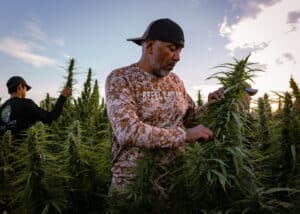
Texas hemp news
In the 1910s and 1920s, police attention to marijuana was concentrated in
border communities and urban barrios where Mexican immigrants lived.

ElPaso’s 1915 ordinance, for example, was championed by lawmen who
explicitly targeted the drug habits of “brown-skinned” newcomers . One El
Paso law official, Chief Deputy Sheriff Stanley Good, argued that officers
had special insight on the issue: “We officers have had the best opportunity
to study the effects of the drug upon the human system,” Good told the El
Paso Herald in 1915 . His implication was clear – trust us, this drug is
destroying people – and newspapers largely took such claims at face value
. In practice, the people being “destroyed” (and arrested) were almost
exclusively Mexican Americans or working-class Mexicans. The folk
nickname for marijuana at the time, “locoweed” or “crazy weed,”
underscored the perception that it was an alien vice of Mexican origin .
By the 1930s, as Texas ramped up enforcement, state prison populations
swelled with minorities convicted under new narcotics laws. Side by side
with imprisoned labor organizers and petty thieves were “significant
numbers of Mexican American men serving time for drug crimes,”
according to historian Curtis Marez . Marez found that “arrests and
convictions of ‘Mexican’ workers for marijuana possession were most
concentrated during the years of, and in the areas with, the highest levels
of labor organization and action” . In other words, crackdowns often spiked
when Mexican migrant workers were agitating for better conditions –
suggesting that marijuana laws became a convenient pretext to round up
“troublesome” Mexicans. The incarceration of Mexican workers for minor
drug offenses (or on flimsy suspicions of use) had a chilling effect: as
Marez notes, jailing people “whether for smoking or striking, made the
workforce as a whole easier to manage.”
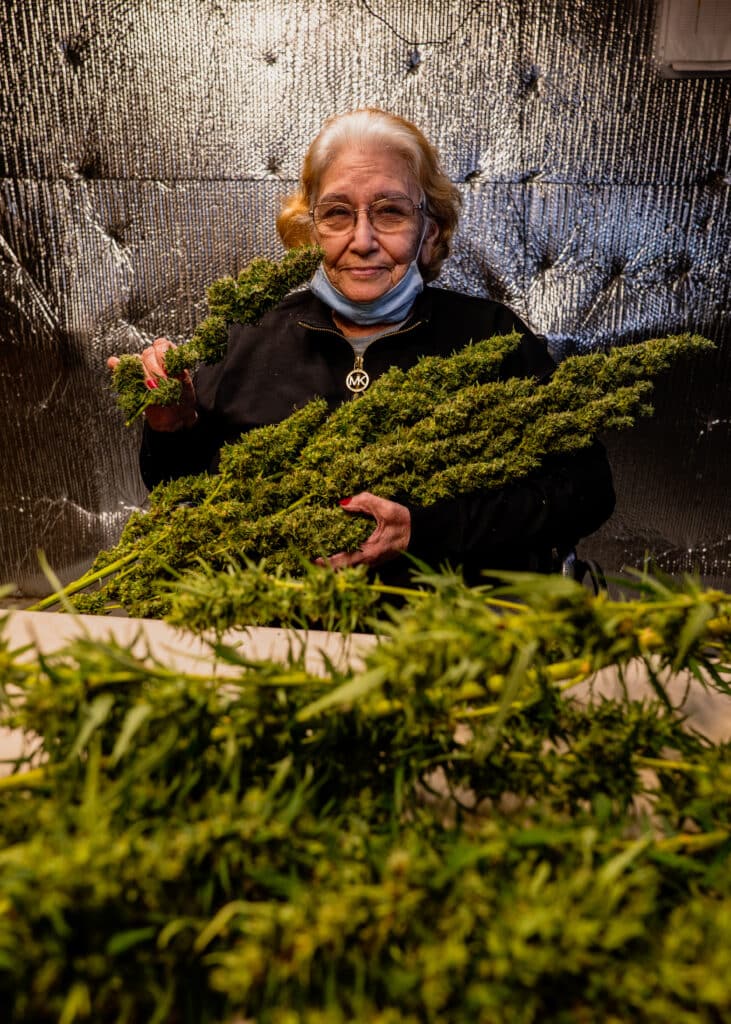

Statistics from mid-century are telling. In Texas counties along the Rio
Grande, the vast majority of marijuana arrests involved Mexican nationals
or Mexican Americans. For instance, archival records from the 1950s in
one border county show nearly 90% of those jailed for marijuana were of
Mexican descent (despite Mexican Americans being a minority of the
overall population at that time). Statewide data was not systematically kept
by race in early decades, but anecdotal reports and newspaper stories
make the pattern plain. When the San Antonio Express wrote in 1923 that
cannabis was used by “lower class Mexicans and to a lesser extent white
people,” it tacitly acknowledged who was most likely to end up in handcuffs.


African Americans were also ensnared by marijuana laws, though in Texas
the early rhetoric focused more on Mexican users. By the mid-20th century,
however, Black Texans too faced disproportionate enforcement. Nationally,
the narrative of the “reefer-smoking Negro jazz musician” took hold in the
1930s, and Texas was not immune to this racist trope . In cities like
Houston and Dallas, police targeted Black neighborhoods for drug raids,
fueled by lurid tales that marijuana fueled crime in the “inner city.” Still, it
was the Mexican community that remained the primary target in Texas
discourse. In 1937, a federal narcotics official openly trumpeted that in the
Southwest, “marihuana influences Negroes to look at white people in the
eye, step on white men’s shadows and look at a white woman twice” – a
blatantly racist appeal – but such statements were often lumped in with
generalized panic rather than singled out in Texas-specific debates.
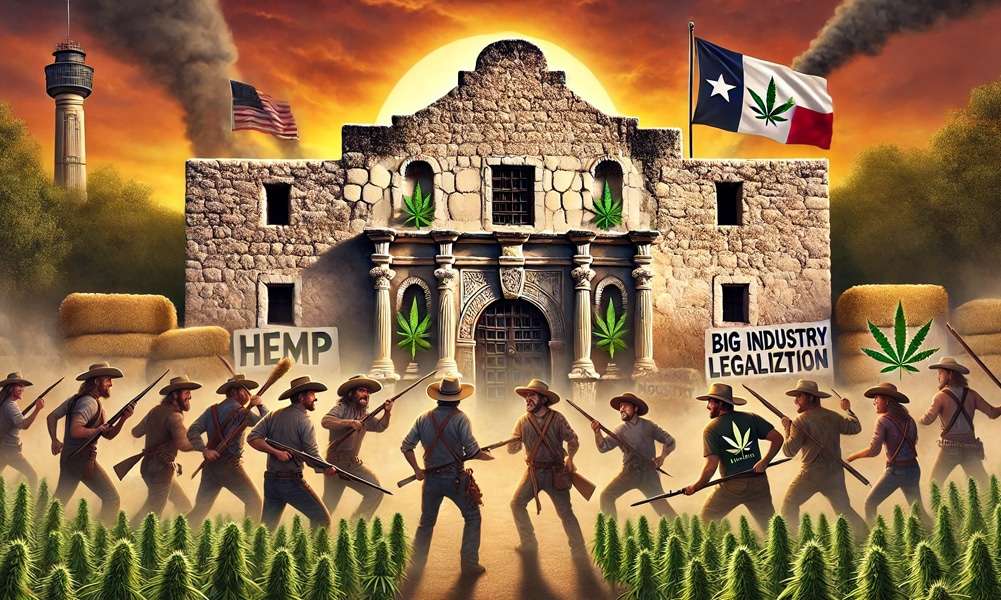

As late as the 1970s, after the civil rights era, racial disparities persisted in
Texas marijuana arrests. In 1972 (just before reform of the law), nearly 75%
of Texans imprisoned for cannabis were non-white, according to a
legislative analysis at the time. And although the 1973 reform reduced
penalties for small possession, in practice police enforcement continued to
burden communities of color most. This pattern only grew more
pronounced during the national “War on Drugs” of the 1980s and 1990s. By
the end of the 20th century, Black Texans were being arrested on cannabis
charges at roughly 4 times the rate of white Texans, despite similar usage
rates – a disparity well documented by civil liberties groups and state arrest
records. In short, from 1915 to 1999, a young minority male in Texas stood
a far greater chance of being arrested, prosecuted, and jailed for marijuana
than his white counterpart, a legacy of bias that began with the drug’s very
criminalization.

Prophets of Prohibition: Politicians, Preachers, and the Press
Who were the people beating the drums for marijuana prohibition in Texas?
A colorful cast of politicians, lawmen, newspaper editors, and moral
crusaders shaped the anti-marijuana narrative. Often, their own words best
reveal why these influencers pushed so hard to ban the “assassin weed.”

Lawmakers and Elected Officials
In Texas’ Legislature, early 20th-century debates around marijuana dripped
with nativism. Perhaps the most notorious line came from an unnamed

state senator who championed the first statewide ban. Speaking on the
Senate floor about marijuana, he thundered: “All Mexicans are crazy, and
this stuff is what makes them crazy.” Such blunt racism drew little objection
at the time – if anything, it was met with nods. That sentiment neatly
encapsulated the legislative motive: it wasn’t the drug’s chemical properties
that alarmed lawmakers, but rather the people associated with it. As one
legal historian summed up the passage of these early laws, “It wasn’t
hostility to the drug; it was hostility to the newly arrived Mexican community
that used it.”


Another influential figure was Mayor Tom Lea of El Paso, who in 1915
presided over the first city ban. Lea, a former lawman himself, warned of an
“absolute necessity” to act against marijuana’s spread . He publicized
police reports of crazed dopers and lent political weight to Sheriff Stanley
Good’s crusade. By invoking public safety and morality, Mayor Lea and his
council gave the prohibition movement respectable civic endorsement
beyond just bigotry. (Lea would later brag that El Paso set a national
example in drug control, a point of pride repeated in Texas political circles
for years.)

At the state level, Rep. Robert F. McMillan of Dallas (for whom the 1923
“McMillan Bill” was named) was a key sponsor tightening the noose on
cannabis. McMillan portrayed marijuana as a lurid vice creeping in from the
border. Though direct quotes from him in archives are scarce, the fact that
his bill sailed through with minimal debate suggests broad agreement with
his position. Another lawmaker, Sen. J. W. Edgar of San Antonio,
introduced one of the bills to stiffen penalties in the 1920s; he cited the
Apolinar murder case in San Antonio as proof that “marihuana” turned men
into monsters (despite evidence that Apolinar wasn’t actually under the
influence). Such political speeches were often heavy on anecdote and light
on science – and nearly all the anecdotes involved Mexican offenders.

By the 1930s and 1940s, Texas politicians found an ally in federal drug
commissioner Harry J. Anslinger – the famous architect of national
marijuana prohibition – whose racism matched their own. Anslinger
routinely corresponded with Texas sheriffs and legislators, swapping
sensational crime stories. Texas Congressmen in Washington, like Rep.
Maurice Sheppard, dutifully echoed Anslinger’s claims that marijuana
caused insanity and urged swift federal action . On the home front,
governors like Pat Neff (1921–25) and later Beauford Jester

(1947–49) positioned themselves as tough on narcotics, supporting strict enforcement.
While not as vocal on weed specifically, they empowered state agencies to
crack down on “dope evils.” Notably, no major Texas politician of the mid-
20th century publicly opposed marijuana prohibition – the issue was
politically one-sided until the late 1960s.

Law Enforcement and the Judiciary
From the beginning, Texas law enforcement officials were some of the
loudest voices calling for marijuana bans. Sheriff Stanley Good of El Paso
can be considered one of America’s first anti-pot crusaders. After
witnessing a string of violent incidents in which he believed marijuana was
involved, Good “went on a campaign to ban marijuana within the city limits”,
even writing newspaper articles to drum up support . “We’ve seen what it
does – it drives men to killing madness,” Good claimed (according to later
retellings). His alarmist testimony to the city council – and likely to state
lawmakers in Austin – painted marihuana as a public safety emergency.
Good’s influence was such that the 1915 El Paso ordinance passed
unanimously, under “suspended rules” as an emergency measure.

Elsewhere, police chiefs and Texas Rangers fed local newspapers a steady
diet of marijuana horror tales. In 1923, a Dallas police captain told the
Dallas Morning News that “the Mexican ganja is as dangerous as opium or
worse” and linked it to a rise in “lustful crimes” (a likely reference to the
racist trope that drugged minorities would prey on white women). Judges,
too, sometimes joined the chorus: one El Paso judge, in sentencing a
young Mexican for cannabis possession in 1920, lamented from the bench
that “this demonic drug is undermining the virtue of our youth.” Such
statements made headlines and reinforced the perception that authorities
were fighting a noble battle against a uniquely evil substance.

Preachers and Moral Reformers
Religious leaders in Texas, particularly in the conservative Protestant
tradition, largely folded anti-marijuana rhetoric into their broader
temperance and morality campaigns. While not all pulpit sermons are
recorded, some clues survive. In 1920, the Baptist Standard (a leading
church newspaper in Texas) ran an editorial linking “marihuana cigarets” to
the same depravity as alcohol, gambling, and jazz music, warning the
faithful that the “poison weed from Mexico” was ensnaring young

Christians. Evangelists traveling the revival circuit in the 1930s would
sometimes mention the dangers of “reefer smoking” in the same breath as
condemning booze and dance halls. One fiery preacher in East Texas
dubbed marijuana “the Devil’s weed”, claiming it “makes a brute of a man in
five seconds” and thanking God that Texas was putting the devil out of
business. Such rhetoric, though less documented than the political or press
material, indicates that many churchgoers were being primed to view
marijuana as a sin and a threat to family and society.

Organizations like the Woman’s Christian Temperance Union (WCTU),
which had successfully pushed for alcohol prohibition, quickly added
narcotics to their agenda. In Texas, WCTU chapters in the late 1920s
endorsed the campaign against cannabis. They circulated pamphlets with
titles like “Marihuana – Assassin of Youth” (borrowing from national
propaganda) and urged lawmakers to protect children from “drug-crazed
Mexicans.” By 1938, one Texas temperance newsletter celebrated that “our
state was among the first to outlaw marihuana, that soul-destroying drug”,
explicitly crediting Christian activism for the victory. The WCTU and aligned
pastors essentially sanctified the anti-marijuana effort as part of God’s
work, giving the movement a moral high ground in the eyes of many
Texans.

Newspapers: Hysteria on the Front Page
If one institution can be credited (or blamed) for stoking moral panic over
marijuana, it is the press. Texas newspapers in the 1910s–1930s published
some of the most vivid, hyperbolic accounts of the drug’s effects—often
blurring fact and fiction in the process.

The El Paso Herald set the tone early on January 2, 1913, with a
sensational front-page story headlined “Crazed By Weed, Man Murders”.
The article began: “Marihuana, that native Mexican herb which causes the
smoker to crave murder, is held accountable for two deaths and a bloody
affray on the streets of Juarez Wednesday afternoon.” It went on to
describe an “unidentified Mexican” who, “crazed by continual use of the
drug,” killed a police officer, wounded another, stabbed two horses and
terrorized bystanders before being shot dead . The lurid details—some
true, some likely embellished—created a template for reefer madness
journalism. Other papers around the state picked up the tale of  the

“marihuana murderer,” and the idea of a killer drug was implanted in the
public consciousness.

Throughout the 1920s, newspapers in Texas routinely referred to cannabis
as the “Mexican loco weed” or “Mexican drug.” The language was often
openly xenophobic. In 1921, after the San Antonio murder case, the San
Antonio Evening News ran the headline “Mexican Killer Had Been Smoking
Marijuana” (despite later evidence he hadn’t). Papers from Houston to Fort
Worth echoed with talk of “dope-crazed Mexicans” and “marihuana fiends.”
The Dallas Morning News, covering a 1928 drug bust, noted those arrested
were Mexicans and asserted, “It is well known that habitual users of
marihuana finally lose their minds and become raving maniacs” (a claim
with no medical basis). These stories rarely included any rebuttal or
scientific perspective; they simply amplified the most frightening claims
from law enforcement.

Even when not reporting specific crimes, Texas newspapers editorialized
vigorously for prohibition. The San Antonio Light in 1931 (quoted earlier)
praised the new state ban, calling marijuana “a dangerous and insanity-
producing narcotic” and essentially equating users with homicidal lunatics .
The Fort Worth Star-Telegram in 1937 ran an editorial supporting the
federal ban, declaring that “the Texan who values the sanctity of his home
should hail the crackdown on the marihuana menace,” linking the drug
implicitly to threats against (white) family and property.

It’s important to note that not all media coverage was hysterical. Some
reporters took a more measured tone: The Austin Statesman in 1923, for
instance, treated the marijuana bill as a minor legislative footnote and
simply explained what the drug was . And as early as 1915, the El Paso
Herald did quote local pharmacists who defended cannabis’s legitimate
uses . But such voices of moderation were submerged by a flood of scare
stories. Sensational media coverage was a hallmark of the moral panic that
engulfed Texas. It created the public pressure and fear needed for
lawmakers to act, and it vilified a plant by consistently associating it with
violence, insanity, and marginalized groups.

Moral Panic on the Border: How Fear Outpaced Facts
The push to criminalize marijuana in Texas exemplifies a classic moral
panic. Sociologists define a moral panic as a period of public anxiety over

an issue perceived as a threat to society’s values and safety, often
disproportionate to the actual danger. Moral panics typically have “folk
devils” – blamed groups who supposedly embody the threat – and “moral
entrepreneurs” – people or institutions that drive the panic and call for
action. By these measures, Texas in the 1910s–1930s was in the grip of a
textbook moral panic over marijuana.

Exaggerated Threat: The rhetoric around marijuana in this era wildly
overstated its effects. Words like “insanity,” “murder,” “homicidal mania,”
and “deadly menace” dominated the conversation . In reality, marijuana’s
pharmacological effects (a mild intoxication, sedation, sometimes
hallucinations) were nowhere near as extreme as portrayed. Yet to read
Texas newspapers or hear officials talk, one would think a single puff could
unleash a bloodthirsty killer. This disproportionality is a key sign of moral
panic. For example, an Agriculture Department report in 1917 – quietly
noting many soldiers in Texas were smoking marijuana with no ill effect –
was completely overshadowed by lurid local stories of “reefer murders” .
Fear, not fact, drove the narrative.

Folk Devils: In Texas, the “folk devils” of the marijuana panic were primarily
Mexican immigrants and Mexican Americans. They were consistently
depicted as the prime users and spreaders of the drug, and thus the source
of the problem. Headlines explicitly tied the drug to Mexicans (e.g.
“Mexican Drug,” “Mexican Dope,” “used by lower class Mexicans” ). The
public was led to believe that if it weren’t for Mexicans, marijuana might not
be a threat at all. This scapegoating meant that Mexican communities
became targets of increased policing and public suspicion. In San Antonio’s
case, an entire minority group was stigmatized as potential murderers
thanks to one crime that was wrongly linked to marijuana. African
Americans, as noted, were secondary targets – often mentioned in the
same breath when discussing “undesirables” who used weed – but the
prototypical marijuana user in the Texas imagination of the time was a
Mexican “degenerate.” This vilification of an ethnic minority through a moral
panic is a pattern seen in other drug scares (e.g., opium with Chinese,
cocaine with Black Americans), and it played out strongly in Texas.
Moral Entrepreneurs: Several key actors served as the drivers of the panic.
Local law enforcement (like Sheriff Good) and politicians (like that state
senator with his “crazy Mexicans” remark ) were primary instigators. They
provided the narratives of danger that the media picked up.

The press then acted as an accelerate – newspapers were the echo chamber that
amplified every claim. Editors who ran headlines about “crazed weed
killers” or editorials about “insanity drug” were classic moral entrepreneurs,
whipping up public outrage and fear. Clergy and civic leaders added moral
weight, framing the issue as a battle for decency and public order. The
convergence of these forces – police, politicians, press, pulpit – gave the
panic legitimacy. When the San Antonio Light and the WCTU and the local
sheriff all agreed that marihuana was an urgent threat, the average citizen
in 1930 had little reason to doubt it.

Public Reaction and Policy Response: Moral panics usually provoke rapid
changes in law or policy – often hastily crafted. In Texas, we see that
pattern clearly. El Paso’s ordinance was passed as an “emergency” with
virtually no opposition . The state laws of 1919, 1923, and 1931 sailed
through the legislature, supported by bipartisan fear-mongering and
minimal debate on actual merits. By 1931, any earlier hesitance was gone;
as one historian noted, alcohol Prohibition had “withdrawn any
philosophical barrier” to banning marijuana too . The public, barraged with
terrifying tales, largely approved these crackdowns or was indifferent. If
there was any constituency against prohibition, it was tiny and voiceless
(perhaps some doctors and pharmacists quietly objected, but to little avail).
Thus, the legal response – criminalizing a plant outright – far outweighed
the demonstrable harm being caused by the drug itself at the time. This is
emblematic of a panic where legislation is driven by perception of menace
rather than reality.

One telling aspect of the marijuana panic was how evidence contrary to the
narrative was ignored or suppressed. When a 1925 U.S. Army study found
that soldiers in the Canal Zone who smoked cannabis did not become
deranged or violent, it was dismissed. When the Texas health department
in the 1930s quietly noted that hospital admissions for marijuana psychosis
were virtually non-existent, no one wanted to hear it. Instead, the state’s
officials doubled down with stories that conveniently fit the panic: e.g., a
Texas Ranger famously claimed in 1937 that five boys in his town had gone
insane from one joint each – a claim presented to Congress with zero
proof, yet it went unchallenged . This willingness to accept anecdotes as
truth and reject expert input is typical of moral panics, where emotions
trump evidence.

In summary, Texas’ early marijuana prohibition was a panic-driven
response. All the classic elements – sensational media, scapegoating of a
marginalized group, exaggeration of the threat, and rapid legal change –
were present. And underpinning it all was something even more insidious:
racism.

Racism and Social Control: The Hidden Agenda
Pulling back the curtain on Texas’ marijuana laws reveals that racism was
not just a side effect – it was a central motive. From El Paso to Austin to
San Antonio, the criminalization of cannabis was entwined with efforts to
control and marginalize Mexican-origin people. The pattern is hard to
ignore: lawmakers and enforcers explicitly linked the drug to Mexicans, and
then used the drug as a pretext to police Mexicans.

At a fundamental level, marijuana prohibition in Texas functioned as a tool
of social control. During the very years that Mexican immigrants and
Mexican American laborers were organizing for rights and growing in
number, marijuana laws provided authorities an easy way to surveil,
harass, and detain them. It is no coincidence that south Texas counties with
active farmworker unions also saw the most aggressive marijuana
crackdowns . Being caught with a pinch of weed – or often, simply being
accused of it – could land a Mexican worker in jail, off the picket line and
away from his community. This dynamic was not lost on contemporary
observers. In 1928, a Texas Ranger testifying about border unrest
commented that the “marihuana habit” made Mexican laborers “idle and
belligerent,” essentially implying that it stoked troublemaking; removing
those users, in his view, helped keep the peace (peace, in this context,
meaning a compliant workforce).

Moreover, many historians point out that Texas’ approach mirrored what
had happened with the opium laws in California against Chinese
immigrants decades earlier . In each case, a drug associated with a
disliked minority was banned and hyped as a public menace, whereas
more familiar drugs used by the white majority (like alcohol or tobacco)
were tolerated until much later. As Smoke Signals: A Social History of
Marijuana observes, “the target of the prohibition was not the drug so much
as those most associated with its use” . That one sentence encapsulates
Texas marijuana policy. A Dallas legislator in 1919 didn’t suddenly develop
a concern for Texans’ lung health or mental health; he was concerned

about the “other” – the foreigners in his midst – and marijuana was a
convenient symbol to rally against.

Racism was blatant in the language used. Describing marijuana as
something that made Mexicans “crazy” or into “maniacs” dehumanized
those individuals, justifying harsh treatment. When the San Antonio Light
casually inserted “[read Mexican]” into its description of a drug addict , it
laid bare the assumption that user = Mexican, Mexican = dangerous. This
dehumanization made it easier for the public to accept that young men of a
certain ethnicity could be locked up for years for the crime of smoking a
plant. Indeed, plenty of white Texans likely felt safer thinking that police
were cracking down in the “Mexican quarter” for whatever reason.

Even after the initial panic subsided and marijuana became a routine part
of the illegal drug landscape, enforcement remained racially skewed. By
the 1950s, if a white high-school kid in an Anglo neighborhood was caught
with a joint, there’s evidence he was more likely to get a warning or quiet
probation, whereas a Mexican American kid in a barrio was more likely to
do time. This selective enforcement kept the racial impact of the laws tilted.
It was an open secret that the law was aimed at certain communities. As
late as 1953, a state representative candidly admitted in a private
committee, “We didn’t have this marihuana problem until those people
[Mexicans] brought it here. I reckon we aim to stop it at the source.” That
“source” was not the plant – it was the people.

To be fair, not everyone who supported marijuana prohibition in Texas was
consciously racist or had ill intent. Some were genuinely worried about
public safety (albeit due to misinformation). And the moral panic had its
own inertia – many ordinary Texans got swept up in it without questioning
the racial narrative. But when we examine the genesis and enforcement of
these laws, it’s evident that marijuana prohibition served as a racialized
form of governance. It gave cover for authorities to raid Mexican homes,
patrol Mexican neighborhoods, and jail Mexican men at a time when overt
racial profiling was socially accepted in law enforcement.

Looking back with a century’s hindsight, the conclusion is difficult to
escape: Texas’ marijuana laws in the 20th century were never really about
a plant’s danger. They were about maintaining a social order. They were
about a dominant group exerting control over a minority group viewed as

threatening or undesirable. The moral crusade was the public face; social
control was the underlying function.

Conclusion: Fear, Prejudice, and Policy
In the story of Texas marijuana prohibition, the ostensible rationale of public
health and safety was largely a fig leaf. The historical evidence – the
timeline of laws, the inflammatory rhetoric, the patterns of enforcement –
shows that marijuana was criminalized less for what it does to the human
brain than for what its prohibition would do for those in power. By
demonizing “marihuana” and linking it to Mexican immigrants, Texas
officials found a powerful tool to sway public opinion and assert authority.
The resulting laws provided a handy method to police minority
communities, suppress potential dissent, and reinforce a racial hierarchy
under the guise of protecting society from a “deadly peril.”

This is not to say that no one in 20th-century Texas sincerely believed
marijuana was dangerous. Many did, but their belief was shaped by a
campaign of misinformation and sensationalism – a moral panic – that was
anything but organic. It was engineered by specific actors with specific
fears and goals. Racism was the common thread weaving through yellow
journalism pieces about “crazed Mexicans,” through legislators’ crude
remarks on the Senate floor, through city ordinances enacted after crimes
blamed (rightly or wrongly) on a Mexican suspect.

Over time, the mythology took on a life of its own. “Reefer madness”
became part of the cultural lexicon, and a plant that had been relatively
uncontroversial in the 19th century was transformed into a symbol of evil by
the mid-20th. Lost in this hysteria were the voices of reason – the El Paso
doctors urging caution, the lack of scientific evidence linking cannabis to
violent crime, the fact that many users (including, ironically, some U.S.
soldiers and presumably some Anglo Texans) consumed it without incident.
But a moral panic doesn’t leave room for nuance.

The legacy of that panic-driven policy is still felt. The disparate arrest rates,
the lives derailed by incarceration, and the lingering stigma around
cannabis in Texas all trace back to the early decision to cast marijuana as a
social boogeyman. And at the heart of that decision was a discomfort with
and prejudice toward the people associated with the drug. As historian
Charles Whitebread observed of the Southwestern bans, “you didn’t have

to look far… right on the floor of the legislature” to see that it was never
really about the drug – it was about the people .
Today, as Texas slowly inches toward possible reform and as the nation
reassesses the War on Drugs, it’s crucial to remember this history.
Understanding that marijuana laws were born in bigotry and fear casts
current debates in a new light. It challenges us to ask: Were these laws
ever truly about protecting society, or were they about controlling a
segment of society? The Texas experience strongly suggests the latter.
Marijuana prohibition, in short, was “a handy instrument to keep the
newcomers in their place,” part of a “web of social controls…mobilized to
police Mexicans” .

In the end, the tale of marijuana in 20th-century Texas is a cautionary one –
a reminder of how easily moral panic can masquerade as public policy, and
how laws ostensibly for the public good can hide a much darker purpose.
As the state continues to grapple with the future of its cannabis laws,
acknowledging the past – however uncomfortable – is the first step toward
crafting more just and rational policies. The smoke of hysteria has begun to
clear, and what emerges is a truth as harsh as West Texas sun: the war on
weed, as waged in Texas, was never just about weed at all.
Sources:

• Lee, Martin A. Smoke Signals: A Social History of Marijuana –
Medical, Recreational and Scientific. (Project CBD, excerpt) .
• Whitebread, Charles. “The Early State Marijuana Laws”
(speech transcript) .
• El Paso Herald, Jan. 2, 1913, p.1 (“Crazed By Weed, Man
Murders”) .
• El Paso Morning Times, 1915 (via 420CPA article) ; El Paso
Herald, June 3, 1915, p.6 .
• Austin Texas Statesman, 1923 (via Shafer Commission report) .
• San Antonio Light, Feb. 1931 (editorial) .
• Marez, Curtis. Drug Wars: The Political Economy of Narcotics
(analysis via Lee) .
• San Antonio Express-News, Oct. 13, 2023 (Timothy Fanning,
“racist origins of San Antonio’s war on marijuana”) .
• U.S. National Commission on Marihuana and Drug Abuse,
Marihuana: A Signal of Misunderstanding (1972) .


Texas Hemp: True Economic Numbers

“Who are you going to believe, me or your own lying eyes?” — Groucho Marx, noted comedian and cigar enthusiast

This week’s release of the Whitney Economics study on the Texas Hemp Industry should have been an eye-opener—at least for anyone willing to acknowledge reality. The more I review the numbers and rhetorics surrounding SB 3, the clearer it becomes that this isn’t about responsible regulation—it’s a deliberate effort to mislead the public and lawmakers while dismantling a thriving industry.

It would be almost laughable if it weren’t so blatant. On one hand, Sen. Perry ignores a vast body of evidence, from thousands of constituent testimonials to gold-standard, peer-reviewed studies demonstrating the safe and effective health benefits of cannabinoids. Instead, he insists that hemp retailers are preying on Texas children, addicting them, and causing untold harm to millions.

At the same time, the Comptroller of Public Accounts’ fiscal note—the official economic impact analysis provided to the legislature—downplays the industry’s contribution to the state, suggesting that Texas hemp businesses generate only $10 million per year in tax revenue. The reality? It’s at least TWENTY TIMES that amount.

So which is it? Is the Texas hemp industry so big, fearsome, and dangerous that it must be slashed down to size? Or is it so small and insignificant that lawmakers can vote to ban its products without fear of economic repercussions in their districts? They can’t have it both ways.

What’s happening here is not policymaking—it’s prohibition masquerading as regulation, built on fearmongering and bad math.


Flawed Fiscal Note: Bad Data, Worse Assumptions

The fiscal note attached to SB 3 is deeply flawed, significantly underestimating the economic impact of the Texas hemp industry. The Comptroller’s office arrived at its revenue projections based on an indefensible assumption: that a small sample of hemp retailers in Austin accounts for 25% of all sales statewide.

There is no data to support this claim, yet this flawed assumption forms the foundation of the state’s economic analysis of SB 3.

By contrast, Whitney Economics conducted a comprehensive, data-driven study of the industry and found:

• The Texas hemp-derived cannabinoid industry generates $5.5 billion annually.

• It employs more than 53,300 Texans, with $2.1 billion in wages.

• It contributes $267.7 million annually in state sales tax revenue.

• The retail sector alone produces $4.3 billion in sales, with manufacturing and wholesale adding another $1.26 billion.


Instead of considering this robust statewide industry, the Comptroller’s analysis relied on tax returns from a handful of vape shops in Austin, assumed those stores represented one-quarter of the entire state’s market, and extrapolated from there.

This is not a credible methodology. It grossly understates the economic fallout that SB 3 will cause.


The True Cost of SB 3

The fiscal note estimates only a $27 million loss in state revenue over two years. But it ignores the full economic impact of dismantling an industry of this scale.

According to Whitney Economics, the actual consequences would be far greater:

• $3.1 billion in lost retail sales

• $194.9 million in lost tax revenue

• 40,201 jobs eliminated

• $1.59 billion in lost wages

• $7.5 billion in total economic losses

This bill won’t just hurt individual business owners—it will have far-reaching economic consequences for:

• Commercial real estate (as retailers shut down storefronts across Texas).

• Supply chains (manufacturers, wholesalers, and logistics providers will be impacted).

• Local economies (thousands of Texans will lose their jobs and spending power).

The fiscal note, by narrowly focusing on direct sales tax revenue, fails to account for these larger disruptions.


Misinformation and Fear Tactics

Beyond the faulty fiscal analysis, SB 3’s backers are relying on scare tactics and misleading testimony to push the bill forward.

When veterans, chronic pain sufferers, epilepsy patients, and other Texans testify about the life-changing benefits of hemp-derived cannabinoids, proponents of the bill deflect by cherry-picking isolated incidents and misrepresenting their significance.

At the Senate State Affairs Committee hearing, I saw this firsthand. A witness gave an emotional testimony about a family member’s death, strongly implying that cannabis was to blame. But when the microphones were off, another witness calmly asked what actually happened.


Her response? “It was drugs, OK?”

This kind of vague, unverified testimony is being weaponized to justify dismantling a legitimate industry. Sen. Perry then seized on this uncorroborated story, using it as justification to attack law-abiding business owners.


This isn’t policymaking—it’s prohibition by way of fearmongering.


The Bottom Line

SB 3 is not about protecting the public—it’s about eliminating a $5.5 billion industry under the guise of regulation. The fiscal note is built on faulty assumptions, and the narrative supporting this bill is driven more by a political agenda than by facts.


Top Ten Prohibitionist Lies

The March 3 hearing showcased the best anti-THC talking points from the 1970’s, 80’s and beyond. Like a hit parade of bogus tunes, here’s the Top Ten Prohibitionist Lies

1. “Marijuana is a Gateway Drug”

• Falsehood: Using marijuana leads people to use harder drugs like heroin or meth.

• Reality: Numerous studies, including from the National Institute on Drug Abuse (NIDA), show no causal link between marijuana use and subsequent hard drug use. The real gateway factors tend to be socioeconomic conditions, trauma, or early exposure to addictive substances like alcohol and nicotine.

2. “Marijuana Causes Violent Crime”

• Falsehood: Legalizing marijuana increases violent crime rates.

• Reality: Crime statistics from states that have legalized cannabis (e.g., Colorado, Washington) show no significant rise in violent crime—and some cities have even reported decreases. In contrast, illegal drug trade violence often decreases when legal markets replace black market sales.

3. “Marijuana Lowers IQ and Makes People Lazy”

• Falsehood: Long-term cannabis use reduces intelligence and destroys motivation.

• Reality: Studies show no significant IQ drop in adults who use cannabis. While adolescent overuse may impact cognitive development, occasional adult use has not been linked to measurable declines in intelligence. Moreover, many successful professionals and creatives openly use cannabis without suffering motivational issues.

4. “Marijuana is as Dangerous as Heroin and Fentanyl”

• Falsehood: Cannabis is a “Schedule I drug” because it’s highly addictive and has no medical benefits.

• Reality: Marijuana is not chemically addictive in the way opioids or nicotine are, and it has established medical benefits for pain, epilepsy, PTSD, and more. In fact, it is far less harmful than alcohol and prescription painkillers.

5. “Legalization Leads to More Teen Use”

• Falsehood: When states legalize marijuana, more teenagers will start using it.

• Reality: Studies from The Journal of the American Medical Association (JAMA) and Colorado Department of Public Health show no increase in youth marijuana use post-legalization. In fact, some states have seen decreases in underage use due to better regulation.

6. “Marijuana Kills Brain Cells”

• Falsehood: Smoking weed permanently destroys brain cells.

• Reality: This myth originated from a flawed 1970s study where researchers suffocated monkeys with excessive cannabis smoke, depriving them of oxygen. Modern neuroscience shows that cannabis affects brain function but does not destroy brain cells.

7. “People Overdose on Marijuana”

• Falsehood: Cannabis use leads to lethal overdoses.

• Reality: There are zero recorded deaths from cannabis overdose. While high doses can cause discomfort, anxiety, or nausea, it does not suppress respiratory function like opioids.

8. “Legal Marijuana States Have More DUIs and Traffic Accidents”

• Falsehood: Marijuana legalization leads to more impaired driving and crashes.

• Reality: While THC can impair driving ability in some cases, overall crash rates have not spiked in legal states. Many studies indicate that drunk driving is a far bigger problem than cannabis-impaired driving.

9. “Marijuana Has No Legitimate Medical Use”

• Falsehood: There is no scientific evidence supporting medical marijuana.

• Reality: Cannabis is FDA-approved for multiple conditions, and studies confirm its effectiveness in treating epilepsy (CBD), chronic pain, nausea from chemotherapy, PTSD, and multiple sclerosis. The U.S. government even holds a patent on cannabinoids for their neuroprotective effects.

10. “Marijuana Legalization Harms the Economy”

• Falsehood: Legal weed will damage businesses and hurt the economy.

• Reality: Legal cannabis is one of the fastest-growing industries, generating billions in tax revenue, creating hundreds of thousands of jobs, and reducing costs related to law enforcement

Skip to content