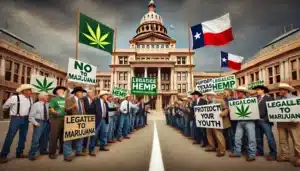
New Mexico’s cannabis history is a story of changing laws, patient advocacy, and a gradual shift from prohibition to regulation. For much of the 20th century, cannabis was treated as an illegal substance under state and federal law, but New Mexico later became one of the first states to recognize its medical potential and eventually legalized adult use.
In the early decades of prohibition, New Mexico followed the national trend toward criminalization. Cannabis possession and sale were increasingly policed, and by the mid-20th century the plant had been pushed out of ordinary medical and agricultural use. Like the rest of the country, New Mexico entered the modern era with cannabis defined more by enforcement than by medicine or commerce.
A major turning point came in 1978, when the state passed the Controlled Substances Therapeutic Research Act. That law created an early state-level medical cannabis research program and signaled that New Mexico was willing to consider cannabis as a legitimate therapeutic option. Although the program was limited and reached only a small number of patients, it laid important groundwork for later reform.
The next major milestone arrived in 2007, when Governor Bill Richardson signed the Lynn and Erin Compassionate Use Act. This law established New Mexico’s modern medical cannabis program and allowed qualified patients with serious medical conditions to obtain cannabis through a regulated system. Over time, the program expanded as more conditions were added and more patients enrolled, making medical cannabis a lasting part of the state’s healthcare landscape.
Local governments also began to soften penalties before statewide reform took hold. Santa Fe decriminalized possession of small amounts of cannabis in 2014, and Albuquerque followed with similar changes in 2018. In 2019, New Mexico lawmakers approved statewide decriminalization of small amounts, reducing the consequences for simple possession and reflecting a broader change in public opinion across the state.
The biggest change came in 2021, when Governor Michelle Lujan Grisham signed the Cannabis Regulation Act. The law legalized adult-use cannabis for people 21 and older, allowed limited home cultivation, and created a regulated commercial market. Legal sales began on April 1, 2022, marking the start of New Mexico’s recreational cannabis era and transforming the state’s relationship with the plant.
Since legalization, New Mexico has built a growing cannabis industry with cultivators, manufacturers, testing laboratories, and dispensaries operating across the state. The market has created jobs, generated tax revenue, and given rise to a distinctly New Mexican cannabis culture shaped by local businesses, small producers, and patient access. At the same time, federal prohibition continues to create challenges for banking, transportation, and enforcement, especially near the state’s borders.
Today, New Mexico’s cannabis history is still being written. The state moved from prohibition to medical access, then to decriminalization and adult-use legalization in just a few decades. That progression reflects the efforts of patients, lawmakers, advocates, and entrepreneurs who helped reshape cannabis policy in New Mexico and turned the state into a leader in modern reform.
Texas Begins Enforcing New Total THC Rule: What the DSHS Crackdown Means for Hemp Retailers
The Texas Department of State Health Services (DSHS) has begun actively enforcing new Consumable Hemp Program rules that dramatically change how THC is measured in hemp products, creating significant consequences for retailers, manufacturers, distributors, and consumers across Texas.
The agency’s enforcement centers on a Total THC calculation performed on a dry-weight basis. Unlike previous interpretations that focused primarily on Delta-9 THC, the new methodology includes THCA after it is converted into Delta-9 THC through decarboxylation—the process that occurs when cannabis flower is heated or smoked.
For much of the Texas hemp industry, this is more than a testing change. It effectively places most THCA flower products outside the state’s legal hemp definition.
The curious timing in this reversal in their approach happened shortly after The Texas Hemp Business Council or (THBC) filed a motion for rehearing. Allegedly, they were not properly enforcing the new rules and that DSHS therefore had waived it. This move was extremely controversial in the Texas Hemp Industry, particularly for those who sell flower. The advocacy lobby team at (THBC) is largely funded by Hometown Hero of which flower is not a product the company sells or offers.
Why It Matters?
Because most hemp flower naturally contains THCA that converts into Delta-9 THC when heated, many products that previously passed compliance testing may now exceed Texas’ legal THC limit.
Retailers carrying smokable hemp products, pre-rolls, and certain concentrates could face increased regulatory scrutiny as DSHS expands enforcement efforts.
The industry argues that these rules fundamentally reshape the marketplace through administrative rulemaking rather than legislative action, and multiple legal challenges continue to move through Texas courts.
What Retailers Should Expect?
As if the water faucet being turned on again and off again multiple times since March 31st… what should Texas retailers expect next?
Businesses should review inventory, certificates of analysis, supplier testing protocols, and compliance documentation while monitoring ongoing litigation that could affect enforcement. Or reach out to their office for further clarification that information is at the end of this article.
The new rules impact:
– THCA flower
– Pre-rolls
– Smokable hemp products
– Testing standards
– Retail compliance requirements
– Product sourcing and inventory decisions
Industry Response
Texas hemp advocates maintain that DSHS has exceeded its statutory authority by adopting a Total THC standard that was not explicitly enacted by the Texas Legislature.
State regulators, meanwhile, maintain that the updated enforcement is intended to ensure products sold as hemp remain within legal THC limits established under Texas law.
The legal battle over these rules is expected to continue throughout 2026 and may ultimately determine the future of the Texas hemp flower market.
Some feel that the flower market in Texas has somehow been hijacked from the TCUP program with the Delta-9 status. But Texas lawmakers are still at least a session or two away from yet offering a smokable flower option.
Blazed Magazine will continue monitoring enforcement activity, court proceedings, and industry response as the regulatory landscape evolves. Businesses with questions regarding compliance should consult qualified legal counsel and stay informed through official DSHS guidance.
For regulatory clarification regarding the Consumable Hemp Program, DSHS identifies:
Jessica Fierros, RS
Manager, Consumable Hemp Branch
Texas Department of State Health Services
Office: 512-231-5656
Cell: 512-217-1319
Email: Jessica.fierros@dshs.texas.gov
This contact information is provided as a public regulatory resource for businesses seeking clarification regarding Texas Consumable Hemp Program enforcement.
At nearly 88 years old, Tommy Chong is still here.
“I’m still here. I’m having fun. I’m really in a really good space now.”
It is the kind of deceptively simple statement only Tommy Chong could deliver with both humor
and gravity. For most public figures, surviving more than five decades in entertainment would be
achievement enough. But Chong’s life has never followed ordinary celebrity trajectories. His
story is not simply one of fame, nor even solely one of cannabis advocacy. It is the story of a
man who repeatedly found himself at the front edge of cultural revolutions long before the
mainstream was ready to embrace them.
Long before cannabis became a polished corporate industry, before celebrities raced to attach
their names to THC brands, before dispensaries transformed into upscale retail experiences,
Tommy Chong was helping dismantle decades of fear, criminalization, and propaganda
surrounding the plant through one profoundly subversive tool: laughter.
Today, Chong remains one of the most significant living figures in cannabis history, not merely
because he consumed the plant, profited from it, or advocated for it, but because he
fundamentally helped reshape how society perceived it.
His life has touched Motown, Hollywood, counterculture rebellion, federal prison, corporate
cannabis, and political hypocrisy. Through it all, Chong remains exactly what he has always
been: authentic, irreverent, and remarkably self-aware.
“I was chosen,” he joked repeatedly during his recent conversation with Blazed Weekly.
It sounds absurd until one examines the extraordinary historical footprint he has left behind.
BEFORE CANNABIS WAS COOL, TOMMY CHONG MADE IT HUMAN
For younger generations raised amid legal dispensaries and normalized cannabis markets, it is
difficult to fully appreciate the social and political hostility that once surrounded marijuana in
America. Cannabis users were not lifestyle consumers.
They were criminals.
Public perception was shaped by decades of weaponized fear, racialized policy, and political
misinformation. Then came Cheech & Chong, whose comedy transformed the cannabis
consumer from societal threat into relatable antihero.
Their records became underground staples. Their films became cultural landmarks. Their humor
pierced through anti-cannabis hysteria with absurdity so effective that it often accomplished what
political arguments could not.
Up in Smoke was not merely a successful comedy. It was one of the earliest mainstream assaults
on prohibitionist mythology, introducing millions of Americans to cannabis consumers as
creative, flawed, hilarious human beings rather than dangerous caricatures.
Tommy Chong did not simply participate in cannabis culture.
He helped humanize it for the masses.
That contribution alone places him among the most important cultural figures in the history of
normalization.
FROM MOTOWN TO COUNTERCULTURE KING
While Tommy Chong’s public identity is deeply intertwined with cannabis, his influence reaches
far beyond it.
Before becoming one-half of the most iconic comedy duo in stoner history, Chong was already
immersed in music culture, working with Bobby Taylor and the Vancouvers during a pivotal era
in American entertainment.
That proximity placed him closer than many realize to the rise of the Jackson 5, a historical
contribution Chong feels has often been erased or minimized.
Speaking on the latest Michael Jackson biopic, Chong was candid in his frustration.
“They have Suzanne De Passe saying she went to Chicago and discovered the Jackson 5. No, no,
that was not true at all. We not only discovered them, but we brought them to Detroit with us.”
He added with equal bluntness:
“Bobby Taylor didn’t exist in the movie.”
For Chong, these omissions represent more than personal slight. They reflect a larger truth about
how history often sanitizes or simplifies the real architects behind cultural shifts.
Throughout his life, Chong has repeatedly occupied this curious space: deeply influential, often
present at pivotal moments, yet frequently under-credited by mainstream historical narratives.
Whether in music, comedy, or cannabis, Tommy Chong often arrived before the culture caught
up.
THE PRICE OF BEING EARLY: PRISON, PIPE DREAMS, AND THE WOLF OF WALL STREET
Being early, however, often comes at a cost.
When federal authorities targeted Chong during Operation Pipe Dreams, his prosecution was
widely viewed by supporters not merely as law enforcement, but as symbolic punishment.
The government was not simply pursuing a businessman selling glass pipes.
They were making an example of an icon.
“It was an honor to go to jail for the messed up law,” Chong reflected.
His imprisonment became one of the clearest examples of America’s contradictory relationship
with cannabis culture during the early 2000s.
Yet even in prison, Chong found strange opportunity.
“I wrote my memoirs when I was in prison.”
Rather than succumbing to bitterness, Chong embraced writing and reflection. In one of the more
surreal intersections of pop culture history, his incarceration also brought him into close contact
with Jordan Belfort, the infamous Wolf of Wall Street.
As Chong recounts it, Belfort would return from tennis, see Tommy writing, and ask what he was
doing.
“What are you doing?”
“I’m writing.”
“You’re writing a book? I’m gonna write a book.”
Initially, Belfort presented Chong with plagiarized pages. Tommy immediately recognized the
theft, called him out, and then offered the advice that would ultimately help shape Belfort’s
future memoir:
“Write all the stories you’ve been telling me every night.”
Belfort listened.
The resulting work became The Wolf of Wall Street.
After Chong’s release, Belfort reportedly drove by his home honking and shouting:
“Hey! My book’s gonna be a movie! Martin Scorsese is gonna be the director!”
Only Tommy Chong could serve as both cannabis martyr and unlikely literary mentor to one of
Wall Street’s most notorious criminals.
THE SECRET SAUCE: WHY CHEECH & CHONG WORKED
Cheech & Chong’s enduring legacy cannot be explained solely through cannabis.
Their brilliance was artistic.
Their chemistry was rooted in improvisation, rhythm, and authenticity.
“We never rehearsed anything,” Chong explained.
That spontaneity became their defining strength. Their now-legendary “Dave’s Not Here” routine
emerged almost accidentally, born from Tommy stalling while setting up recording equipment.
What could have been an ordinary delay became one of the most recognizable sketches in
comedy history.
Cheech’s character work brought unforgettable voice and cultural texture. Tommy’s musical
background provided pacing, rhythm, and structure.
Together, they created an entirely new comedic framework that felt effortless precisely because it
was genuine.
“We’d get an idea, smoke a joint, go eat… then come back.”
That loose creative formula produced platinum albums, genre-defining films, and an enduring
place in global counterculture.
They were not selling rebellion.
They were documenting it in real time.
CANNABIS LEGALIZATION DIDN’T END THE WAR… IT JUST CHANGED THE PLAYERS
As cannabis evolved from outlaw economy to legitimate industry, Tommy Chong’s role evolved
with it.
His expanding business ventures, spanning cannabis products, wellness innovation, and THC
consumer markets, positioned him once again near the forefront of industry growth.
Until regulatory systems intervened.
“It was doing great until Gavin Newsom shut us down.”
Chong described how hemp-derived THC opportunities created enormous business potential
before political pressure and entrenched economic interests once again constricted expansion.
“We were set to sign a big deal… that would have put us in the billion-dollar range.”
For Chong, this was not unfamiliar.
The laws had changed. The business structures had evolved. The players had become wealthier.
But the suppression of cannabis whenever it significantly disrupted established industries
remained strikingly familiar.
Legalization, Chong’s career suggests, did not end the struggle surrounding cannabis.
It simply transformed it into something more sophisticated.
AGING OUTLAW, UNDIMINISHED LEGEND
“My whole body forgets that I’m getting old.”
Few people could summarize aging with such perfect Tommy Chong absurdity.
Yet beneath the humor lies something more substantial.
At nearly 88, Chong remains one of the few surviving public figures whose life directly spans
nearly every major chapter of cannabis history: criminalization, activism, cultural rebellion,
legalization, commercialization, and ongoing political warfare.
He is not merely a celebrity attached to cannabis.
He is one of its last great living historians.
His relevance endures because his life story mirrors the broader trajectory of cannabis itself:
misunderstood, persecuted, commodified, but ultimately impossible to erase.
THE FINAL HIT
Tommy Chong’s legacy cannot be reduced to punchlines, nostalgia, or celebrity branding.
He helped normalize cannabis before normalization became profitable.
He endured punishment before legalization became politically convenient.
He transformed fear into laughter, stigma into humanity, and rebellion into mainstream culture.
Many celebrities now profit from cannabis.
Tommy Chong helped make that world possible.
And nearly nine decades in, he remains what he has always been:
Still here. Still standing. Still one of the last true outlaws of cannabis culture.
Blazed Media Group
Blazed Magazine | Blazed Weekly News
blazed@blazednews.com| http://BlazedNews.com
1104 S. Mays, Suite Round Rock, TX 78664
403 N Richardson Ave, Roswell, NM 88201
512-897-7823 c.| 575-578-4928 o.
The federal government may have just signaled one of the biggest cannabis policy shifts in modern aviation history — and most travelers never noticed it.
In late April 2026, the Transportation Security Administration quietly updated its public-facing travel guidance to formally recognize “medical marijuana” as an item permitted in both carry-on and checked baggage under certain conditions. The change appeared on TSA’s “What Can I Bring?” database just one day before the Department of Justice’s revised Schedule III cannabis policy officially took effect nationwide.
While the update was not accompanied by a press release or public announcement, the timing has raised eyebrows across the cannabis industry, legal community, and medical marijuana markets.
The policy revision follows the Trump administration’s April 23 order signed by Acting Attorney General Todd Blanche, which moved state-licensed medical marijuana and FDA-approved cannabis medications from Schedule I to Schedule III under federal law.
That distinction matters.
For decades, cannabis was federally classified alongside heroin as a Schedule I narcotic — defined as having “no accepted medical use.” The new federal interpretation now acknowledges that state-regulated medical cannabis programs operate within a recognized medical framework, even if recreational cannabis remains federally prohibited.
The TSA’s updated language reflects that evolving federal posture.
According to the agency’s revised guidance:
“TSA security officers do not search for illegal drugs.”
The TSA also reiterated that its primary mission remains aviation safety and threat detection, not cannabis enforcement.
However, travelers should not mistake the update for full legalization.
The agency still warns that if TSA officers discover substances they believe violate federal or local law, the matter may be referred to law enforcement. The final decision at airport checkpoints still rests with individual TSA officers and local jurisdictions.
In practical terms, many cannabis patients and travelers say TSA has already taken a hands-off approach toward small personal-use quantities for years — especially in legal states. The new guidance appears to formalize that reality for state-licensed medical marijuana patients. Still, confusion remains.
The TSA policy does not clearly define quantity limits, documentation requirements, or how officers should verify whether cannabis products qualify under a state medical program. Critics say the federal government has effectively acknowledged medical cannabis without fully explaining how airports are supposed to enforce the distinction between legal medical products and federally prohibited recreational marijuana.
Legal experts continue to advise caution, especially when traveling across state lines or carrying larger amounts of flower, concentrates, or infused products. International travel with cannabis remains extremely risky regardless of state laws.
The broader cannabis industry is now watching the next major federal milestone: the DEA’s June 29, 2026 hearing on wider marijuana rescheduling. That proceeding could determine whether cannabis as a whole eventually moves into Schedule III — a shift that would dramatically impact banking, taxation, stock exchange access, institutional investment, and interstate commerce for the legal cannabis industry.
For now, the TSA’s quiet website edit may represent something larger than a simple travel policy update.
It may be the clearest sign yet that the federal government is slowly preparing the American public — and federal agencies themselves — for a post-prohibition cannabis era.
Tommy Chong joins Blazed Weekly News for a conversation on cannabis, comedy, activism, pop culture, and a
lifetime of changing American history. From Motown to Cheech & Chong to the modern cannabis movement —
this is a legacy interview you don’t want to miss.Note:
I edited in some audio clips from their comedy albums that are not on the
original video episode below. Additionally the Audio here is also cleaned up better than
the video version so we can hear Tommy better.
After the interview: I explain since the recording began before the call started
i had not set the mix minus in the RCP2, so we had to hold the phone near the mic
to prevent a loop-feedback going back to an already hard hearing 88 Chong.
🙂 Enjoy this one guys because he was really comfortable and shares a lot this time.
There are moments in a policy fight when the noise stops working—when all the bluster, press conferences, and scare tactics run headlong into a judge who doesn’t care about any of it and just asks one simple question: what does the law actually say?
April 10 was that moment.
What followed was less a legal argument than a slow-motion collapse. The State’s lawyer looked like a man who brought a water pistol to a cattle drive—outmatched, outgunned, and increasingly aware of it. As the court pressed in, the case didn’t just weaken, it unraveled, failing the most basic requirement of any courtroom: say something with a straight face and back it up.
They couldn’t.
Because when it came down to brass tacks, the trifecta wasn’t even close. The facts weren’t on their side. The statute wasn’t on their side. And the Constitution sure as hell wasn’t on their side.
And a Texas judge noticed.
April 10, 2026 is going to stick. Not because it ends the fight, but because it exposed it. Strip away the politics, put the argument under oath, and the prohibitionist case folded like a cheap lawn chair in an August heatwave.
They didn’t just lose.
They got their hat handed to them.
A Travis County district court issued a Temporary Restraining Order halting enforcement of Texas’ latest hemp rules — a sweeping regulatory scheme that, in plain terms, attempted to rewrite the law without bothering to ask the Legislature. For an industry that has spent years navigating shifting goalposts, administrative improvisation, and the occasional outbreak of outright hostility, this order lands not merely as a procedural win. It’s a judicial rebuke — precise, methodical, and rooted in the first principles of administrative law.
What the State Tried to Do
The core issue, stripped of regulatory camouflage, couldn’t be simpler. Texas law defines hemp using a delta-9 THC concentration threshold of 0.3% on a dry weight basis. That’s the statute. That’s the line the Legislature drew. What DSHS attempted was to swap that framework for a “total delta-9 THC” or “acceptable hemp THC level” standard — a different chemical metric, a different legal universe, achieved entirely through rulemaking.
The court saw through the maneuver immediately. The rules, it found, “effect a substantive change in the governing law through rulemaking rather than implementing the statute as written.” That’s not a technical infraction. That’s a separation-of-powers problem — the kind courts take personally. Agencies are creatures of statute. They implement the law. They don’t rewrite it because they’ve decided they’d prefer a different answer.
Why the Court Moved Immediately
Temporary restraining orders don’t come easy. The standard demands a showing of probable success on the merits and imminent, irreparable harm. The plaintiffs cleared that bar with room to spare.
Enforcement of these rules, the court concluded, would fracture the entire hemp supply chain — manufacturing, testing, transport, retail — and effectively force businesses to shut down, abandon Texas, or face enforcement actions tied to standards no legislature ever authorized. The harm here isn’t hypothetical; it’s operational collapse. Supply chains break. Customer relationships vanish. Goodwill, once gone, doesn’t file a refund claim. These aren’t losses that can be tabulated and made whole later. They’re structural — and that’s precisely why the court found them irreparable.
A Statewide Industry, Not a Niche Dispute
One of the ruling’s more consequential passages is its recognition of scope. Processors, manufacturers, distributors, and retailers all operate within the same regulatory ecosystem. A flawed rule doesn’t stay politely contained — it propagates. Limiting relief to the named plaintiffs would have been a legal gesture, not a remedy. Effective relief required restraining enforcement broadly against similarly situated businesses, and the court said so plainly.
That finding matters beyond the immediate case. It signals that the judiciary understands the scale of what’s at stake here and isn’t prepared to treat a statewide industry like a zoning dispute.
The Public Interest Argument They Didn’t Expect to Lose
Perhaps the most quietly devastating section of the order is its treatment of the public interest — the argument opponents of the hemp industry have been running for years as if it were their exclusive franchise.
The court declined to rent it to them.
Instead, it recognized that consumers across Texas rely on hemp-derived products for legitimate, documented purposes: chronic pain, PTSD, sleep disorders, and as alternatives to alcohol and pharmaceuticals that carry their own considerable risks. Many of those consumers are veterans. The court also acknowledged what any honest policy analyst already knows: removing lawful products from the market doesn’t extinguish demand. It reroutes it — toward less regulated, less safe, or outright illicit alternatives. That’s not an industry talking point. That’s a judicial finding, and it will be difficult to walk back.
What the TRO Actually Does
The order is operational, not symbolic. The state is now restrained from enforcing the rules’ substitution of a “total THC” standard for the statutory delta-9 threshold, along with the enforcement mechanisms dependent on that framework — penalties, product embargoes, and license actions built on provisions the Legislature never passed.
The practical effect is a restoration of the status quo ante — the regulatory environment as it existed before March 31, 2026. Not perfect rules. Not permanent rules. Lawful ones. And for now, that’s enough to keep an industry running.
What Comes Next
A hearing on a temporary injunction is set for April 23, 2026, where the legal questions will be litigated more fully and the state will have its opportunity to defend the rulemaking. But the trajectory is already legible. The court has signaled skepticism grounded in statutory interpretation and administrative law doctrine — skepticism the state will struggle to overcome without retreating from its current position.
The strategic lesson here is simple enough. When the political process gets captured by narrative, the legal system becomes the venue of last resort. When the record is strong — when the facts, the statute, and the economic realities align — courts still function as a corrective. There’s a durable tendency in Texas politics to treat enforcement power as though it were synonymous with legal authority. This order draws a bright line between the two.
The state can regulate hemp. What it cannot do is redefine it. That distinction now sits where it always belonged: in the hands of the Legislature, not in the hands of whoever is running the rulemaking process on any given Tuesday.
Medicare just became the nation’s first large-scale, reliable buyer of hemp — provided you are old enough, sick enough, and compliant enough to qualify. Everyone else — the twenty-something vaping a delta-8 cart in Austin, the Hill Country soccer mom with a bag of sleep gummies — is staring down a federal crackdown capable of erasing most of the existing retail market within a year. That split screen is the essential fact of American drug policy in 2026: Grandma’s CBD has received its federal blessing, while corner-store delta-8 is being fitted for the gallows.
The $500 Olive Branch, and What It Actually Means
On April 1, the Centers for Medicare & Medicaid Services quietly activated a pilot program allowing certain seniors to receive up to $500 annually in hemp-derived products through participating provider groups. Don’t mistake this for a subsidy program or a reward card you swipe at the Buc-ee’s hemp counter. Beneficiaries cannot walk into their local shop, save the receipt, and bill Washington. Instead, CMS will reimburse organizations operating inside select Innovation Center models — ACO REACH, Enhancing Oncology, and LEAD — up to $500 per eligible patient, with those organizations controlling which products are furnished as part of clinician-guided care plans. The federal government is not subsidizing brands. It is commissioning a tightly controlled cannabinoid experiment on its own terms.
The strings attached are considerable. Products must be hemp-derived and remain within the 0.3 percent delta-9 THC limit established by the 2018 Farm Bill, along with a hard cap of only a few milligrams of total THC per serving. Inhalables, synthetics, and anything with obvious intoxicating potential are excluded. Certain patients — those with disqualifying conditions including some substance use disorders and serious pulmonary disease — are carved out entirely. Dollars flow to accountable care organizations and similar entities, not to beneficiaries directly, which means clinicians and administrators control the tap. For Texas seniors, particularly in rural communities, “legal hemp” is about to acquire a respectable institutional twin: doctor-approved, chart-notated, dispensed through credentialed intermediaries rather than the shop on the frontage road.
FDA’s Wink and Nod — and Who It Leaves Out
To prevent the pilot from colliding with existing law on its first day, the Food and Drug Administration issued a new enforcement memorandum focused on Medicare-linked hemp products. The agency has spent years insisting that CBD in food and supplements occupies an unresolved regulatory gray zone. Now it is signaling a narrow pocket of “enforcement discretion” — an official look-the-other-way — when CBD is dispensed under clinician guidance inside CMS models and meets strict safety, labeling, and potency standards.
That carve-out does not extend to the broader Texas hemp marketplace. Retail tinctures, gummies, beverages, and vapes sold directly to consumers remain burdened by the same unresolved FDA questions, patchwork state rules, and ever-present risk that a compliance misstep converts inventory into contraband. Even brands that have invested seriously in rigorous testing, GMP-style production, and responsible labeling gain no special status from the fact that CMS is quietly paying for distant cousins of their products. Washington has blessed cannabinoid use in a narrow, medicalized lane — and left the general market precisely where it was, except for one item buried in a shutdown bill that threatens to blow everything else up.
The 0.4mg Time Bomb
While the Medicare pilot is launching, a separate piece of federal policy is counting down. Buried in last year’s government funding package to end a shutdown, Congress rewrote the federal definition of “hemp” to impose a hard ceiling of 0.4 milligrams of total THC per finished container — in addition to the already-familiar 0.3 percent delta-9 THC by dry weight. Any hemp-derived cannabinoid product exceeding that threshold will, once the law takes full effect, no longer qualify as hemp at all.
The numbers involved are not abstractions. Lawyers and analysts tracking the change warn that the cap would disqualify virtually all existing full-spectrum and intoxicating hemp products, along with a meaningful share of mainstream CBD items that contain trace THC exceeding the 0.4mg floor across a full bottle. Trade groups and beverage-law specialists estimate that 95 percent or more of current ingestible hemp products are over the line. In Texas alone, estimates peg the hemp market at roughly $8 billion, supported by thousands of jobs in farming, processing, distribution, and retail — an industry that would be, in the words circulating through trade commentary, “effectively shut down” if the cap is enforced as written. What was packaged inside the Beltway as a fix to the “intoxicating hemp loophole” looks, from the I-35 corridor, like a controlled demolition of an industry Washington once invited people to build.
Texas: Fresh Off a Victory, Walking Into an Ambush
No state illustrates the whiplash more vividly than Texas. Earlier this year, a hard push to ban hemp-derived THC products — spearheaded by Lt. Gov. Dan Patrick, backed by substantial Republican leadership — ran headlong into a mobilized hemp industry and a governor who ultimately vetoed the ban. The fight was real: hearing rooms filled, phone lines lit up, and small business owners made the case that prohibition would gut a multi-billion-dollar market. When the veto ink dried, many Texas operators concluded they had bought themselves at least a few years of breathing room.
Then came the federal shutdown deal. Buried in that compromise is the 0.4mg cap that accomplishes, at the national level, almost exactly what the failed Texas ban would have accomplished within one state. Nearly all consumable hemp products with any meaningful THC content become unlawful — not just in Houston and Lubbock but in Boise and Buffalo. The same operators who spent months fighting Austin now find themselves on the receiving end of a Washington decision they had virtually no hand in shaping. The sense of ambush is not rhetorical. It is palpable in every industry conversation and in local coverage from San Antonio to Dallas.
A Split Screen Made for Political Conflict
The juxtaposition is difficult to ignore. On one side of the screen, Medicare dips a cautious institutional toe into hemp, allowing clinicians in select models to furnish carefully constrained CBD and low-THC products as part of structured care plans. On the other, Congress and federal agencies have redefined hemp in a way that treats nearly anything beyond a trace as beyond the pale. One program recognizes cannabinoids as legitimate tools for managing pain, sleep, and chronic conditions — provided they arrive small, boring, and physician-mediated. The other treats any cannabinoid product that people actually choose to buy as a loophole to be sealed.
For Texas officeholders, this creates a set of choices that will not stay quiet. Supporting the federal 0.4mg cap means endorsing a Washington compromise that threatens to dismantle an $8 billion in-state industry that their own voters just finished defending against a home-grown ban. Backing the Medicare pilot, on the other hand, means conceding that cannabinoids are legitimate medicine for the very population most likely to appear in Republican primary elections — which undercuts a good deal of the rhetoric used to justify state-level crackdowns. Trying to ignore the contradiction does not make it disappear. Washington is now setting the terms for a sector that Texas policymakers thought they had partially tamed on their own.
Two Experiments, One State on the Line
From a policy standpoint, the United States is running two concurrent experiments. In the Medicare pilot, CMS and its partners will gather data on whether clinician-guided hemp products reduce pain, improve sleep, or lower downstream costs in selected patient populations, using the $500 annual ceiling as both incentive and constraint. In the broader economy, the new hemp definition and 0.4mg cap will test how resilient an industry can be when its core products are redefined into illegality by a few lines in a funding bill nobody was watching closely enough.
For Texas, which embraced hemp as a politically viable middle ground when broader cannabis reform remained a bridge too far, the stakes of both experiments are anything but theoretical. Producers, processors, and retailers were told the rules: test your products, get licensed, pay your taxes, and you can build a durable business under state and federal law. Now they are learning that the most important rule was always subject to renegotiation in a distant capital, with local investment and livelihoods treated as acceptable collateral. Whether Texas responds to that reality with the same ferocity it brought to Austin, or accepts it as the price of playing in a federally defined market, will say a great deal about whose experiment this actually is — and who gets to survive it.
In case you missed it, a new op-ed in the Washington Examiner highlights a critical public-policy issue: the federal prohibition on intoxicating hemp products that Congress passed into law with bipartisan support last November must be fully implemented this year, without delay.
With the U.S. House Committee on Agriculture set to begin markup of the Farm, Food, and National Security Act of 2026 – also known as the Farm Bill – on March 3rd, the intoxicating hemp industry is pushing hard to keep these products on the market.
But as Diane Carlson writes, “the measure passed with a rare bipartisan supermajority of 76 senators. It reflected what harmed families, emergency physicians, leading public health and youth-serving organizations, law enforcement, regulators, and 39 state attorneys general, both Democrat and Republican, had already concluded: this loophole had become a national public-health crisis. It was causing unacceptable harm to children, families, and communities nationwide.”
Carlson, who is the co-founder and national policy director of One Chance to Grow Up, a nonpartisan, nonprofit organization that educates and advocates children’s interests in marijuana policy, goes on to note that “in the “Wild West” of the intoxicating hemp market, there are no age gates, no testing standards, no ingredient disclosures, no warnings. The only assured variable is predictable harm from those building businesses off targeting children and deceiving the public through “dupe” products and false claims.”
Background: A provision signed into law last November will end the nationwide unregulated sale of psychoactive Tetrahydrocannabinol (THC) products disguised as “hemp” or cannabidiol (CBD). These items have flooded gas stations, convenience stores and online marketplaces with gummies, vapes and drinks that can rival marijuana in potency and typically appeal to children. The prohibition is set to take effect this November, but the intoxicating hemp industry is seeking to delay implementation of the law.
The Problem: Since 2018, bad actors exploited hemp regulations to create unregulated, lab-produced intoxicants (gummies, vapes, drinks) with THC levels matching regulated marijuana markets but are sold without age gates, testing standards or ingredient disclosures.
The Harm: The consequences are real. The loophole has contributed to accidental child poisonings, emergency room visits, impaired driving incidents and serious mental health concerns.
Carlson writes “the intoxicating hemp free-for-all led to the rise of accidental child poisonings and injuries, ER visits and hospitalizations, impaired driving, and other serious physical and mental health effects, including acute psychosis that, for some, led to suicide.”
The Solution: The closure doesn’t ban hemp or eliminate CBD – it simply ensures intoxicating products can’t be marketed as “hemp” and sold in easily accessible stores and locations. Implementation cannot be delayed if we’re serious about protecting children and families.
“If a product can intoxicate, it should not be marketed as wellness ‘hemp’ and sold next to everyday candies, snacks, and drinks outside of a voter-approved marijuana dispensary.”
Congress acted. Now the law must take effect on schedule. Protecting kids from unregulated intoxicating products should not be controversial, it should be common sense.
For nearly half a century, Steven Spielberg has used cinema to rehearse humanity for a moment he has never fully shown on screen: official extraterrestrial disclosure.
His protégé, J. J. Abrams, inherited this framework—and in Super 8, echoed it with near-surgical precision. When viewed alongside Close Encounters of the Third Kind, the similarities are not homage alone. They form a blueprint.
The Train Derailment: A Disclosure Trigger
In Super 8, the story detonates when a catastrophic train derailment shatters the calm of a small American town. The military swiftly arrives, sealing off the area, controlling information, and reframing the incident as a public safety concern.
In Close Encounters, the same mechanism is deployed—decades earlier.
The climactic contact event at Devil’s Tower is made possible only after a manufactured emergency: the public is told a train derailment spilled toxic chemicals, justifying evacuation. This false flag clears the area for the rendezvous while Roy Neary and others move toward the truth.
Two films. Same narrative lever.
The train derailment is not chaos—it is logistics. Domestic Normalcy Meets the Impossible
Spielberg and Abrams both anchor disclosure not in the skies—but in the living room.
Super 8
As morning routines unfold, TV news reports the derailment. Children bang toys in the background. When Joe Lamb enters the house, Charles is transfixed by a small black-and-white television broadcasting the crisis.
Close Encounters
Roy Neary watches the same kind of broadcast—alone, desperate, drinking Budweiser—as his family life collapses. The derailment near Devil’s Tower interrupts domestic despair, not adventure.
In both films:
The television is small
The image is grainy
The family is fractured
The truth arrives quietly, not spectacularly
Disclosure doesn’t crash through the roof. It leaks in through the TV.
Toy Trains, Fractions, and Repetition
Spielberg’s visual language is obsessive—and deliberate.
Roy Neary explains fractions to his son using toy train cars, just before offering a choice between Goofy Golf or Pinocchio. The banging of toys punctuates the moment—echoing later scenes of domestic unrest.
In Super 8, Joe Lamb paints model trains in his spare time. The derailment becomes personal before it becomes cosmic.
Model trains are not props.
They are preconditioning tools—symbols of control, order, and derailment. Abrams doesn’t just salute Spielberg here. He repeats the lesson. Loss of Family as the Cost of Truth. Both films are built on trauma. Joe Lamb loses his mother in a sudden industrial accident. Roy Neary loses his family—and eventually leaves Earth entirely. In both cases, disclosure costs something permanent.
This theme deepens when viewed alongside Spielberg’s later autobiographical work, The Fabelmans, where parental divorce is revealed as a defining wound. The same absence echoes through E.T. the Extra-Terrestrial, with Elliott’s father quietly gone—off in Mexico with another woman.
What will that day look like?
Contact is never free.
Truth rearranges families & Children as the Disclosure Constant
Across Spielberg’s universe—and Abrams’ continuation—children are always ready.
E.T.
Super 8
Close Encounters
Even Taken
Adults panic. Institutions lie. While Children adapt. If disclosure happens, Spielberg suggests, it will not break the young—it will expose the old.
Disclosure Day 2026: Cinema or Conditioning?
The question is no longer if disclosure will come—but how it will be framed.
Will it arrive: As a Spielberg-directed return to the genre by cinema’s greatest architect of UFO storytelling?
Or as another government-aligned narrative, laundered through Hollywood to guide public reaction?
Spielberg’s filmography already includes: Close Encounters, E.T. , War of the Worlds , Indiana Jones and the Kingdom of the Crystal Skull, A.I. Transformers, Men in Black (producer), Amazing Stories, & Taken to name a few.
Decades of preparation. Decades of normalization.
Final Thought
Spielberg never taught us to fear aliens. He taught us to fear being lied to. If Disclosure Day comes, it won’t look like a blockbuster. It will look like a news report…playing softly in the background…while families argue in the next room. The only remaining question is whether Spielberg will finally show us the moment he’s spent a lifetime preparing us to see.
Well, Texas did it again. A federal judge just told a couple of hemp shop owners in Abilene,
“sorry folks, you’re on your own.”
Here’s what happened. Brennon and Brittany Manske run CBD House of Healing. Like a lot of
Texas hemp businesses, they’ve been trying to carve out a place in this messy, confusing market
since the 2018 Farm Bill supposedly made hemp products legal. They built their shop around
CBD and other hemp-derived products, kept their shelves stocked, and had customers who relied
on them.
Then, in August, Abilene police showed up with a search warrant. Officers raided the place and
walked out with roughly $400,000 worth of products. The Manskes say the raid was based on
misinformation, bad testing, and outright lies. They argue every single item taken was federally
legal hemp.
So they sued. They asked a federal judge to step in and order the city to give their inventory back
and stop any more raids. Because let’s be honest, when you lose nearly half a million dollars in
merchandise, it’s not just a setback. It is a death sentence for a small business.
But Judge James Wesley Hendrix said no. He ruled that it is not the federal court’s job to
interfere with ongoing state criminal proceedings. He called the request for a temporary
restraining order “an extraordinary remedy” and basically said, “come back when the state case
is over.” And in his view, financial loss does not count as irreparable harm. As for reputational
damage, the judge said that is speculative at best.
That is a tough pill to swallow. Imagine having your entire store cleaned out, customers left
wondering if you are even legitimate, and being told, “Don’t worry, you can fight it later.” By
then, later might be too late.
Now let’s talk about the so-called evidence. The raid relied on field kits from Safariland and lab
results from National Medical Services. Both have a reputation for overestimating THC levels.
These tests have been criticized for years. They are unreliable, inconsistent, and often flat-out
wrong. According to the lawsuit, one of the very officers involved in the raid even admitted the
tests were not solid while the raid was happening. Yet somehow, those results were enough to
justify wiping out a local business.
(Store Raids and Check ups by Law Enforcement have Increased in Recent Years as Lt. Gov Dan Patrick'sCrusade against Federally Legal Hemp Products were stepped up after the 89th Legislative Session began.)
And the Manskes are not alone. Another shop owner, Nate Shahbain, joined the lawsuit. He has
not been raided yet, but he is looking over his shoulder every day, wondering when it is his turn.
That is what this kind of enforcement does. It spreads fear through an entire industry.
This is the bigger problem: the disconnect between federal and state enforcement. The 2018
Farm Bill said hemp was legal if it contains less than 0.3 percent delta-9 THC. That should have
been clear. But in Texas, local police departments have taken it upon themselves to interpret and
enforce the rules however they see fit. We have seen it with smokable hemp bans. We have seen
it with THCA crackdowns. And now we are seeing it with raids based on junk science.
It creates a patchwork where your business can be perfectly legal on paper and still be treated
like a drug den if the wrong cop decides to test your products with the wrong kit. And let’s be
honest, if those kits were accurate, we would not have half the wrongful arrests and lawsuits we
have seen across the country.
So where does this leave the hemp industry in Texas? On shaky ground, as always. The judge
made it clear the Manskes will have to keep fighting in state court first. Their products stay
locked up in an evidence room, their shop struggles to stay open, and their customers are left
without access.
For the rest of the hemp retailers out there, the message is pretty clear: you are on your own.
Federal law will not save you. Local politics will steamroll you. And even if you can prove you
were right all along, by the time the courts sort it out, your business might not survive.
That is the reality of doing business in Texas right now. Hemp is legal, but only until someone
with a badge decides it is not.
Austin, TX – State legislators are considering a ban of the sale of all consumable hemp products, leaving the cannabis industry and cannabis advocates in the State of Texas in an uproar.
New cannabis legislation threatens to dismantle a $5.5 Billion industry by bringing an end to the sale of all consumable hemp products in Texas.
This will affect over 10,000 businesses in Texas according to the latest estimates, and over 55,000 jobs will be lost.
“We haven’t abused any loopholes in legislation, because we did not write the legislation nor were we asked to help or assist in the regulations” states Ahmad Alnajjar, owner of Trippiez Smoke Shop. “Everything we have sold and produced has been federally legal with the recent federal farm bill guidelines. We want safety like the legislators do, we WANT proper regulation to ensure safety, abide by the law, and provide the right products for millions of Texans who rely on this as much as we rely on them.”
With five locations in Austin and plans to open an additional location soon, Trippiez Smoke Shop will definitely feel the burn when this legislation is enacted. Imposing fees, creating criminal offenses, and providing an administrative penalty for violations is the primary objective of the new legislation. TX SB3 is sponsored by several members of the state Senate and championed by Lt. Gov. Dan Patrick. Texas legalized hemp-derived products in 2019, but according to the Lt. Gov., retailers have abused this by selling products with a THC level of above 0.3%. CBD and CBG products are exempt provided that they are registered, plainly labeled and in resealable, child-proof containers.
“All the businesses who follow regulations are being punished for the very very few businesses who act carelessly”, protests Alnajjar.
The concerns of those owners who will not have to close their doors is significant, as well. Adjustments will have to be made such as cutting labor costs, and profit will be lost on surplus hemp-derived inventory if not sold before the allotted grace period.
The March 3 hearing showcased the best anti-THC talking points from the 1970’s, 80’s and beyond. Like a hit parade of bogus tunes, here’s the Top Ten Prohibitionist Lies
1. “Marijuana is a Gateway Drug”
• Falsehood: Using marijuana leads people to use harder drugs like heroin or meth.
• Reality: Numerous studies, including from the National Institute on Drug Abuse (NIDA), show no causal link between marijuana use and subsequent hard drug use. The real gateway factors tend to be socioeconomic conditions, trauma, or early exposure to addictive substances like alcohol and nicotine.
• Reality: Crime statistics from states that have legalized cannabis (e.g., Colorado, Washington) show no significant rise in violent crime—and some cities have even reported decreases. In contrast, illegal drug trade violence often decreases when legal markets replace black market sales.
3. “Marijuana Lowers IQ and Makes People Lazy”
• Falsehood: Long-term cannabis use reduces intelligence and destroys motivation.
• Reality: Studies show no significant IQ drop in adults who use cannabis. While adolescent overuse may impact cognitive development, occasional adult use has not been linked to measurable declines in intelligence. Moreover, many successful professionals and creatives openly use cannabis without suffering motivational issues.
4. “Marijuana is as Dangerous as Heroin and Fentanyl”
• Falsehood: Cannabis is a “Schedule I drug” because it’s highly addictive and has no medical benefits.
• Reality: Marijuana is not chemically addictive in the way opioids or nicotine are, and it has established medical benefits for pain, epilepsy, PTSD, and more. In fact, it is far less harmful than alcohol and prescription painkillers.
5. “Legalization Leads to More Teen Use”
• Falsehood: When states legalize marijuana, more teenagers will start using it.
• Reality: Studies from The Journal of the American Medical Association (JAMA) and Colorado Department of Public Health show no increase in youth marijuana use post-legalization. In fact, some states have seen decreases in underage use due to better regulation.
• Reality: This myth originated from a flawed 1970s study where researchers suffocated monkeys with excessive cannabis smoke, depriving them of oxygen. Modern neuroscience shows that cannabis affects brain function but does not destroy brain cells.
7. “People Overdose on Marijuana”
• Falsehood: Cannabis use leads to lethal overdoses.
• Reality: There are zero recorded deaths from cannabis overdose. While high doses can cause discomfort, anxiety, or nausea, it does not suppress respiratory function like opioids.
8. “Legal Marijuana States Have More DUIs and Traffic Accidents”
• Falsehood: Marijuana legalization leads to more impaired driving and crashes.
• Reality: While THC can impair driving ability in some cases, overall crash rates have not spiked in legal states. Many studies indicate that drunk driving is a far bigger problem than cannabis-impaired driving.
9. “Marijuana Has No Legitimate Medical Use”
• Falsehood: There is no scientific evidence supporting medical marijuana.
• Reality: Cannabis is FDA-approved for multiple conditions, and studies confirm its effectiveness in treating epilepsy (CBD), chronic pain, nausea from chemotherapy, PTSD, and multiple sclerosis. The U.S. government even holds a patent on cannabinoids for their neuroprotective effects.
10. “Marijuana Legalization Harms the Economy”
• Falsehood: Legal weed will damage businesses and hurt the economy.
• Reality: Legal cannabis is one of the fastest-growing industries, generating billions in tax revenue, creating hundreds of thousands of jobs, and reducing costs related to law enforcement