There is a crossroads in the hemp industry where many stakeholders clash. Some business owners and investors believe synthetic THC products should remain on the shelves. Others would like to see the state issue a total ban on synthetics.
Synthetic cannabinoids are a source of confusion for many, including lawmakers who will gather at the Texas Capitol for the 89th Legislative Session in January.
The general lack of understanding regarding synthetics is concerning for Texas Farmer Aaron Owens, especially because Texas is on track to mull over Delta 8 (D8) and Delta 9 (D9) THC this session. When the state legislature last convened in 2023, lawmakers did not address hemp, which remains loosely regulated.
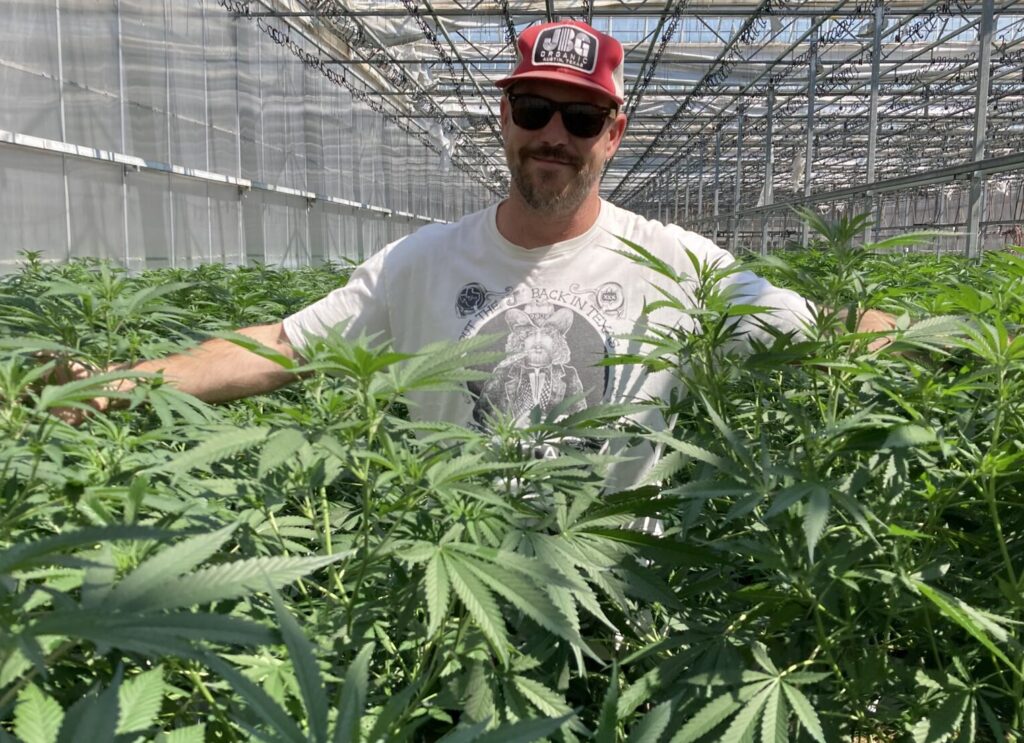
Owens, founder of Dripping Springs-based Tejas Hemp and Tejas Tonic, said ignorance surrounding synthetics could have dire consequences for hemp, causing lost progress industry-wide.
“You’ve got the politicians who just don’t know any better,” he says, “It seems unfair to ask politicians to become chemists overnight. They are just not in tune with the details and differences between the naturally occurring and extracted cannabinoids vs. those that are synthetically manufactured. Many are under the impression that different forms of THC are just different varieties of plants. This is a misconception.
“There is only one version of THC that can be extracted from hemp plants in normal industry conditions, and that’s the old-fashioned kind: Delta 9 THC. The industry has been allowing this misconception; some knowingly, many not knowingly. The result is an understandable frustration. The risk is losing the whole industry overnight through returning to full-blown prohibition. We want regulation, not elimination.”
Owens’ fears seem legitimate, as 2024 saw states across the country move to restrict hemp.
In September, California Governor Gavin Newsom issued an emergency order to ban consumable hemp products with any detectable amount of THC. While the order expires in 2025, Newsom said it offers an interim solution to hold bad actors accountable while lawmakers work on new legislation.
On the other side of the nation, Ohio is facing a bill that would ban intoxicating hemp products statewide. In 2023, Ohio legalized adult cannabis use. According to the bill’s language, cannabis is not considered an intoxicating hemp product, and it will not be affected if a ban is passed.
At the federal level, the Mary Miller Amendment was passed by the House Agricultural Committee in May and aims to change the Farm Bill’s current definition of hemp to include naturally occurring, naturally derived and non-intoxicating cannabinoids. Cannabis Attorney Rod Kight, a regular contributor to Texas Hemp Reporter, said its final passage would kill the entire hemp industry.
To stakeholders like Owens, such drastic measures highlight politicians’ mass confusion surrounding the plant.
“I have a friend that called me one day to tell me his granddaughter was in the emergency room. She took an over-the-counter 20mg THC gummy. Turns out it was a 20mg THCP gummy. Well, she nor anyone I have ever heard of has ever had experience with THCP. That’s because THCP is another synthetic THC that was created at scale for the first time just after the Delta 8 craze of 2021. Its effects are significantly stronger than normal plant-derived THC. Of course, she is okay, but not without a big scare and likely a hefty medical bill.
“It’s just unnecessary, in my opinion. What is the purpose of these synthetic isolates? To benefit the user’s well-being? Or is it more like the seller’s pocketbook? Just remember though — not all who sale these products know all these details, nor have mal intention. This is where responsible regulation comes in to benefit the wellbeing of our patrons, which is really what’s most important.”
Earlier this year, the Texas Senate’s State Affairs Committee heard testimony regarding D8 and D9. At the May 29 hearing, witnesses from both sides of the aisle offered opinions. While supporters touted the plant’s medicinal and economic benefits, naysayers expressed concerns about loved ones who experienced cannabis-induced psychosis.
Owens feels a mandate for naturally derived products would help eliminate the horror stories surrounding hemp. He also claims, “The economic opportunities of naturally occurring plant-derived THC are not only more than present but also come with a proven history of consistency at dosage, as well just flat out not hurting people (and not to mention would actually put farmers like me back to work).”
The path to synthetics: How did we get here?
According to Vote Hemp’s 2019 Hemp License Report, the United States had 511,442 licensed acres of hemp in 2019, a 455% year-over-year increase. These numbers depict the exponential industry growth that took place after the federal Farm Bill was passed in 2019, which made hemp farming legal.
Owens said that in order to provide the whole United States’ demand with CBD for one year at that time, we only required a meager 8,500 acres of hemp production, and with supply far exceeding demand, many industry investors lost everything.
“Unfortunately, the commodity complex occurred and drove the value of CBD so low that it became worth less than what it cost to process. So what now were they to do with all that hemp?” Owens said. “Some burned it, others threw it away, but the majority made CBD isolate.”
CBD isolate is a pure form of cannabidiol (CBD). It is one of over 130 known cannabinoids — or active compounds — found in the cannabis plant. CBD is not psychoactive, so it does not cause a high for the user. However, research shows it can offer many therapeutic benefits.
Isolating CBD from the hemp plant’s other cannabinoids is achieved through a variety of processing methods, including chromatography (read about that here).
How are synthetics made?
Once the CBD is isolated, a chemical process, often referred to as an acid wash, is used to convert the CBD into either Delta 8 or Delta 9 THC, which are both psychoactive cannabinoids. Essentially, the conversion takes a nonpsychoactive cannabinoid and turns it into a psychoactive one.
“So what happened next was truly a creative solution to a financial pressure, as well a political workaround: Delta 8 THC was created. The CBD isolate was converted to Delta 8 THC, which being unregulated, became the fast path to recouping capital exposures. It also provided a useful path to market all of the surplus of Industrial Hemp from 2019,’” Owens said. “It happened because we had a surplus of a supply that needed to be monetized, as well because let’s face it, people want THC, and that’s not a bad thing.”
What is the difference between D8 and D9?
According to Owens, the polarity of the acid being used, meaning if it were naturally either positively charged or negatively charged, can drive whether the final product is a Delta 8 or a Delta 9 THC.
D8 only occurs naturally in trace amounts in the cannabis plant.
“There is no question about it: all Delta 8 THC in the market is synthetic, period,” Owens said.
Because D9 occurs more abundantly in cannabis, it’s a toss-up whether products in the market contain synthetic or naturally occurring D9. Unfortunately, most current laboratories do not specify whether the D9 molecule is natural or synthetic.
“It is not likely that brands are going to tout that their D9 THC is synthetic on the label and to be quite honest, the majority are not likely to even know,” Owens said. “If you want to discern whether what you are consuming is a naturally occurring D9 THC vs synthetic, you can look on the COA for something very specific. If all that is there is D9 THC and CBD, you are holding a product made with isolates; and if there is even the smallest little touch of D8, then 100% it’s a synthetic. If the report shows ZERO D8 THC, as well presence of other minor cannabinoids, like CBG, THCV, CBDV, or CBC for example, then there’s your sign the material is natural and from a plant.”
Users should always read product labels and laboratory Certificates of Analysis (COAs) to know what they are consuming. Many products include a QR code on the label that directs to its corresponding COA.
Whether synthetic or natural, both D8 and D9 can be infused into vape juice, beverages, gummies and many other products that can lead to intoxicating effects. However, when it comes to smokable hemp flower, synthetic compounds are often sprayed onto buds to make them intoxicating. “Not Good,” is Owens’ only comment on this.
Should lawmakers ban synthetics?
Owens said all of Tejas’ products are naturally derived and gives several reasons why he takes a personal stance against synthetics.
1. Synthetics take away from farmers
First and foremost, Owens says synthetics have stolen the potential for agriculture, for farming, an industry the Federal Government intends the Farm Bill is in place to help.
“The Texas Department of Agriculture created a program to stimulate farmers, but now the market is riddled with synthetic products that are created for pennies on the dollar, and removed 99% of the opportunity for local agriculture to be a viable practice. What about us farmers?”
2. Unprecedented consumption lacks research
With a lack of research on the impacts of consuming high concentrations of isolated or synthetic compounds, no one knows what the long-term implications could be.
“None of this has been consumed in these concentrations ever in the history of time,” Owens said.
3. The supply chain is questionable
Consumers may assume they are purchasing American-sourced products when, in reality, they could be buying cheaper, subpar versions of active ingredients sourced from abroad. Unknown manufacturing requirements and quality control standards can pose a safety risk. Hence the desire for responsible regulation.
“Do you think all pure CBD or converted molecule that enters the American market was taken from a hemp plant? How about if it did come from a hemp plant, do you think it was grown on American soil? The entire synthetics supply chain is likely not even in our country at this point,” Owens said. “Industrial agriculture costs often boils down to labor. We all know there are many countries abroad that have cheaper labor than the U.S.”
Some may also attempt to mimic cannabinoids with unsafe products like the infamous designer drug JWH-018 — also known as K2 or Spice. The active ingredient travels the same neural pathways as THC and can be masqueraded as D8 or D9.
“A handful of years back, a synthetic version of the psychoactive cannabinoid JWH-018 was being mailed to the US from China. People were spraying this on herbs and selling so people could get high and not fail a drug test. It did not go well, and was ultimately outlawed. Good Decision,” Owens said. “We don’t need synthetics when the plant is already offering us everything we need and desire, plus the many, many more benefits that haven’t yet had time to be discovered.”
4. Naturally derived cannabis offers far-reaching benefits
Owens hopes lawmakers will consider the plus side to the plant this session.
-
Hemp plants remediate soil, meaning they remove contaminants. This means the plants themselves actually remove heavy metals, residual pesticides, and all types of unhealthy materials from our soil as they grow. This even includes nuclear waste!
-
Hemp can be produced in a much shorter time than other traditional crops, and therefore requires less water than other crops overall.
-
Research is continually emerging on hemp’s medicinal benefits.
-
Hemp offers a multitude of industrial application opportunities.
-
Hemp offsets greenhouse gas emissions by removing carbon from the air.
-
Hemp plants put oxygen back into the air.
“The whole life cycle of the plant benefits our whole world,” Owens said.
5. There’s something missing
Whether isolates are synthetic or not, Owens said the plant’s entourage effect can not occur without the other cannabinoids and terpenes present. Terpenes, found within the hemp plant’s essential oils, are the compounds that give hemp and cannabis strains their unique smells and flavors.
The entourage effect hypothesizes that all minor cannabinoids interact synergistically with THC, as well as the essential oils, to modulate the overall psychoactive effects of the plant while maximizing the medicinal benefits. Therefore, Owens views full-spectrum products with all compounds intact as superior.
He uses a football analogy to illustrate his point:
“In marijuana, THC is the quarterback and CBD is the tailback. In hemp, CBD is your quarterback and THC the running back,” he said. “There are over 130 known cannabinoids to complete the rest of the team. Then the essential oils, which include the terpenes, which are like your cheerleaders. If you bring your Hemp product to the table with nothing more than a quarterback and a running back, how effective do you think they will be vs. a product that has over 130 people on their team and with the support of their cheerleaders as well? The naturally occurring cannabinoids and terpenes all together win every time — there’s really no question.”
Without the entourage effect, Owens believes consumers do not experience the plant’s full therapeutic potential.
“Are we trying to get people high or are we trying to help people? Healing properties are not coming from a synthesized isolate, period,” he said.
The other side of the coin
Since D8 products became widely available, supporters say they have used them to help alleviate anxiety, panic attacks, nausea, stress, depression and chronic pain. The U.S. Food and Drug Administration has documented some adverse effects as well, including hallucinations, vomiting, tremors, anxiety, dizziness, confusion, and loss of consciousness.
D8 is sometimes referred to as “weed lite.” Some users prefer it because, while it produces a high, it is not as strong as D9 at the same dosage.
Because D8 has gained so much popularity, many business owners have been vocal about continuing to sell the products in their stores. According to Forbes, D8 generated $2 billion in revenue during its first two years of being legal.
“Of course they did, and of course they are; because natural D9 THC was not available. Now it is, so why do we need a workaround?” Owens said.
Will 2025 be a grim year for hemp in Texas?
According to federal law, the Farm Bill must be reviewed and renewed every five years, meaning the 2018 version should have been revisited in 2023. However, lawmakers have punted the issue down the road by extending the 2018 Farm Bill, which is set to expire on Dec. 31.
As Texas’ legislative session approaches, “Regulation, not elimination” is a mantra ringing through the industry, and Owens believes banning synthetic cannabinoids is the best path forward.
“The solution is to ban synthetics and make it to where you can only sell what you can extract from the plant, not to mention allowing the political authorities a chance to focus on regulating just one thing. That’s so much more reasonable,” he said.
Synthetics aside, most stakeholders are in favor of common sense regulations, such as:
-
Age gating: As it stands today, stores can legally sell hemp products to minors. However, most store owners self-regulate, taking it upon themselves to turn away customers who are under 21. Many products, like Tejas Tonic, say “21 and up” on the label.
-
Packaging restrictions: The design of product packages should not appeal to children.
-
Regulating the proximity of smoke shops to schools: In Texas, a liquor store can not operate within 300 feet of a school, and smoke shops could be regulated the same way.
Ultimately, it’s too early to predict how the state legislature will move on hemp this session. One thing is for certain, though: If Owens has it his way, responsible regulation of D9 THC from an actual hemp plant will enable the future, and synthetics will be a thing of the past.


