Tag: Dan Patrick

Twin Bills, One Goal: Sweeping Hemp Crackdown

Why HB 5 Mirrors SB 5.


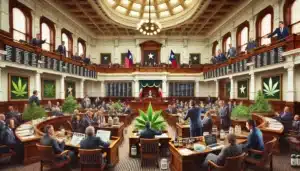
A second shoe has dropped in the Texas Legislature, and it has the same number as the first. House Bill 5, filed by Rep. Gary VanDeaver during the first called session of the 89th Legislature, is a word-for-word duplicate of Senate Bill 5 by Sen. Charles Perry. The filing sets the stage for what appears to be a coordinated attempt by legislative leadership to force through a prohibitionist overhaul of the state’s hemp market with unprecedented speed and severity.

The significance of the bill number cannot be overstated. In the Texas legislative process, bills are numbered sequentially as they are filed. But the first ten or so slots in each chamber are traditionally held for measures that reflect leadership priorities. HB 1 is the state budget. SB 1 is its Senate counterpart. When the House and Senate each file a bill with the same number, and the text of those bills is identical, it is a clear signal to members, lobbyists, and stakeholders that the bills are being coordinated at the highest levels and are intended to move in lockstep.

In this case, HB 5 and SB 5 do more than signal urgency. They mark an aggressive attempt to criminalize nearly every cannabinoid product currently legal under Texas law, with almost no exceptions. The text of the bills prohibits the manufacture, sale, or possession of any consumable hemp product containing any cannabinoid other than cannabidiol (CBD) or cannabigerol (CBG). This prohibition includes popular products containing Delta‑8 THC, Delta‑9 THC derived from hemp, THCP, HHC, and other minor cannabinoids that make up a significant portion of the Texas hemp industry’s product line.

Both bills introduce criminal penalties that go well beyond regulatory oversight. Manufacturing or distributing non-compliant products would constitute a third-degree felony. Possession would become a Class C misdemeanor, escalating with repeat offenses. For retailers and consumers alike, the consequences of noncompliance would be swift and harsh. There is no grace period for existing inventory, no allowance for naturally occurring trace cannabinoids, and no scientific standard for impairment or threshold-based enforcement.

Moreover, the regulatory framework proposed by HB 5 and SB 5 imposes punitive financial burdens on businesses. The legislation requires a $10,000 licensing fee for each location where hemp is processed or products are manufactured. It sets a $20,000 annual registration fee for every retail location selling hemp-derived products and imposes a $500 registration fee for every product SKU offered for sale. These costs are not marginal. They are designed either to force small operators out of the market or to consolidate the industry under a few large, well-capitalized firms that can absorb the costs and navigate the bureaucracy.

Every product must be tested using high-performance chromatography by a DEA-registered, ISO-accredited lab located in Texas. Each item must carry a QR code linking to the Department of State Health Services registry. Law enforcement is granted inspection authority over all retail locations, and business owners must grant written consent to allow DPS or local law enforcement to conduct physical inspections of their premises at any time. In short, compliance is not a path to security—it is an ongoing vulnerability.

In parallel, both bills include sweeping marketing and packaging restrictions. Products may not resemble candy, use cartoon images, reference medical use, display green crosses, or imitate brands familiar to minors. While the goal of reducing youth access is a legitimate one, the enforcement mechanisms are overbroad and leave room for arbitrary interpretation.

Perhaps most disturbingly, the bills do not provide for exemptions for patients, veterans, or those who rely on hemp-derived products for pain relief, sleep, anxiety, or seizure control. There is no carve-out for Texas Compassionate Use Program patients. The state’s medical cannabis program remains limited to a narrow list of qualifying conditions and a short roster of licensed operators. HB 5 and SB 5 do not bridge this gap. They widen it.

Governor Abbott’s veto of SB 3 earlier this summer made clear that he does not support total prohibition. In his veto statement, he emphasized the importance of protecting consumers, regulating intoxicating products, and preserving the legal hemp market created by the Legislature in 2019. Abbott called for age restrictions, labeling rules, validated testing, and a framework that supports—not destroys—Texas hemp businesses.

HB 5 and SB 5 ignore that directive. Their drafters appear to be daring the Governor to veto again or challenging the House to rubber-stamp the Senate’s punitive approach. Whether this strategy succeeds depends in large part on the House Committee process and whether stakeholders can educate members in time.

For now, the industry must take HB 5 as seriously as SB 5. They are one and the same. And they represent the most immediate threat to the existence of a lawful, regulated, and economically vital hemp market in Texas since the passage of HB 1325 five years ago.

The Texas Hemp Reporter will continue tracking developments on both bills, publishing updates, stakeholder analysis, and legal commentary throughout the special session.

If you operate a licensed hemp business in Texas and have not yet contacted your state representative, now is the time to do so. The House has a choice: double down on prohibition or course-correct toward regulation. That decision may hinge on what happens with HB 5.

Meet the Happy Cactus: Fighting for Hemp

The landscape of hemp and marijuana in the State of Texas has
been an absolute minefield, and Todd Harris of The Happy
Cactus can speak to this first-hand. From being targeted by a
51-year-old publication to having his shop visited by none other
than Dan Patrick himself, Todd has had to defend his business
left, right, and center.

Blazed Magazine: What would you like our readers to know
about The Happy Cactus? Can you explain your growth from a
food truck to bona fide brick-and-mortar?


Todd Harris: My brother Mickey and I started The Happy
Cactus over 5 years ago out of my garage. What started as an
online CBD store quickly turned into a physical location when
we converted a taco truck into a super small hemp retail shop
in South Austin. From there we expanded into two trailer
locations and then eventually ended up where we are today,
with two brick-n-mortars. We couldn’t be more proud to have
started this business in our hometown servicing the
community we grew up in. Our customers and amazing
staff are absolutely the reason we have stayed in business and
continue to grow in this beautiful city of ours.

BM: Were you disappointed by Texas Monthly’s article, where
they supposedly made harsh claims against multiple shops in
Texas (including Happy Cactus), clearly without doing their due
diligence? You really called them out on that one!

TH: Yes, we were definitely disappointed in Texas Monthly.
We feel like they tried to tell a biased story that they didn’t
have all the information on, and that is a very dangerous
thing. These shops they called out, including ours, were
following the laws exactly how Texas legislators passed them
in 2019 and we were being subjected to scrutiny based on
false information and data. In response to the article and its
wild claims, DSHS (the regulatory organization for hemp in
Texas) came by our shops for an inspection, in which we
passed with flying colors. So it was even more obvious that
the people behind that article condoned spreading
misinformation to disrupt the hemp industry. But yes, we did
write a letter to the editor detailing all of the misinformation
in their article. We reached out to Texas Monthly and at first
they seemed interested in hearing our side of the story. But
then, at the last minute, after many emails, they went silent
and wouldn’t respond. I believe that, in the end, they knew
they were in the wrong and didn’t want to share our story.

BM: Can you explain to our readers why TCUP came after you?

TH: I can do my best. So, TCUP is the medical marijuana
program in Texas. It became exceedingly obvious to us that
TCUP was trying to shut down the hemp industry after a
member of Texas Original (a TCUP company) spoke at the
Senate hearing for SB3. He went on to say that their business
has dropped 50% due to the rise in popularity for hemp
derived products and that we should all be shut down

immediately. He claimed we are peddling unsafe and illegal
products, even though these products we sell are the same as
what TCUP offers except with more options, access and
affordability. Everything we sell is federally legal whereas
medical marijuana still isn’t. It is our opinion that TCUP
operators are extremely upset they were not able to come
into Texas and monopolize this plant.


BM: I understand the most important aspect of your business is
helping people (with pain management, PTSD, etc.). I’m not
trying to downplay that, but some people simply use marijuana
and hemp-based products recreational. Does it ever bother
you that even though alcohol has no medicinal value or
therapeutic merit, makers and distributors are allowed to hawk
their wares unfettered in convenience stores on every
corner, while your business is used as political fodder?

TH: It is extremely bothersome and disheartening to have
these few legislators push so hard against a plant that has
never killed anyone while taking large amounts of campaign
money from alcohol companies. We believe, though, that
Texans are easily seeing through the misinformation and are
speaking up about the corruption among our leaders. Texans
are watching. I believe this will be exceedingly evident during
the next election here in Texas.

BM: Can you explain what’s on the table for the July 21 special
session and how the outcome may affect shops like yours?

TH: The special session looks to bring more regulations to the
hemp industry. We are absolutely in favor of commonsense
regulations, like: 21 and up, more strict packaging
requirements, and milligram caps. Something that a lot of
people don’t realize is that the hemp industry in Texas already
has a good number of regulations, from not allowing synthetic
cannabinoids to requiring up-to-date/verified testing on all
products. But we are absolutely in favor of adding even more
regulations to make sure Texans and hemp businesses are
protected. We are cautiously optimistic. Our main hope is that
they don’t try and push for far-reaching regulations that
would shut down the industry. Texans have spoken, we just
hope our legislators listen.

BM: You are blazing trails. Can you tell us about the single most
rewarding aspect of starting and running your business so far?

TH: Oh, that’s tough. But I will say, one of the most rewarding
aspects of running our own business is the ability to have
complete control over curating the experience our customers
get when walking through our doors. We absolutely love
creating a safe and inclusive space for all of our customers so
that they feel educated and excited about these products. It
feels really good to confidently stand behind every product
we carry and know that they will change people’s lives for the
better.

Follow The Happy Cactus @ thehappycactusatx, or visit one of
their store locations at 5700 Menchaca Rd, Ste 520 or 3414 E
7TH St.

Lt. Governor’s Prohibition Push: History Repeats in Texas Hemp Debate


When Lt. Governor Dan Patrick announced Senate Bill 3 to ban all forms of THC in Texas, he drew from a familiar political playbook. His declaration that “thousands of stores have opened to sell all types of dangerous products with unlimited THC” echoes rhetoric used to justify cannabis prohibition in the 1930s, when claims about “reefer madness” helped drive federal policy.


The Texas Hemp Federation, through Executive Director Jay Maguire, responded: “The Lt. Governor’s characterization ignores basic facts about our industry. Legal hemp businesses employing thousands of Texans are providing safe, tested products while generating over a billion dollars in tax revenue. This isn’t about public safety – it’s about politics.”

Patrick’s announcement comes as multiple studies show regulated hemp markets reduce illegal sales and provide safer alternatives for consumers. States with strict regulation rather than prohibition consistently report better outcomes for both public health and law enforcement resources.


The timing is particularly notable given recent challenges to the “tough on drugs” political narrative. As more states move toward regulated markets, evidence continues to mount that prohibition creates more problems than it solves. Even traditionally conservative states have begun embracing hemp’s economic benefits while implementing sensible regulations.


Law enforcement perspectives have also evolved. Many departments now prefer focusing resources on actually dangerous substances rather than hemp products. Some Texas police chiefs have publicly stated that regulated hemp markets make their jobs easier by clearly distinguishing legal from illegal products.


The economic stakes are substantial. Beyond direct revenue and employment, Texas’ hemp industry supports numerous ancillary businesses from agriculture to retail. Local communities across the state have come to depend on hemp-related commerce and tax revenue for essential services.


“History teaches us that prohibition doesn’t eliminate demand – it just drives markets underground,” notes the Federation’s statement. “We’ve built a transparent, regulated industry that protects consumers and supports communities. Dismantling it would only benefit illegal operators.”

The proposed ban faces several hurdles, including potential federal preemption under the Farm Bill and likely legal challenges from affected businesses. Previous attempts at administrative prohibition have already been blocked by Texas courts.


For now, the industry continues operating under existing regulations while preparing for what promises to be a defining legislative battle. The outcome may well determine whether Texas embraces evidence-based policy or returns to failed strategies of the past.


[Note: This article represents ongoing coverage. The Texas Hemp Reporter will continue following developments as this story unfolds.]


Skip to content